Matson shipping in 2026 and what importers should watch
What Matson shipping means in 2026
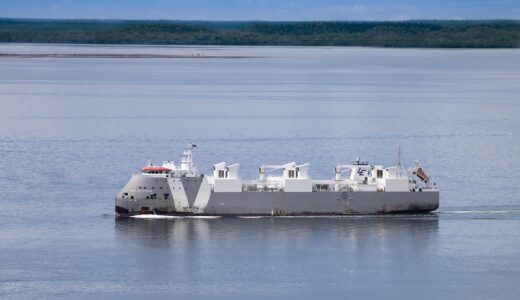
Matson shipping is not a broad global container network like Maersk, MSC or CMA CGM. It is a focused Pacific carrier and logistics provider built around Hawaii, Alaska, Guam, Micronesia, parts of the South Pacific, Okinawa, and expedited China-to-Long Beach routes. For importers, the practical question is whether Matson’s faster, premium-positioned trans-Pacific service is worth the cost when timing, reliability and inland delivery matter more than the lowest ocean freight rate. In 2026, that question has become more relevant because Matson reported stronger China service demand in the second quarter and expected that service to be at or near capacity through peak season. For more context on ocean freight topics, see our shipping section.
This article focuses on what shippers can verify from Matson’s public service information, its 2025 annual report, and its second-quarter 2026 results and Form 10-Q. It does not treat carrier marketing language as proof of performance. Instead, it separates company-reported facts from the operational implications that importers, freight forwarders and supply chain teams should evaluate before booking.
Where Matson operates
Matson’s core identity is Pacific ocean transportation. Through Matson Navigation Company, the company serves several non-contiguous U.S. markets and selected international routes. Its public filings describe a network that includes Hawaii, Alaska and Guam, along with Micronesia, parts of the South Pacific, Okinawa, China and Japan-related services. That makes Matson more specialized than the largest global liners, but it also gives the carrier a clearer service proposition in certain lanes.
For many shippers, Matson is visible in two main contexts. The first is domestic Pacific shipping, where the company is a key carrier for Hawaii, Alaska and Guam. These routes support consumer goods, industrial freight, food and beverage cargo, construction materials, vehicles and other essential cargo flows. The second is expedited Asia-to-U.S. shipping, especially China-to-Long Beach services marketed under CLX and MAX.
| Service area | What it covers | Why it matters to shippers |
|---|---|---|
| Hawaii | U.S. West Coast connections with the Hawaii market | Important for essential goods, retail replenishment, construction cargo and island supply chains |
| Alaska | Northbound and southbound Alaska services, including seafood-linked export movements | Seasonality, sailing frequency and export demand can influence equipment and timing |
| Guam and Micronesia | Services to Guam and regional island markets | Useful for shippers moving to smaller Pacific destinations where network reliability is critical |
| China to Long Beach | CLX and MAX expedited trans-Pacific services, including cargo from China and other Asia origins | Attractive when faster ocean transit and U.S. inland integration are more important than simply chasing the lowest rate |
| Logistics | Intermodal, highway brokerage, freight forwarding, warehousing and related services | Can simplify the handoff from ocean arrival to domestic delivery, especially for time-sensitive shipments |
Why the China service is the main 2026 signal
Matson’s China service is the key reason many importers search for Matson shipping. The company positions CLX and MAX as expedited China-to-Long Beach options. Its service pages describe weekly departures and fast U.S. inland connections, while its filings show that the China service can materially affect company earnings because premium rates and utilization matter.
The most important current data point is Matson’s second quarter of 2026. In the quarter ended June 30, 2026, Matson reported that China service container volume increased 15.2 percent year over year. The company attributed the increase mainly to significantly higher demand compared with the prior-year period, when trans-Pacific demand was affected by tariffs imposed in April 2025. It also said CLX and MAX saw stronger-than-expected freight rates and demand across e-commerce, garments and electronic goods against tighter supply conditions in the trans-Pacific trade lane.
For the first six months of 2026, the picture was less dramatic but still positive in the China lane. Matson reported China service volume of 63,000 FEU for the six months ended June 30, 2026, up 3.6 percent from 60,800 FEU in the same period of 2025. The gap between the strong second quarter and more modest first-half growth matters. It indicates that the second-quarter rebound followed a softer first quarter, when Lunar New Year timing and demand patterns weighed on volume.
The practical takeaway is not that every shipper will always save time by using Matson, or that space will always be easy to secure. The more useful reading is that Matson’s China service was operating in a stronger demand environment in mid-2026, and the company expected it to run at or near capacity through peak season. Importers considering CLX or MAX should check space, cutoffs, inland delivery commitments, equipment availability and price premiums early rather than treating Matson as a last-minute fallback.
How Matson differs from a typical global carrier
Matson’s value proposition is different from the mega-carrier model. A large global liner may offer wider origin and destination coverage, more alliance connections, and more port-pair options. Matson concentrates on selected Pacific lanes where it can sell speed, schedule focus, premium service, U.S. inland coordination and experience in domestic non-contiguous markets.
This difference matters when comparing quotes. A lower base ocean rate from another carrier may not mean a lower total landed cost if it creates longer inventory exposure, more transloading uncertainty, missed retail windows, additional storage, or less predictable inland delivery. Conversely, Matson’s expedited positioning may not justify a premium for cargo with flexible lead times, low urgency, or destination points that do not benefit from its inland network.
For importers of light industrial goods, consumer products, components, textiles, small appliances or e-commerce inventory, the decision should be framed around time sensitivity. If the cargo has a narrow sales window, production deadline, customer delivery promise, or inventory shortage, a premium ocean service can be rational. If the cargo is replenishment stock with loose timing, slower service through a broader carrier network may be more economical.
What the latest reported volume data shows
Matson’s 2026 numbers show a split between stronger China performance and softer domestic volume in some lanes. The company’s second-quarter and first-half data are useful because they show where demand pressure was building and where it was softer.
| Trade lane | Q2 2026 year-over-year volume change | First half 2026 year-over-year volume change | Company explanation |
|---|---|---|---|
| Hawaii | Down 1.1% | Down 3.3% | Lower general demand |
| Alaska | Down 2.3% | Down 2.2% | Lower export seafood volume and general demand factors, partly offset in Q2 by one additional northbound sailing |
| China | Up 15.2% | Up 3.6% | Higher demand in Q2 2026 compared with a tariff-affected 2025 period |
| Guam | Up 4.4% | Up 2.3% | Improved volume versus the prior-year period |
| Other containers | Down 11.4% | Down 7.7% | Includes services in Micronesia, the South Pacific and Okinawa |
The data suggests that Matson’s 2026 story was not broad growth across every trade. The China service was the most important positive driver, while Hawaii and Alaska were softer through the first half. Guam improved modestly. For shippers, this matters because a carrier’s space situation can vary sharply by lane. A tight China sailing does not automatically mean the same conditions exist for Alaska or Hawaii, and softer domestic volumes do not automatically mean lower China premiums.
Operational checks before booking Matson shipping
Check whether the cargo really needs an expedited ocean option
The first question is not whether Matson is faster in a general sense. It is whether a specific shipment benefits from the service. A time-sensitive shipment moving from China to a U.S. destination that can be efficiently connected through Long Beach may be a good candidate. A shipment with flexible timing, uncertain purchase order readiness, or a destination that requires extra handoffs may not capture the full value.
Confirm the full route, not only the port-to-port leg
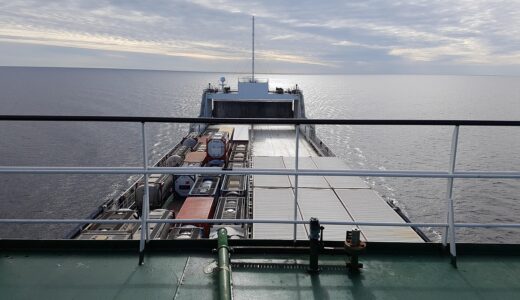
For many importers, the ocean crossing is only one part of the shipment. The final result depends on origin pickup, documentation, cutoff compliance, vessel departure, port arrival, customs release, chassis or truck availability, rail capacity and final-mile delivery. When comparing Matson with other options, evaluate the full door-to-door or origin-to-destination timeline, not only the advertised sailing time. See also: Food Packaging.
Watch peak season space and booking windows
Matson stated in its second-quarter 2026 update that it expected the China service to be at or near capacity through peak season. That does not mean every sailing will be unavailable. It does mean shippers should avoid late planning. Peak-season bookings should be checked earlier, and forwarders should confirm whether the quote includes firm space, equipment, origin handling and inland delivery assumptions.
Separate rate premium from total supply chain value
A premium ocean product should be measured against the cost of time. For some cargo, faster replenishment can reduce stockouts, air freight substitution, warehouse disruption or missed retail windows. For other cargo, the premium may simply increase landed cost. The right comparison is not only Matson versus another ocean rate; it is Matson versus the total cost of delay, uncertainty and inventory exposure.
Fleet renewal and capacity context
Matson has also been investing in vessel renewal. Public company materials describe Aloha Class ships of about 3,220 TEU and note a commitment to three additional Aloha Class vessels scheduled for delivery in 2027 and 2028. That is important for long-term fleet efficiency and service planning, but shippers should not read it as an immediate 2026 capacity solution. Newbuild programs affect future deployment, replacement of older vessels and environmental performance over time; they do not remove near-term peak-season space constraints by themselves.
The company also reported significant vessel construction expenditures in 2026. This reinforces that Matson is investing through the cycle, but it also highlights why service economics matter. Premium China service, domestic Pacific demand, fuel costs, terminal performance and logistics margins all influence how those investments translate into shipper experience.
When Matson shipping may fit a supply chain
Matson shipping may fit well when a company has Asia-origin cargo moving to the United States, a meaningful time penalty for delay, and a destination plan that benefits from Long Beach and coordinated inland movement. It may also fit companies shipping to Hawaii, Alaska, Guam or other Pacific island markets where Matson has established service coverage and operational familiarity.
It may be less suitable when cargo has highly flexible timing, when the destination does not align with Matson’s strongest network, or when the shipment is primarily rate-driven and has no urgent inventory requirement. In those cases, a shipper should compare alternatives from larger global liners, non-vessel-operating common carriers and freight forwarders.
The strongest approach is to treat Matson as a specialized option rather than a universal solution. Ask for the sailing schedule, cutoff time, transit assumptions, inland plan, accessorial charges, demurrage and detention terms, equipment details, and what happens if a shipment misses the intended sailing. These operational details are often more important than the carrier name on the quote.
Frequently asked questions
Is Matson shipping mainly for China-to-U.S. imports?
No. China-to-Long Beach services are a major reason importers search for Matson, but the company also serves Hawaii, Alaska, Guam, Micronesia, parts of the South Pacific and Okinawa. The best-known China services are important for time-sensitive imports, while the domestic Pacific trades are central to island supply chains.
What are CLX and MAX?
CLX and MAX are Matson’s expedited China-to-Long Beach service offerings. They are commonly evaluated by importers that want a faster ocean alternative to standard trans-Pacific services and a lower-cost option than air freight for suitable cargo. Exact suitability depends on origin, destination, cargo readiness, space and inland delivery requirements.
Did Matson’s China service grow in 2026?
Based on Matson’s reported figures, yes for the periods available through June 30, 2026. China service container volume increased 15.2 percent year over year in the second quarter and 3.6 percent for the first half of 2026. The company connected the second-quarter increase to stronger demand compared with a tariff-affected 2025 period.
Should shippers expect Matson to be cheaper than other carriers?
Not necessarily. Matson is often considered for speed, schedule focus and service integration rather than the lowest base ocean rate. Shippers should compare total landed cost, inventory impact and delivery risk, not only the ocean freight line item.
What should be verified before booking?
Verify the sailing, cutoff, equipment availability, origin handling, destination delivery plan, customs timing, inland mode, accessorial charges and what service commitment is actually included in the quote. For peak-season China shipments, space confirmation and timing assumptions should be checked as early as possible.