How to choose a pizza box supplier for food service packaging
What buyers need from a pizza box supplier
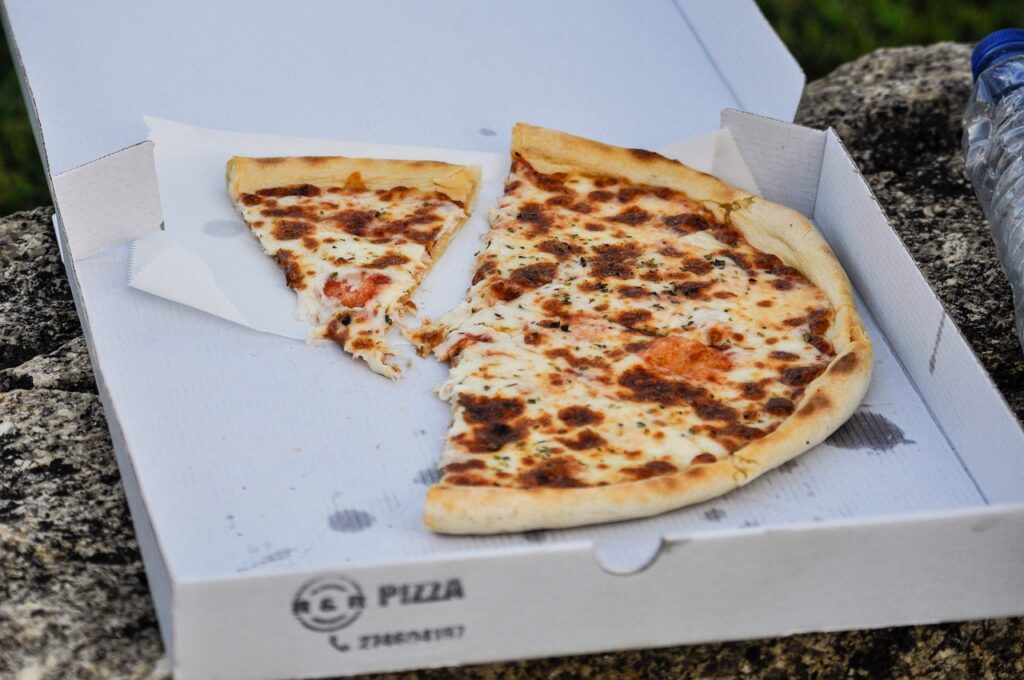
A pizza box supplier should be judged on more than unit price. Food-service buyers also need to confirm food-contact compliance, board strength, grease performance, sizing accuracy, print control, sustainability documentation, and delivery reliability. For restaurants, distributors, and private-label food packaging buyers, the requirement is practical: the box has to protect hot pizza during pickup or delivery without creating avoidable compliance, waste, or branding problems.
Current sourcing decisions are also shaped by regulatory and market changes. In the United States, the FDA announced on February 28, 2024 that PFAS-containing grease-proofing substances used in paper food packaging were no longer being sold by manufacturers for food-contact use in the U.S. market. In Europe, Regulation (EU) 2025/40 entered into force on February 11, 2025 and generally applies from August 12, 2026, with requirements phased over time. These developments make supplier evidence more important than broad claims.

This guide is written for packaging buyers who need a practical shortlist method. It focuses on checks that can be made before an order is placed: specifications, test data, certificates, artwork controls, production capability, and commercial terms. For more procurement checklists across light-industry categories, see the Buyer’s Guide.
Define the box before comparing suppliers
A productive supplier discussion starts with a clear box specification. If a buyer asks only for a standard pizza box, each factory may interpret the requirement differently. A workable specification should include internal dimensions, flute type, board grade, color, print coverage, closure style, ventilation, packing quantity per bundle, pallet configuration, and intended market.
Pizza boxes are usually made from corrugated board because it offers stiffness, cushioning, printability, and relatively low weight. The right board still depends on the pizza format and delivery conditions. A small thin-crust pizza handed across a counter does not need the same structure as a large loaded pizza stacked with other boxes in a delivery bag. Boxes used for longer delivery routes need better resistance to moisture and deformation, while boxes used mainly for pickup may place more emphasis on presentation and easy folding.
Buyers should send sample pizzas where possible, or at least provide realistic product data. The supplier needs to know the pizza diameter, crust height, average weight, oil level, expected holding time, and whether boxes will be stacked while hot. These details affect board strength, vent placement, and liner selection. A box that looks acceptable in a showroom can still fail if steam softens the lid, grease migrates through the base, or the corners loosen during handling.
Check food-contact compliance first
Food-contact compliance should be the first gate in supplier review, not a document requested after price negotiation. In the U.S., the FDA explains that the regulatory status of a food-contact material depends on the status of each substance that may reasonably migrate to food. Relevant routes can include applicable provisions in 21 CFR, GRAS status, prior sanctions, threshold-of-regulation exemptions, or effective food contact substance notifications. For paper and paperboard packaging, buyers should ask the supplier to identify the regulatory basis for the board, coatings, inks, adhesives, and any grease-resistant treatment.
The PFAS issue needs specific attention. The FDA announced on February 28, 2024 that grease-proofing substances containing PFAS were no longer being sold by manufacturers for food-contact use in the U.S. market. The announcement addressed substances used on paper and paperboard packaging to provide grease and water resistance. For buyers, the practical step is to request a current supplier declaration covering intentionally added PFAS in the finished box and in any grease-resistant chemistry. A general food-grade claim is not enough.
For European supply, buyers should also monitor the Packaging and Packaging Waste Regulation, known as Regulation (EU) 2025/40. The European Commission states that the regulation entered into force on February 11, 2025 and generally applies from August 12, 2026, with requirements phased over time. For pizza boxes, the most relevant buyer questions concern recyclability, labeling, material minimization, and the ability to document compliance through the supply chain. If the boxes will be sold into multiple markets, the supplier should be able to separate U.S., EU, UK, and other regional compliance documents instead of sending one generic certificate.
Evaluate board performance and pizza-specific design
A pizza box has to manage heat, moisture, oil, and stacking at the same time. That combination makes performance testing more useful than visual inspection alone. Buyers should ask which tests the supplier uses for corrugated board control. Common industry references include edge crush resistance, flat crush resistance, burst strength, and box compression testing. ISO and TAPPI methods are widely used in paper and corrugated testing, and suppliers should be able to explain which values they monitor and how often they test production lots.
Board strength is only one part of performance. The structure also has to release steam without drying the pizza too quickly. Vent holes, corner gaps, and lid geometry all affect condensation. If the lid sags, touches cheese, or traps too much moisture, the customer experience suffers even if the box remains technically intact. Buyers should test samples with real hot pizza, not only with empty folded boxes.
Grease performance should be reviewed carefully. Stronger grease resistance does not automatically mean a better box. Heavy coatings can affect recyclability, compostability claims, print behavior, and compliance documentation. The supplier should explain whether grease resistance comes from board selection, treatment chemistry, liner choice, or structural design. The answer should be consistent with the buyer’s end-of-life claim.
| Evaluation area | What to ask | Why it matters |
|---|---|---|
| Board grade | What flute, liner, and basis weight are used? | Determines stiffness, stacking strength, folding feel, and cost. |
| Food-contact status | What is the regulatory basis for board, inks, coatings, and adhesives? | Reduces compliance risk in direct food-contact applications. |
| Grease resistance | Is any grease-proofing chemistry used, and is there a PFAS declaration? | Supports safer sourcing and more accurate sustainability claims. |
| Print process | What print method, ink system, and color tolerance are offered? | Affects brand consistency and risk of odor or set-off. |
| End-of-life claim | Is the box recyclable, compostable, or both under defined conditions? | Prevents misleading claims and customer confusion. |
| Quality control | What inspections are performed before shipment? | Helps avoid dimensional errors, weak scores, and printing defects. |
Do not treat sustainability claims as interchangeable
Recyclable, compostable, recycled-content, and FSC-certified are different claims. A responsible pizza box supplier should use each term precisely. The Recycling Partnership summarizes 2020 industry testing by noting that empty pizza boxes can be recycled and that grease and residual cheese are not necessarily the barrier many consumers assume. AF&PA has also stated that paper mills recycle pizza boxes and has supported clearer public messaging. Even so, local recycling acceptance can vary, so buyers should avoid promising universal recyclability without considering the market where the packaging will be used.
Compostability requires a different evidence path. The Biodegradable Products Institute states that its commercial compostability certification program uses ASTM D6400 as the base standard, with additional options for eligible items. BPI also distinguishes commercial compostability from home compostability. For buyers, this means a plain compostable pizza box claim is incomplete unless it identifies the certification, scope, facility conditions, and whether inks and coatings are included.
Forest sourcing claims also need documentation. FSC describes chain-of-custody certification as a system for verifying that FSC-certified material is tracked through the supply chain from forest-based material to finished goods. If a supplier offers an FSC logo or FSC claim on pizza boxes, ask for the certificate number, product scope, and transaction documents. A supplier using FSC board does not automatically have the right to print the FSC label on finished boxes unless the chain-of-custody requirements are met.
Assess printing, branding, and production control
Custom printing can turn a simple pizza box into a brand asset, but it also adds risk. Buyers should request artwork templates, dielines, print tolerances, ink type, color management procedures, and pre-production proofing steps. If the box has heavy ink coverage, test for odor, rub resistance, drying, and possible transfer during stacking. Food packaging should not smell like ink when opened.
For small chains and regional brands, flexographic printing is often a practical balance of cost and speed. Larger brand programs may require tighter color control, multiple designs, batch coding, or coordinated packaging across box sizes. The supplier should show how it controls plate changes, registration, color drift, and artwork version management. One common sourcing mistake is approving an attractive digital proof without checking whether the production process can repeat it consistently at scale.
Structural scoring is just as important as print quality. Pizza shops need boxes that fold quickly during busy service. If scores are too stiff, staff lose time. If scores are too weak, the box can collapse or open during delivery. Ask for samples from normal production equipment, not only hand-made prototypes. Then run a small operational test: time the folding process, stack filled boxes, place them in delivery bags, and inspect them after realistic holding periods.
Compare suppliers with a balanced scorecard
Price matters, but a low quote can become expensive if it comes with poor documentation, inconsistent board, unclear lead times, or weak after-sales handling. A useful shortlist gives weight to compliance, product performance, quality control, commercial reliability, and communication. This is especially important when buying from overseas suppliers or when launching custom artwork.
Ask each supplier for the same information package. It should include specification sheets, material declarations, food-contact statements, sample test reports, sustainability certificates if claimed, minimum order quantity, tooling fees, artwork charges, production lead time, packing details, and defect-handling policy. If a supplier refuses basic documentation or sends certificates that do not match the product, treat that as a warning sign.
A simple scoring system can prevent price from dominating the decision. For example, assign 30 percent to compliance and documentation, 25 percent to box performance, 15 percent to print and design capability, 15 percent to delivery reliability, and 15 percent to total cost. Buyers can adjust the weighting by project. A national brand may give more weight to documentation and color consistency, while a local chain may emphasize lead time and practical folding performance.
Questions to ask before approving a pizza box supplier
- Which food-contact regulations or authorizations apply to the board, inks, coatings, and adhesives?
- Can the supplier provide a current declaration covering intentionally added PFAS in grease-resistant materials?
- What board grade and flute type are recommended for each pizza size, and why?
- Which corrugated performance tests are used for routine quality control?
- Are production samples made on the same equipment and materials planned for bulk production?
- What sustainability claims are supported by third-party certificates or documented recycling guidance?
- What are the standard tolerances for dimensions, color, board weight, and print registration?
- How are nonconforming boxes handled, credited, replaced, or investigated?
- What is the realistic production lead time after artwork approval?
- How are boxes packed to avoid warping, moisture damage, or crushed corners in transit?
Common red flags in supplier selection
Several warning signs appear repeatedly in packaging sourcing. The first is vague language. Terms such as food grade, eco-friendly, biodegradable, or premium board should be backed by specifications or certificates. The second is mismatched documentation. A certificate for a paper mill, ink supplier, or unrelated product does not automatically prove that the finished pizza box is compliant. The third is inconsistent sampling. If three sample boxes from the same supplier fold differently, bulk production may be unstable.
Another red flag is unrealistic pricing without a clear reason. A lower price may be valid if the supplier has scale, local material access, simpler print, or efficient tooling. But if the quote is far below the market and the supplier cannot explain the board grade, coating, test values, and packing method, the buyer may be comparing unlike products. Packaging failure is visible to the end customer, so small savings can damage the food brand.
Be cautious when a supplier promotes a sustainability claim before understanding the buyer’s market. A box can be recyclable in one collection system and poorly accepted in another. A compostable box may still require commercial composting infrastructure. A certified forest material claim may require chain-of-custody controls. The stronger supplier is often the one that explains these limits clearly.
Frequently asked questions
What is the most important document to request from a pizza box supplier?
Start with a finished-product specification sheet and a food-contact compliance statement that covers the board, inks, adhesives, and coatings. If the supplier claims recyclability, compostability, recycled content, or certified forest sourcing, request the matching evidence separately.
Are greasy pizza boxes recyclable?
Industry recycling groups including The Recycling Partnership and AF&PA have stated that empty pizza boxes can be recycled and that grease alone is not necessarily the problem many consumers assume. However, local program rules can differ, and leftover food should be removed before recycling.
Should buyers choose compostable pizza boxes instead of recyclable boxes?
Not automatically. Compostable packaging only delivers its intended benefit when it is accepted by suitable composting systems and when the finished item, including coatings and inks, is covered by the claim. Recyclable corrugated boxes may be the more practical option in markets with established paper recycling.
How many samples should be tested before a bulk order?
Test enough samples to cover each size, print version, and expected use condition. At minimum, buyers should check folding, stacking, heat exposure, grease exposure, lid clearance, print odor, and packing condition after transit simulation or a small pilot shipment.
What makes a supplier reliable beyond price?
A reliable supplier can explain specifications, provide current documents, produce consistent samples, communicate realistic lead times, control artwork versions, and respond clearly when a quality issue occurs. These capabilities often matter more than a small difference in unit price.