How Can Food Packaging Bags Keep Products Fresh and Export-Ready?
Why Do Food Packaging Bags Matter for Export Food Brands?
Food packaging bags do more than cover food. They keep flavor in, control moisture, carry the brand, and help goods handle a long trip by truck, sea, or air. If you need more choices for retail or wholesale packs, the Food Packaging category is a useful place to start. For exporters, the right bag is often the small thing that keeps a snack crisp in July, stops powder leaking inside a carton, or helps a buyer notice your product on a busy shelf.
Fresher Products With Less Waste
Good packaging slows the usual reasons food quality drops, including oxygen, moisture, light, odor transfer, grease migration, and rough handling. This matters because food waste is a direct cost for any food business. The UN Environment Programme reported in its 2024 Food Waste Index that households wasted more than one billion meals a day in 2022, while 783 million people faced hunger. Better bags will not fix global waste by themselves, but they can reduce broken packs, stale goods, and expired stock in normal trade. A roasted nut pouch with a proper moisture barrier, for example, has a better chance of reaching the distributor with the crunch still there. (unep.org)
Lower Shipping Weight
Flexible bags are used widely because they are light, compact, and easy to pack into cartons. Compared with many rigid packs, they can reduce empty space and shipping weight. This helps when a buyer orders mixed SKUs, smaller cartons, or trial quantities. The Flexible Packaging Association reported that flexible packaging reached $41.5 billion in U.S. sales in 2022 and made up about 21% of the $180.3 billion U.S. packaging market. That market size gives a clear message: brands use flexible packs because they work for snacks, frozen foods, powders, pet food, sauces, bakery items, and many other product lines. (flexpack.org)
Retail-Ready Shelf Appeal
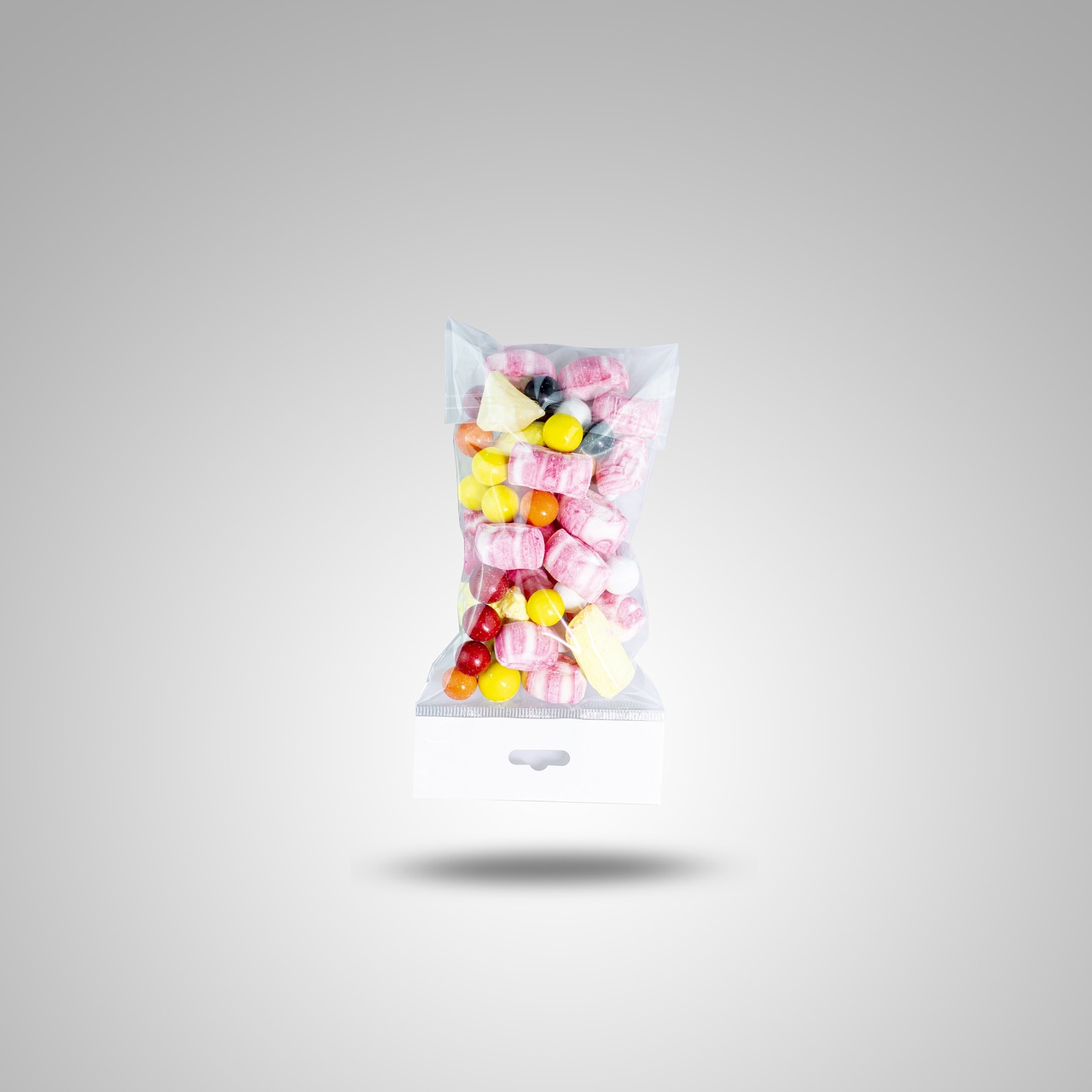
A bag also sells quietly on the shelf. Clear windows let shoppers see texture, while matte film can make granola look clean and steady instead of too bright. Glossy print often fits candy, chips, and kids’ snacks. A stand-up pouch can face the customer instead of lying flat like a sample pack. Small details also matter, such as an easy-tear notch at the right height or a resealable zipper that opens and closes without trouble every morning.
Which Materials Fit Different Food Products?
There is no one best material for every food. The bag has to match the product, shelf life, filling method, storage temperature, and target market. A dry rice bag, a frozen dumpling bag, and a coffee pouch need different performance. Price matters, but the cheapest material can turn expensive if it causes returns or complaints.
PE and PP for Everyday Dry Foods
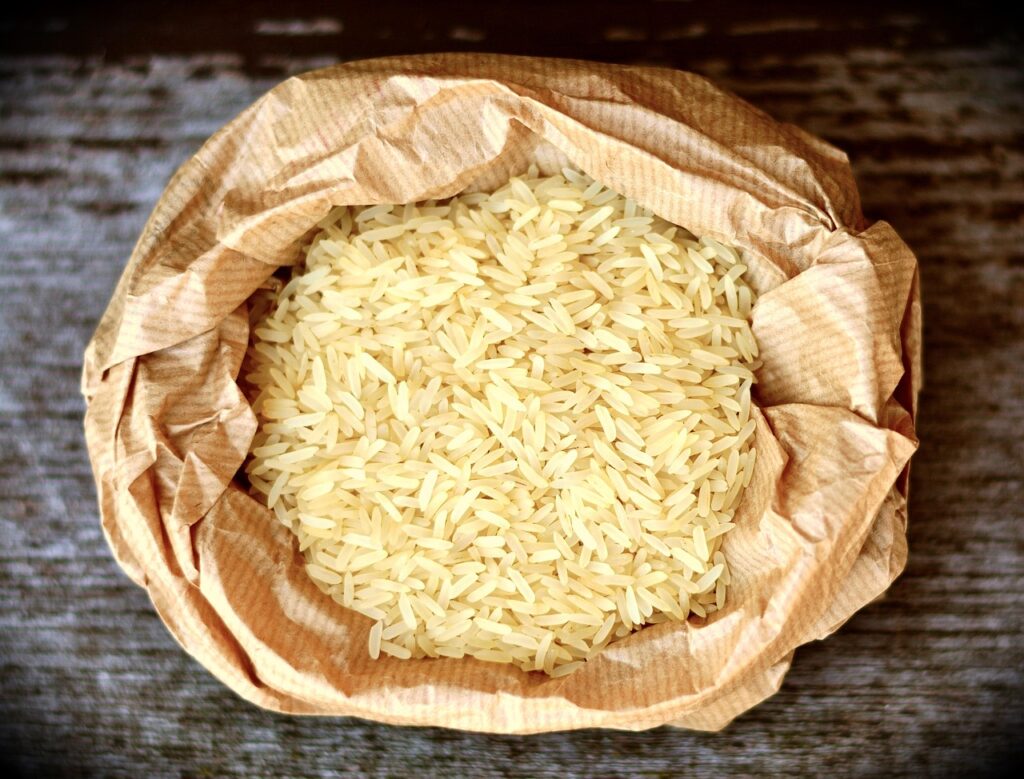
Polyethylene and polypropylene are common choices for dry foods and basic retail packs. PE is flexible and easy to seal, while PP often gives better clarity and stiffness. For cereals, pasta, beans, sugar, dry fruit, and inner liners, these films can be enough when the shelf-life demand is not too high. You still need to confirm the exact food contact grade, thickness, sealing layer, and printing ink system. A bag that looks fine on a desk may still fail on a packing line running 40 packs per minute.
PET and Laminates for Barrier Needs
Many export products need laminated structures because one layer cannot do every job. PET can add strength and print quality, while PE can handle heat sealing. Aluminum foil or metallized film can add strong oxygen and light protection. That is why coffee, spices, powdered drinks, dehydrated vegetables, and oily snacks often use multi-layer bags. A common structure might be PET plus foil plus PE, but the final choice should follow shelf-life goals and filling conditions, not old buying habits.
Kraft Paper and Compostable Films for Niche Lines
Kraft paper gives a natural look, especially for tea, bakery mixes, grains, and organic-style snacks. In most cases it still needs an inner film layer, because paper alone is not a strong moisture barrier. Compostable films can fit some markets, but you need to check industrial composting access, labeling rules, heat resistance, and shelf-life impact. Some buyers like the message, while others will ask direct questions about the real disposal route. That is reasonable. Packaging should fit how the customer actually throws it away, not only how it reads in a sales sheet.
How Do Barrier Features Protect Food Quality?
Barrier performance decides how well a bag protects the product after filling. The right barrier depends on the weak point of the food. Is it sensitive to oxygen? Does it absorb moisture quickly? Does oil mark the pack? Does aroma escape? Once those points are clear, the bag structure is easier to set.
Oxygen and Moisture Control
Oxygen can weaken flavor, speed up rancidity, and damage color. Moisture can soften crackers, clump powders, or make dried fruit too sticky. For oxygen-sensitive foods, you may need foil, high-barrier coated film, or an EVOH-based structure. For moisture-sensitive foods, the water vapor barrier and seal quality become very important. Coffee, nuts, chips, milk powder, and freeze-dried fruit all need careful barrier choices. A tiny leak can spoil a full carton, and nobody wants to find that problem at 5 p.m. in the factory.
Heat Sealing and Leak Resistance
Many bag failures come from weak sealing rather than weak film. Dust, oil, sugar, or powder in the seal area can create small channels. The seal layer should match the packing machine temperature, pressure, and dwell time. If the product is heavy, the side seam and bottom gusset need more strength. For liquids, sauces, and frozen foods, drop tests and leak tests should not be treated as simple paperwork. They are low-cost checks before a container leaves the factory.
Light Aroma and Grease Protection
Light can fade spices, tea, and colored snacks. Aroma loss can make coffee or seasoning smell weak before the pack is opened. Grease can stain paper or reduce the strength of some structures. Metallized films, foil, opaque inks, and grease-resistant layers can help with these issues. If your product has a strong smell, such as garlic seasoning or pet treats, test odor transfer inside a closed carton with mixed items. Buyers will notice if a vanilla biscuit carton smells like chili oil.
What Compliance Details Should You Check Before Ordering?
Export packaging needs more than a good price and clean artwork. You should check food contact compliance for the destination market, along with labeling, ink safety, recycled content claims, and any buyer-specific rules. Keep records organized from the first order. It saves time when a supermarket, importer, or customs broker asks for documents.
Food Contact Declarations
For the U.S. market, the Food and Drug Administration states that a food contact substance treated as a food additive must be authorized for that use before it is marketed. The FDA also keeps food contact substance inventories and reviews certain recycled material uses for food contact. In plain terms, ask suppliers for food contact declarations linked to the exact material structure you plan to buy. A loose letter saying ‘food grade’ without material details is not enough for serious export work. (fda.gov)
Migration and Material Test Reports
Migration testing helps show whether substances may move from packaging into food within legal limits. The required test depends on food type, temperature, contact time, and sales region. Dry food, oily food, acidic food, and hot-filled food do not carry the same risk. Ask for recent test reports from recognized labs, and check that the report matches the film, ink, adhesive, and inner layer you are going to order.
Labels and Destination-Market Rules
Labeling rules may cover ingredient panels, nutrition facts, recycling marks, country of origin, allergen statements, and language requirements. Europe is also moving quickly on packaging design and waste rules. The European Commission says the Packaging and Packaging Waste Regulation aims for all packaging on the EU market to be recyclable by 2030, with recycled plastic content targets rising in 2030 and 2040. If your buyer sells into the EU, early design choices can help you avoid a costly redesign later. (environment.ec.europa.eu) See also: Eco Packaging.
How Can You Balance Sustainability Cost and Performance?
Sustainable packaging is not just changing one material to another. It means using enough material to protect the food, avoiding layers that are not needed, and making claims that can pass a buyer review. In real projects, the best choice is usually a balance rather than an extreme option.
Source Reduction Before Material Swaps
Start by checking whether the bag is oversized, too thick, or more complex than the shelf life really needs. The U.S. Environmental Protection Agency reported that containers and packaging made up 82.2 million tons of municipal solid waste in 2018, equal to 28.1% of total generation. Plastic containers and packaging alone reached 14.5 million tons. These numbers explain why lighter and right-sized packs matter, as long as the food still stays safe and saleable. (epa.gov)
Recyclable Mono-Material Structures
Mono-material PE or PP structures can improve recyclability compared with mixed laminates. They may not, however, give the same barrier performance as foil-based structures. That trade-off needs to be checked early. A recyclable bag that shortens shelf life and creates more food waste may not be the better environmental choice. For dry snacks, frozen foods, and some powders, mono-material options can work well. For coffee, high-fat nuts, or oxygen-sensitive powders, you may need stronger barrier layers or a tested recyclable high-barrier design.
Right-Size Bags and Lower Waste
Right-sizing is a simple way to reduce waste and save money. A bag that is 10 mm too wide across a million pieces means extra film, larger cartons, and more pallet space. At the same time, making a bag too small can slow filling and damage seals. Use product density, fill weight, headspace, and carton layout to decide the final size. A small mock-up test with real product can find problems that a flat drawing will miss.
What Should You Ask a Food Packaging Bags Supplier?
A capable supplier should be able to discuss materials, testing, artwork, filling conditions, lead time, and shipment details without making you ask the same question twice. Before ordering, provide clear product information. This includes food type, net weight, filling temperature, storage condition, shelf-life target, market, and packing machine type.
MOQ Lead Time and Print Method
Ask about minimum order quantity, plate cost, digital or gravure printing, lead time, and repeat-order timing. Gravure printing can give strong color and steady quality for larger runs. Digital printing can suit small test batches or many SKUs. If your launch has six flavors and demand is still unclear, a large MOQ can lock cash into the wrong printed bags.
Samples Artwork and Color Control
Request blank samples first for fit and sealing tests, then ask for printed samples or proofs for color review. Provide vector artwork, Pantone references, barcode size, and a clear dieline. Colors can look different on clear film, white ink, kraft paper, and metallized film. A chocolate-brown logo may look neat on matte film but dull on kraft. Check it before production starts.
Packing Shipping and After-Sales Support
Good cartons, moisture protection, labels, and pallet plans protect empty bags during export. Ask how bags are packed, how many pieces fit in one carton, and whether the cartons can handle sea freight humidity. Also ask what happens if there is a sealing issue or print defect. A serious supplier will help trace batch numbers, material rolls, and production dates. This support sounds boring at the buying stage, but it becomes useful when there is a real problem to solve.
FAQ
Q1: What Are the Most Common Food Packaging Bags? A: Common options include flat bags, stand-up pouches, side-gusset bags, vacuum bags, zipper pouches, rollstock bags, and kraft paper bags with inner liners.
Q2: How Do You Choose the Right Thickness? A: Match thickness to product weight, puncture risk, shelf life, and filling speed. Heavy frozen foods and sharp snacks usually need stronger film than light dry powders.
Q3: Can Food Packaging Bags Be Recyclable? A: Yes, some PE or PP mono-material bags can be designed for recycling, but local collection and barrier needs must be checked before making any claim.
Q4: What Documents Should a Supplier Provide? A: Ask for food contact declarations, material specifications, migration test reports when needed, artwork confirmation, production records, and packing details.
Q5: Are Custom Printed Food Packaging Bags Worth It? A: Yes, for most retail products. Custom print helps shelf display, explains product value, supports compliance labels, and makes your brand easier to remember.