How Should You Choose Cardboard Packaging Boxes Manufacturers for Export Orders?
Why Do Cardboard Packaging Boxes Manufacturers Matter More Than Box Price?
When you buy from cardboard packaging boxes manufacturers for export orders, the lowest quote is not always the lowest cost. A weak carton can fail on a pallet, print can scuff during a damp sea shipment, and a mailer that is a little too large can raise parcel charges for no useful reason. For more sourcing topics like this, you can also visit the Buyer’s Guide section.
Cardboard packaging looks simple from the outside. In daily sourcing work, it touches product protection, warehouse handling, retail display, sustainability claims, and customer reviews. The right manufacturer helps you deal with these points before the first container leaves the factory gate.
Packaging Cost Is Not Just Unit Price
A carton quote usually lists paper grade, flute, size, printing, tooling, and packing method. That is only part of the cost. You also pay for damage, returns, repacking labor, extra filler, storage space, and sometimes dimensional weight. A box that costs a few cents more can still save money if it reduces breakage or lets you load more units on each pallet.
The U.S. Census Bureau reported e-commerce as 16.1% of U.S. retail sales in 2024, based on annual seasonally adjusted data. This matters because parcel shipping gives boxes more handling, more drops, and less fixed orientation than traditional pallet-only logistics. Source: U.S. Census Bureau and FRED, 2024. (fred.stlouisfed.org)
Transit Damage Can Hide in Small Details
Small design choices often decide whether a box survives the trip. Flute direction can work against stacking pressure, a score line can be cut too deep, or a hand hole can sit too close to a corner and weaken the carton. For export orders, moisture is another common issue. A carton may pass a quick floor test in a dry sample room but soften during a long ocean route.
Ask the supplier how it controls board moisture, glue strength, slot depth, die-cut accuracy, and printing rub resistance. These are not special questions. They are normal questions from buyers who need cartons to work in real shipping.
Brand Trust Begins with the First Delivery
For e-commerce and retail, the shipping box is often the first thing the customer touches. A clean box shows that the product was packed with care. A crushed, dirty, or overfilled carton sends the opposite message, even when the product inside is still fine.
Good manufacturers understand that cardboard packaging is not just a container. It is part of the promise that your product will arrive as sold. That promise needs proper design and production control, not only brown paper.
What Quality Signals Should You Check Before Ordering?
Before placing a bulk order, check whether the manufacturer can repeat the same quality in mass production. Nice samples are not hard to make. Stable production is the harder part, and this is where many carton problems start.
Board Grade and Flute Selection
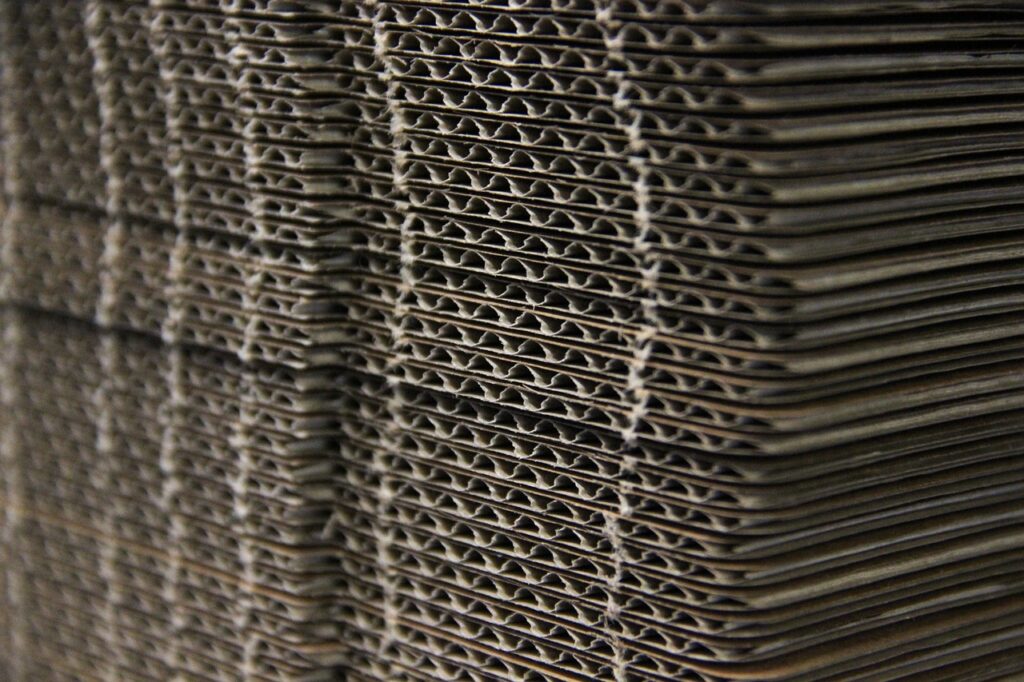
Single-wall board can work for light consumer goods, apparel, and inner cartons. Double-wall board is often used for heavier items, long-distance exports, and pallet stacking. E-flute is common for retail print and small gift packaging. B-flute and C-flute are common choices for shipping cartons. BC-flute is used when stacking strength matters more than a slim profile.
Do not choose by flute name only. Ask for the paper grammage, liner type, medium type, burst or edge crush data, and target box compression strength. If the supplier cannot give these details, the quoted price may be based on rough assumptions.
Compression and Drop Test Records
For shipping cartons, lab tests are useful. ASTM D642 covers compression tests for shipping containers, components, and unit loads. ISO 12048 specifies compression and stacking tests for complete, filled transport packages. These standards give buyers and suppliers the same language when checking whether a carton can take warehouse and transport pressure. Source: ASTM D642 and ISO 12048. (store.astm.org)
For parcel goods, ask whether the package design has been checked against ISTA procedures. ISTA 3A is made for individual packaged products shipped through parcel delivery systems up to 150 lb or 70 kg. This is useful for online sellers because parcel routes can include drops, vibration, compression, and many handling points. Source: International Safe Transit Association, current procedure overview. (ista.org)
Printing, Cutting, and Gluing Consistency
Print color drift, uneven die cuts, and weak glue seams can make a good carton look careless. During factory review, check whether the manufacturer uses color standards, first-piece inspection, in-line checks, and final random inspection. If your carton has barcodes or QR codes, scan them from real production sheets, not only from artwork proofs.
One practical check is to ask for packed-flat photos after strapping. Some cartons look fine when open but become bent or twisted after tight bundling. It is a small detail, but warehouse staff will notice it as soon as the goods arrive.
How Can You Compare Manufacturers for Export Orders?
Export packaging needs more than a machine that can make boxes. You need a supplier that reads specifications clearly, points out risk, and keeps records. A factory may be good at local produce boxes but not ready for Amazon-style parcel cartons or branded retail shippers.
Export Experience by Product Category
Ask what the manufacturer already ships. Cosmetics, small appliances, glassware, food, apparel, auto parts, and electronics all need different packaging logic. A candle jar carton may need inner dividers and drop protection. A garment mailer needs clean folding and stable printing. A motor part carton may need heavy-duty board and oil-resistant inner packing.
Export experience also means knowing pallet loading, container moisture control, labeling, and documentation. If a supplier has handled your product category before, the discussion is usually faster and more accurate.
Clear Sampling and Approval Process
A workable process starts with product weight, dimensions, shipping route, loading plan, and brand requirements. Then the supplier provides a dieline, white sample, printed sample, test sample, and final production approval. It may feel a bit slow, but it helps avoid messy changes after printing plates and cutting dies are made.
For first orders, do not approve only by photo. Ask for physical samples and test them with real products. Put the packed box on a shelf, open it, close it, shake it lightly, stack it, and let a warehouse colleague handle it. These simple checks catch many problems before mass production.
Communication Speed and Technical Detail
Fast replies are helpful, but clear technical answers matter more. A strong manufacturer can explain why it recommends a certain flute, why a carton should be 3 mm larger, or why full ink coverage may need another coating. You should not need to chase the supplier for every small detail.
Also check whether the sales team and production team use the same specification sheet. Many mistakes happen when the buyer approves one version while the factory floor follows another.
What Market and Sustainability Data Should Shape Your Decision?
Cardboard packaging has steady demand, but buyers now face more pressure from retailers, regulators, and end customers. You need packaging that performs well and also fits recycling and waste targets. That does not mean every box needs a complex structure. In many cases, the better answer is a cleaner material structure and a right-size design.
Trade Data Shows a Large Global Supplier Base
World Bank WITS data for HS 481910, which covers cartons, boxes, and cases of corrugated paper or paperboard, listed the United States, China, and Germany among the top exporters in 2023. Reported export values were about $1.36 billion for the United States, $1.36 billion for China, and $1.33 billion for Germany. Source: World Bank WITS and UN Comtrade, 2023. (wits.worldbank.org)
The point is simple: buyers have many options. A wide supplier base also means quality can vary a lot. Compare manufacturers by capability and risk control, not only by country or price.
Recycling Rates Support Paper-Based Packaging Claims
Cardboard has a stronger recycling story than many packaging materials, but the claim still needs care. The American Forest & Paper Association reported that 69% to 74% of cardboard available for recovery in the United States was recycled in 2024. It also reported that about 46 million tons of paper were recycled in the U.S. that year. Source: AF&PA, August 2025 report for 2024 data. (afandpa.org) See also: Food Packaging.
This supports paper-based packaging as a practical choice, especially when your design avoids plastic-heavy lamination, mixed materials, and coatings that block repulping. Local recycling rules still vary, so avoid broad claims unless your target market supports them.
Regulation Favors Recyclable Design
For buyers selling into Europe, packaging rules are moving toward clearer recyclability requirements. The European Commission states that the Packaging and Packaging Waste Regulation 2025/40 entered into force on February 11, 2025, generally applies from August 12, 2026, and aims to make all packaging on the EU market recyclable in an economically viable way by 2030. Source: European Commission, 2026 update. (environment.ec.europa.eu)
If Europe is part of your market, ask the manufacturer about water-based ink, paper tape options, mono-material structures, FSC or PEFC paper availability, and recycling-friendly coatings. A plain brown box with one clean logo may not look very showy, but it can be easier to explain during a compliance review.
How Should You Build a Safe RFQ for Cardboard Boxes?
A vague request brings vague quotes. If you send only size and quantity, suppliers will fill the blanks in different ways. Then you end up comparing prices that are not really comparable. A clear RFQ makes the manufacturer’s job easier and protects you from hidden changes later.
Product and Logistics Information
Share product dimensions, unit weight, fragility, packing quantity per carton, shipping method, destination, pallet height limit, and expected storage conditions. If the product is fragile, liquid, sharp, oily, or food-contact related, say it early. Do not wait until sampling to mention that the box may sit in a humid port warehouse for three weeks.
For retail packaging, add shelf display needs, opening style, barcode position, and color requirements. For mailer boxes, add the courier route and any platform packaging rules.
Specification Sheet for Comparable Quotes
Your RFQ should include internal dimensions, board structure, liner color, paper grade or target strength, printing method, ink coverage, finish, closure method, packing per bundle, quantity, tolerance, sample needs, and test requirements. If you do not know the exact board grade, state the product weight and ask the manufacturer to recommend two options.
A simple two-option request often works well: one economical design and one safer export design. Then compare the cost gap against the possible damage risk.
Inspection Terms and Defect Limits
Set inspection rules before production starts. Common checks include dimension tolerance, printing color, barcode readability, glue seam strength, slot alignment, board delamination, moisture, odor, stains, and crushed corners. You can also define acceptable and unacceptable defects with photos. Photos help reduce arguments later.
For large export orders, ask for pre-production samples and retained samples from the first production run. If a claim comes up later, those samples give both sides something real to check.
When Should You Choose a Custom Manufacturer Instead of Stock Boxes?
Stock boxes are fast and cheap for simple shipping. Custom boxes make sense when the product value, delivery risk, or brand need is higher. The right choice depends on your order pattern, not only on how the carton looks.
Custom Boxes Fit Product and Pallet Space
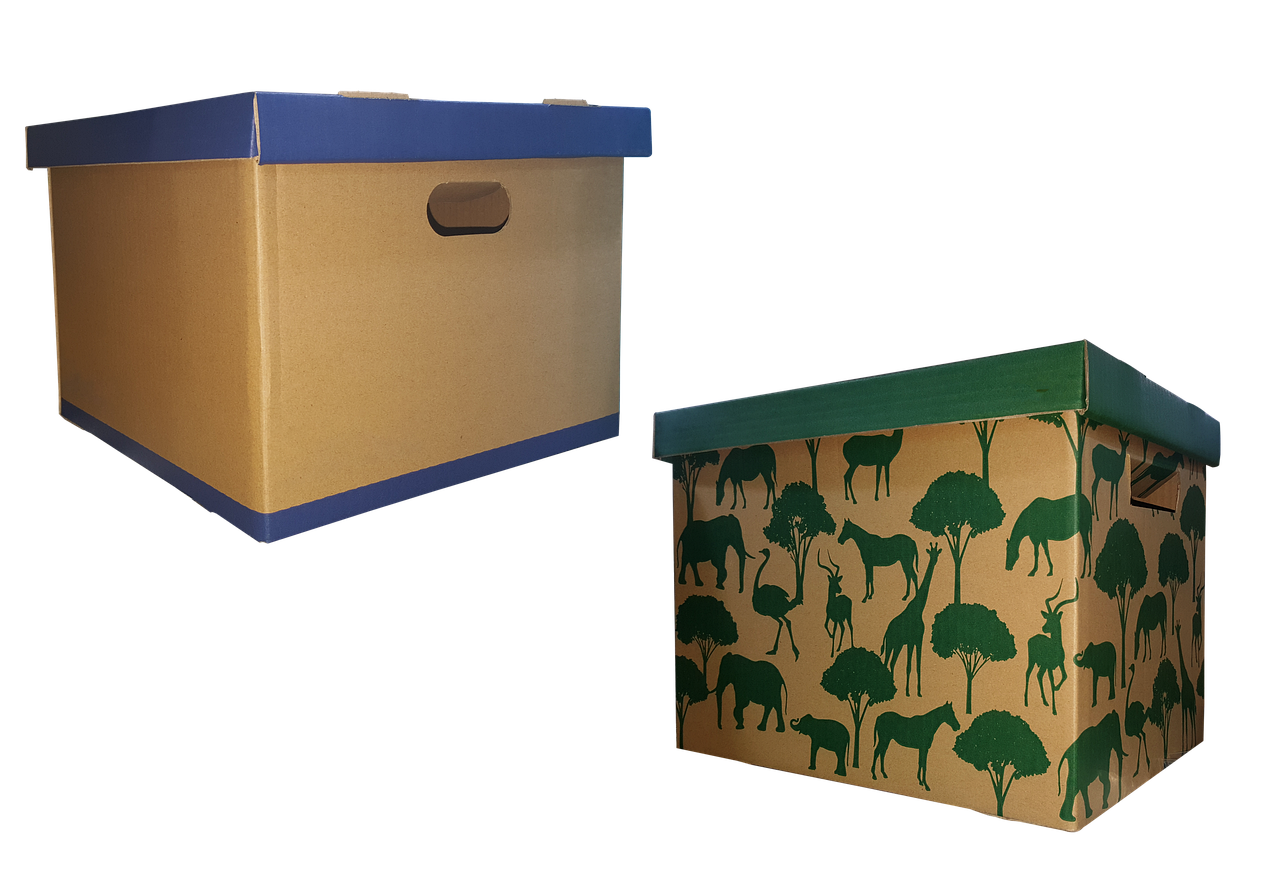
A custom carton can reduce empty space, lower filler use, and improve pallet loading. For example, cutting even 10 mm from one side may allow an extra row on a pallet. That small change can matter when you ship repeat containers.
Custom sizing also helps protect corners and edges. Products often break when they move inside the box. A snug fit with the right insert often works better than a large carton filled with loose paper.
Stock Boxes Work for Low-Risk Orders
Stock boxes are practical for samples, spare parts, seasonal trials, and low-value goods. They reduce tooling cost and lead time. If your product is not fragile and the shipment is domestic or a short route, a stock box may be good enough.
Just watch dimensional weight. A box that is much larger than the product can raise courier cost. Cheap box, expensive freight. Buyers run into this more often than they expect.
Hybrid Plans Reduce Risk
Many buyers use a hybrid plan. They start with stock boxes for market testing, then move to custom packaging after sales volume becomes stable. This avoids spending on dies and plates too early.
For repeat export orders, custom packaging is usually easier to justify. You get better loading, cleaner branding, stronger protection, and fewer last-minute fixes in the warehouse.
FAQ
Q1: How Do You Know If a Cardboard Box Manufacturer Is Reliable? A: Check its sample process, test records, production photos, export references, quality inspection steps, and ability to explain board choices in plain terms. A reliable manufacturer gives clear details before asking for a deposit.
Q2: What Information Should You Send for a Box Quotation? A: Send product size, weight, quantity per carton, shipping route, carton dimensions, printing needs, board strength target, test needs, order quantity, and packing method. More detail helps the supplier quote more accurately.
Q3: Is Double-Wall Cardboard Always Better Than Single-Wall? A: No. Double-wall board is stronger, but it costs more and takes more space. Single-wall board can work well for light goods, inner cartons, and short routes. Match the board to product risk and logistics.
Q4: Should You Ask for FSC or PEFC Certified Paper? A: Yes, if your customers, retailers, or target market care about responsible fiber sourcing. Ask for valid certificate details and confirm whether the exact paper used in your order is covered.
Q5: What Is the Biggest Mistake When Buying Export Cartons? A: The biggest mistake is comparing quotes without one shared specification. If each supplier quotes a different board, flute, size tolerance, and test level, the lowest price may not be the real lowest cost.