MSC shipping company explained with fleet scale, ownership and network changes
What the MSC shipping company is
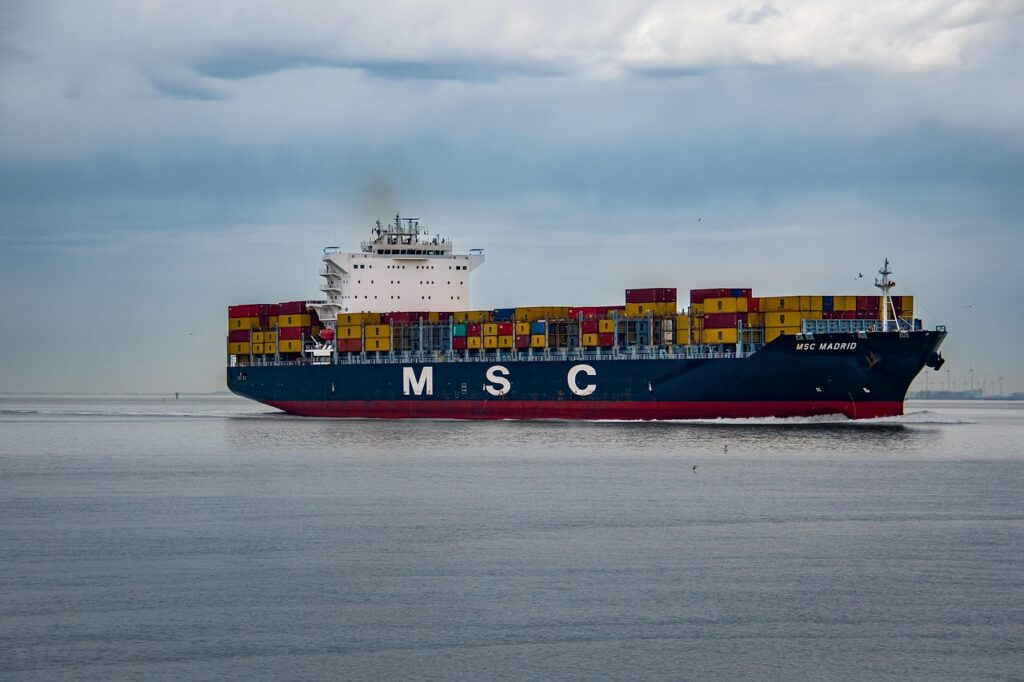
The MSC shipping company refers here to MSC Mediterranean Shipping Company, the Geneva-based container shipping and logistics business within MSC Group. For supply chain teams, MSC is important because it combines very large vessel capacity, broad port coverage, inland logistics options and, since the end of the 2M alliance with Maersk, a more independent East-West network. That scale can improve route choice and equipment reach, but it does not remove the need to review schedules, local charges, documentation requirements, emissions rules and disruption exposure lane by lane. MSC describes itself as privately owned, family-led and active across international and domestic trade markets. (mscgroup.com)
In shipping conversations, MSC may refer to the ocean carrier, the wider MSC Group or, in a different context, MSC Cruises. This article focuses on the cargo carrier: MSC Mediterranean Shipping Company. Its core role is to move containerized goods across deep-sea and regional trades, supported by services such as dry cargo, reefer cargo, project cargo, liquid cargo, inland transport, warehousing, customs clearance and digital tools. Service availability varies by market, so the practical question is not only whether MSC serves a country, but whether the specific origin, destination, equipment type and transit pattern match the shipment.
Fleet scale and global reach in one view
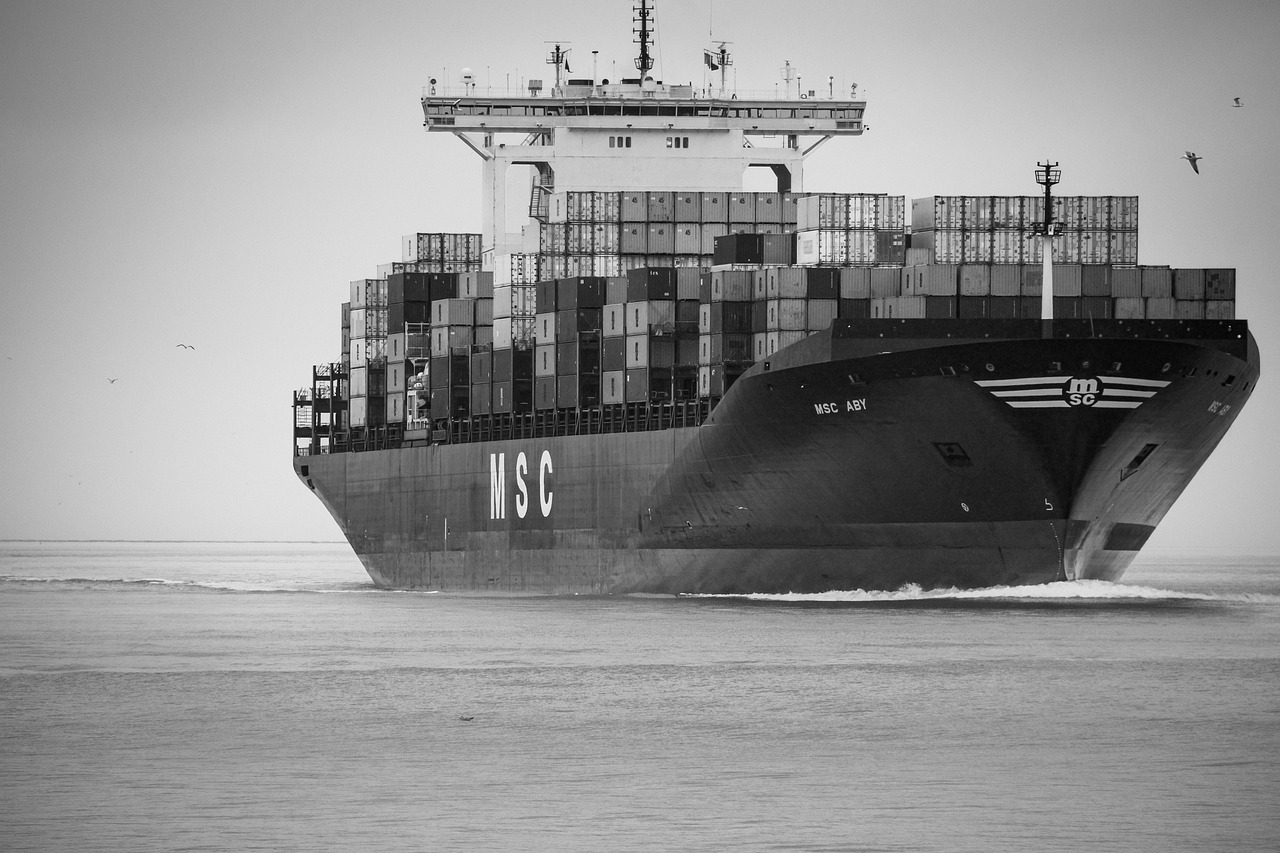
MSC’s current corporate materials list key figures that explain why the carrier is closely watched by shippers, ports and competitors. The figures on MSC’s own About Us page are marked as estimated 2024, while the page remains a current corporate reference. (msc.com)
| Metric | Publicly stated MSC figure | Why it matters for shippers |
|---|---|---|
| Cargo vessels | 1,000 | Scale can support more route options, but deployment still changes by trade lane. |
| Global routes | 300 | Route breadth helps multinational supply chains compare direct and transshipment options. |
| Ports of call | 520 | Port coverage can reduce the need for multiple ocean carriers on some networks. |
| Countries | 155 | Coverage supports both major economies and many emerging-market corridors. |
| Offices | 675 | Local office coverage matters for bookings, documentation, equipment issues and exception handling. |
| Annual TEUs carried | 30 million estimated | Volume indicates operating scale, not a guarantee of space on a particular sailing. |
Industry rankings usually measure carriers by operated TEU capacity rather than by the number of vessels alone. Alphaliner’s Top 100 methodology states that capacity is based on TEU available on operated ships and that consolidated entries include subsidiaries; for MSC, Alphaliner notes the inclusion of WEC Lines and Log-In Logistica in the MSC entry. UNCTAD’s Review of Maritime Transport 2025 described MSC, using May 2025 capacity data, as the largest container carrier and as a standalone global network outside the alliances, with about 20% of global liner shipping capacity in TEU terms at that time. (alphaliner.axsmarine.com)
Why the end of 2M changed how shippers read MSC
For route planning, one of the most important recent changes was the end of the 2M alliance with Maersk. Maersk announced on 25 January 2023 that the two carriers had mutually agreed to discontinue the 2M vessel sharing agreement in January 2025. Maersk’s explanation noted that 2M was introduced in 2015 to support cost-efficient operations on Asia-Europe, Transatlantic and Transpacific trades. (maersk.com)
MSC said it would replace that structure with a standalone East-West network from February 2025. In its 8 September 2024 announcement, MSC said the network would cover five trades with 34 loops: Asia to North Europe, Asia to the Mediterranean, Asia to North America West Coast, Asia to North America East Coast and the Transatlantic network. MSC also stated that it would offer weekly routing options via both Suez and the Cape of Good Hope, with more than 1,900 direct port pairs via Suez and more than 1,800 via the Cape. (msc.com)
For shippers, the move changes how the network should be assessed. A standalone network can make the commercial discussion clearer because the operating carrier has more direct responsibility for network design. The limit is equally important: it does not remove exposure to port congestion, weather, security disruptions, blank sailings, customs delays or inland bottlenecks. Route maps still need to be checked against live sailing schedules, transshipment ports, cutoff times and contingency options.
Ownership and business structure
MSC is unusual among the largest container carriers because it is privately owned rather than publicly listed. On 13 April 2026, MSC announced that ownership had been transferred during the last quarter of 2025 from founder Captain Gianluigi Aponte to his son and daughter, Diego and Alexa Aponte. The announcement also stated that Gianluigi Aponte would remain executive Chairman of the Group, while Diego Aponte serves as Group President and Alexa Aponte as Group Chief Financial Officer. (msc.com)
The company’s history also shapes its identity. MSC Group states that its history began in Brussels in 1970, when Captain Gianluigi Aponte founded the business with the small conventional ship MV Patricia. Since then, the group has expanded beyond ocean freight into road, rail, air, port terminal infrastructure, cruises and passenger ferry services. (cms.mscgroup.com)
For customers and market observers, private ownership has practical consequences. It may give MSC more room to make long-term fleet and network decisions without the same quarterly market pressure faced by publicly listed peers. At the same time, it means less routine public financial disclosure than listed carriers provide. Shippers comparing carrier resilience should therefore look at a broader set of signals, including service performance, equipment availability, contract terms, local support, surcharge transparency and published operational notices.
Where MSC fits in supply chains
MSC is most relevant to companies that need ocean freight coverage across multiple regions, but the value differs by cargo type and trade lane. For exporters of manufactured goods, the main questions are sailing frequency, port coverage and container availability. For retailers and importers, the focus is often transit time, schedule reliability and destination demurrage risk. For food, beverage and pharmaceutical shippers, reefer service quality, temperature visibility and exception response can matter more than headline transit days.
MSC’s published portfolio includes dry cargo, reefer cargo, project cargo and liquid cargo, alongside inland logistics, warehousing, customs clearance and digital tools such as electronic bill of lading capabilities and smart-container-related services. Those capabilities make MSC relevant not only as a port-to-port carrier, but also as part of a wider transport plan. Readers following broader carrier and route developments can find more industry context in the Shipping section.
A useful way to evaluate MSC is to separate global scale from local execution. A carrier may have strong global coverage, yet a specific shipment can still be affected by empty-container shortages at origin, terminal congestion at destination, rail constraints, customs holds or a mismatch between vessel arrival and warehouse receiving windows. Good procurement starts with the lane and cargo profile, not with the brand name alone. See also: Food Packaging.
Decarbonization and compliance pressure
Large carriers such as MSC are also assessed on how they respond to emissions regulation and fuel transition. MSC published its 2024 Sustainability Report on 30 July 2025, describing action areas that include logistics decarbonization and a strategy toward net-zero shipping by 2050. That broadly aligns with the International Maritime Organization’s 2023 GHG Strategy, which aims for net-zero greenhouse gas emissions from international shipping by or around 2050 and sets interim ambitions for 2030 and 2040. (msc.com)
The regulatory environment is moving in stages, and some details remain unsettled. The European Commission stated that the FuelEU Maritime Regulation applies in full from 1 January 2025 and covers commercial ships above 5,000 gross tonnage calling at EU ports. At the global level, IMO approved draft net-zero framework measures in April 2025, including a proposed fuel standard and emissions pricing mechanism, but IMO later said discussions on adoption were adjourned for one year in October 2025. (transport.ec.europa.eu)
For shippers, ocean freight decisions increasingly include carbon data, alternative fuel options, emissions surcharges and compliance risk. A carrier’s decarbonization claims should be checked against shipment-level documentation: what emissions methodology is used, whether the data is tank-to-wake or well-to-wake, whether low-carbon fuel claims are book-and-claim or physically linked, and how costs are passed through in the contract.
How to evaluate MSC as a shipping partner
MSC’s scale makes it a major option on many routes, but a professional carrier review still has to be specific. The following checklist is a practical starting point for importers, exporters and freight teams:
- Lane fit: Confirm the exact origin, destination, port pair, routing, transshipment point and inland leg.
- Schedule evidence: Compare published transit time with recent sailing performance and likely seasonal disruption.
- Equipment availability: Check dry, reefer, special container and project cargo equipment at the origin depot.
- Cost structure: Review base ocean freight, bunker mechanisms, peak season charges, terminal charges, documentation fees, detention and demurrage.
- Documentation flow: Confirm bill of lading options, cutoffs, amendment rules and digital platform access.
- Exception handling: Identify who manages rolled cargo, customs holds, reefer alarms, transshipment delays and cargo claims.
- Regulatory exposure: For EU-linked shipments, ask how FuelEU Maritime and emissions-related charges are calculated.
- Contingency planning: For sensitive supply chains, compare alternative ports, backup carriers and buffer inventory requirements.
MSC should therefore be assessed as both a global carrier and a lane-specific supplier. Matching its network depth with a disciplined lane review, clear contract language and realistic assumptions about disruption gives shippers a better chance of using scale as an advantage instead of being caught by the complexity of global container shipping.
Frequently asked questions
What does MSC stand for in shipping?
In cargo shipping, MSC stands for Mediterranean Shipping Company. MSC’s own About Us page says MSC is a frequently used abbreviation of its full company name, MSC Mediterranean Shipping Company. (msc.com)
Is MSC a carrier, a freight forwarder or a cruise company?
MSC Mediterranean Shipping Company is primarily a container shipping and logistics company. MSC Cruises is part of the wider MSC Group, but it is separate from the cargo carrier discussed here. The group also includes businesses in inland logistics, terminals, air cargo and passenger transport. (cms.mscgroup.com)
Who owns MSC shipping company?
MSC is privately owned by the Aponte family. MSC announced on 13 April 2026 that ownership had been transferred in the last quarter of 2025 from founder Captain Gianluigi Aponte to Diego and Alexa Aponte, with Gianluigi Aponte remaining executive Chairman of the Group. (msc.com)
Is MSC larger than Maersk?
Carrier size changes as ships are delivered, chartered, sold or redeployed, so live capacity tables should be checked for exact current rankings. In UNCTAD’s Review of Maritime Transport 2025, MSC was described as the largest container carrier, with around 20% of global liner shipping capacity in TEU terms based on May 2025 data. (unctad.org)
Does MSC still operate with Maersk after 2M?
The 2M vessel sharing agreement between MSC and Maersk was scheduled to discontinue in January 2025. From February 2025, MSC said it would provide its own standalone East-West network, while using selected commercial arrangements where needed. (maersk.com)