What Is the Best Frozen Food Packaging for Export Cold Chains?
Why Does Frozen Food Packaging Matter for Export Orders?
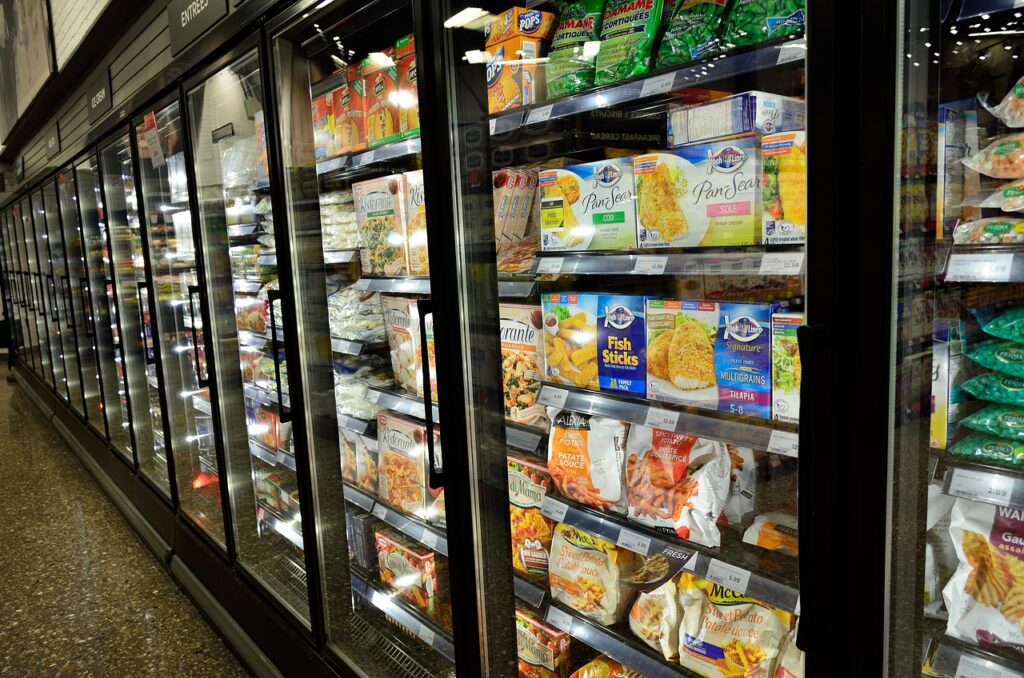
Frozen food packaging is more than the bag, tray, or carton around a cold item. In export orders, it helps protect texture, color, seal strength, barcode scans, and the buyer’s view of the goods from the factory freezer to the retail freezer. If you are buying or specifying packs for frozen meals, seafood, vegetables, dumplings, meat, or bakery items, look at the whole route first, not only the unit price. For more category ideas, you can also visit the Food Packaging section.
Product Quality Protection
A frozen product can leave the packing line in good shape, then arrive with frost, ice crystals, cracked corners, or soft seals. In many cases, this is a packaging and handling problem, not only a freezer problem. A well-matched frozen pack helps slow moisture loss, avoids becoming too brittle, and keeps the food surface away from air. For products with sauce, fat, sharp edges, or small pieces, the pack also needs enough puncture resistance.
Buyer Confidence at Receiving
Importers do not only check the food inside. They also look at the carton, the inner pack, the label, the pallet, and the seal condition after the shipment arrives. A clean, stable pack makes the receiving check easier for the buyer’s warehouse team. A weak pack raises questions, even when the food itself is still within specification.
Market Growth Behind Better Packs
Frozen food is not a small side category anymore. Grand View Research estimated the global frozen food packaging market at USD 45.69 billion in 2023 and projected it to reach USD 67.48 billion by 2030, with a 5.8% CAGR from 2024 to 2030. These are market research estimates, but they point to the same thing exporters see in daily work: more frozen items, more SKUs, and more pressure on packaging performance. (grandviewresearch.com)
Which Materials Work Best for Frozen Food Packaging?
The best material depends on the product shape, fat level, filling temperature, retail format, and cooking method. A shrimp bag, a frozen pizza carton, and a microwave meal tray do not take the same kind of stress. In most export frozen food projects, three material groups come up again and again.
Flexible Film and Pouches
Flexible film is widely used for vegetables, fries, seafood, dumplings, berries, snacks, and many bulk frozen packs. Common structures use PE, PP, PET, or layered films to get the needed seal and strength. For export buyers, it is worth asking the converter about low-temperature toughness, seal range, and whether the film turns noisy or brittle in a deep freezer. A shiny bag may look good on a shelf, but it does not help much if the corner splits during handling.
Paperboard Cartons and Sleeves
Paperboard is a common choice for pizza, frozen desserts, prepared meals, and inner retail cartons. It gives a good print surface and stacks neatly in display freezers. The weak point is still moisture, so the board grade, coating, ink, and adhesive must be checked for cold storage and condensation. During transport, rubbing can also damage weak print or soft board. For outer shipping, corrugated cartons should match the pallet pattern and the loaded container weight.
Rigid Trays and Tubs
Rigid trays are often used for ready meals, meat portions, seafood, and higher-value products. PP is often selected for microwaveable frozen meals, while PET or CPET may fit other uses. The tray has to resist cracking, seal properly with lidding film, and run smoothly on the filling line. Lid peel force should be checked after freezing, not only at room temperature.
How Should the Pack Handle Ice, Air, and Moisture?
Cold helps protect food, but it also exposes weak packaging. Moisture moves, air stays in headspace, and small pinholes can turn into buyer complaints after weeks in storage. USDA FSIS explains that freezing at 0°F inactivates microbes and helps preserve food, while quality can still drop during long storage, especially from drying linked to improper packaging. (fsis.usda.gov)
Moisture Barrier
Moisture barrier matters because frozen foods can dry out slowly when they are exposed to air. The dry, gray, tough surface is usually called freezer burn. For retail packs, this hurts the look of the food before it becomes a safety concern. Films with better water vapor resistance, tight seals, and less empty space can help. For cartons, the inner liner or inner bag often does the real moisture-control work.
Oxygen Control
Oxygen can affect fat oxidation, color loss, and flavor. Frozen fish, meat, and pastry with butter usually need more attention than plain frozen peas. Vacuum packing, tight form-fill-seal packs, or materials with lower oxygen transmission may be useful. There is no need to pay for high-barrier layers if the product sells through quickly. At the same time, a high-value seafood pack should not be under-specified just to save a small amount on film.
Freezer Burn Prevention
Freezer burn prevention is mostly practical work on the packing line. Use a pack size that fits the food, seal before too much frost builds up, and keep sharp frozen edges away from the film. If the product is individually quick frozen, small pieces should be kept out of the seal area. A few ice crystals in the seal can cause slow leaks. Those leaks often show up later as frost inside the bag.
What Should You Check Before Production Starts?
Before mass production, check the pack on the specification sheet and on the actual line. It is not enough to approve one film on paper while the factory runs another structure later. For U.S. market projects, FDA states that food packaging and other food-contact materials are regulated as food contact substances, and its conditions of use include frozen storage with no thermal treatment in the container. (fda.gov)
Food Contact Status
Ask for declarations for each food-contact layer, coating, ink system, adhesive, and additive when they apply. If the product is fatty, acidic, or reheated in the pack, the requirement may be different from a simple frozen vegetable bag. Export buyers may also ask for EU, FDA, LFGB, or other declarations. Keep these files ready before sampling, because missing paperwork can slow down an order that already passed the visual check.
Seal Strength Data
Seal strength should be tested after freezing and after transport simulation. Room-temperature samples can give a false sense of safety. A good seal should survive filling, freezing, packing, and unloading, but it should still open in the way the consumer expects. For zipper bags, test repeat opening after cold storage. For trays, check peel consistency at corners and curved edges, where many failures start.
Print and Barcode Accuracy
Frozen aisles are bright, cold, and crowded, so labels need to stay readable. Condensation, rubbing, and frost can all affect print and barcode scans. Barcodes should scan after normal retail handling, not only on a flat artwork proof. Leave enough safe space near seals, folds, and gussets. A small nutrition panel may look tidy on screen, but buyers can reject it if local labeling rules require larger text. See also: Eco Packaging.
How Can Packaging Reduce Damage During Shipping?
Export shipping adds compression, vibration, forklift handling, and temperature changes during loading. The inner pack, carton, and pallet need to work as one system. A strong pouch inside a weak carton can still fail. A strong carton with loose inner packs can also rub holes into the film.
Drop and Vibration Testing
Run drop tests, vibration tests, and freezer-condition checks on real filled packs. Water-filled samples can help in early trials, but they do not always match the shape and hardness of frozen food. Public, category-wide data on frozen pack puncture failure is not reliable enough to use as a general benchmark. Ask for supplier test reports for your exact pack size and product instead.
Carton and Pallet Strength
Outer cartons need the right board strength, flute type, moisture resistance, and stacking pattern. In reefer containers, pallets may stay under load for weeks. Carton bulge can press into retail packs and make unloading difficult. Corner boards or stretch film can help when the load needs support. Still, do not block airflow around the pallet if the cold-chain operator advises against it.
Cold Room Handling
Cold room workers wear gloves and usually move fast. Small tear notches, slippery glossy cartons, and weak hand holes become real problems in that setting. A pack that is easier to grip can reduce drops. This sounds basic, but it is often where damage starts. One rushed lift in a cold warehouse can ruin cartons that looked fine when they left the packing line.
How Do Sustainability Rules Affect Frozen Food Packaging?
Sustainability now sits beside price, food safety, and shelf appeal in many buyer meetings. The hard part is that frozen packs often need barrier layers, coatings, and strong seals. You cannot just remove material and expect the food to survive the route. A better approach is to reduce waste where testing shows the pack still works.
Less Material Without Weak Packs
Lightweighting can cut material use and freight cost, but only when the test results support it. If a thinner film causes 2% more leaks, the wasted food may cost more than the saved plastic. In the U.S., EPA reported that containers and packaging made up 82.2 million tons of municipal solid waste in 2018, equal to 28.1% of total generation. That is why packaging reduction matters, but it has to be done with care. (epa.gov)
Cleaner Recycling Story
Mono-material PE or PP structures may support recycling claims in some markets. For frozen food, though, pack performance still comes first. Paperboard sleeves can make the pack look less plastic-heavy, but coated board may face recycling limits depending on the local system. For EU sales, the European Commission says the Packaging and Packaging Waste Regulation aims to make all packaging recyclable by 2030, with recycled-content rules for plastic packaging. (environment.ec.europa.eu)
Honest Claims on the Pack
Use simple and accurate claims. Recyclable, compostable, and plastic-free are not just nice words for the front panel. They need proof in the target market. If the claim depends on local collection or industrial composting, explain that in the buyer documents. A careful claim is usually safer than a big line that a retailer’s compliance team will question.
FAQ
Q1: What Is the Most Common Material for Frozen Food Packaging? A: Flexible plastic film is very common for vegetables, seafood, dumplings, fries, and bulk frozen foods because it seals well, saves space, and resists moisture. Paperboard cartons and rigid trays are also common for pizza, desserts, and ready meals.
Q2: Should Frozen Food Packaging Be Vacuum Packed? A: Vacuum packing helps products that are sensitive to oxidation, odor transfer, or freezer burn, such as seafood and meat. It is not needed for every frozen vegetable or bakery item. Match the packing method to shelf life, product value, and buyer requirements.
Q3: Can Paper Packaging Work for Frozen Food? A: Yes, but paper usually needs the right coating, liner, or inner bag. Plain paperboard can absorb moisture and lose strength. For export, test the finished carton after freezing, thawing cycles, and pallet compression.
Q4: What Details Should a Buyer Put in a Frozen Packaging Specification? A: Include material structure, thickness, food-contact status, seal type, pack size, freezing temperature, carton strength, barcode position, print color standard, pallet pattern, and test methods. Clear specs help avoid expensive arguments after production starts.
Q5: How Do You Choose a Supplier for Frozen Food Packaging? A: Choose a supplier that can provide samples, material documents, cold-condition test data, stable printing, and export packing advice. Price matters, but a very cheap pack can cost more later if it leaks, cracks, or fails buyer inspection.