Noodle packaging materials and formats for shelf life, safety, and recyclability
Noodle packaging starts with the product, not the package
Noodle packaging is not a single format. Dry ramen blocks, chilled udon, frozen noodle nests, cup noodles, and ready-to-eat retort noodles all place different demands on barrier performance, sealing, heat resistance, distribution, and labeling. The practical starting point is to define the noodle’s moisture level, fat content, seasoning system, distribution temperature, preparation method, and target market. Only then can brands compare flexible pouches, paperboard cartons, plastic bowls, lidded trays, and retortable packs without treating sustainability as a separate add-on.
A sound specification protects texture and flavor first, simplifies the material structure where possible, and then checks food-contact compliance and consumer disposal claims for each sales region. That is why noodle packaging is a useful example for the wider Food Packaging sector. A pack that looks simple on shelf may still need to manage moisture control, grease resistance, aroma retention, puncture resistance, print clarity, seal strength, tamper evidence, transport protection, and legally required consumer information.
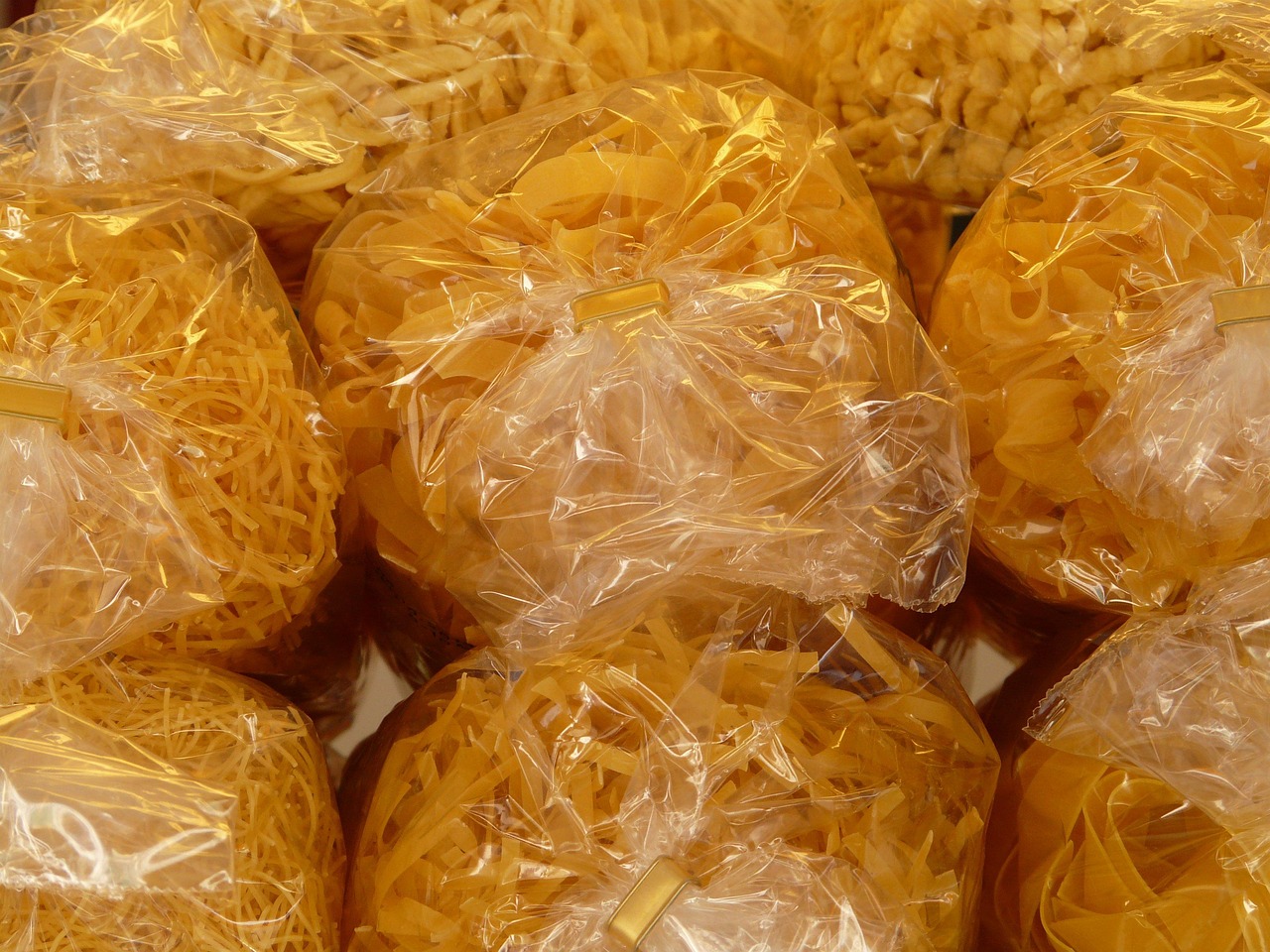
How different noodle types change packaging requirements
Dry noodles need moisture and breakage control
Dry noodles are usually low-moisture products, so the package must limit water vapor gain that can soften texture, cause clumping, or shorten eating quality. For fried instant noodles, oxygen and light exposure can also affect fats in the noodle cake and seasonings. This is why many dry noodle packs use flexible plastic films, metallized films, foil-containing laminates, or a pouch inside a printed carton.
The key engineering question is not only barrier level. The pack also has to protect brittle noodle blocks during filling, case packing, palletizing, retail handling, and e-commerce delivery. A film that performs well in a shelf-life test may still be unsuitable if it allows crushed blocks, weak seals, or excessive rejects on the packing line.
Fresh and chilled noodles depend on cold-chain discipline
Fresh ramen, udon, pasta-style noodles, and refrigerated meal kits have higher moisture and shorter shelf-life expectations. Packaging may use thermoformed trays, vacuum packs, lidding films, modified-atmosphere formats, or separate sachets for sauces and toppings. However, packaging cannot replace temperature control.
A chilled noodle pack should be specified alongside microbial risk assessment, sealing validation, distribution temperature, and clear use-by labeling. If sauces or toppings contain allergens such as wheat, soy, egg, milk, crustacean shellfish, or sesame, the artwork and production controls must also reduce the risk of undeclared allergens.
Frozen noodles require toughness at low temperature
Frozen noodles face a different stress profile. The pack must resist cracking, seal failure, abrasion, and puncture while moving through freezing, storage, picking, transport, and home freezers. Moisture loss can contribute to freezer burn, while sharp frozen corners can damage thin films.
For this reason, frozen noodle packaging often favors durable polyethylene-based bags, laminated pouches, carton-plus-inner-bag structures, or lidded trays. Designers should test seals and drop performance at frozen temperatures, not only at room temperature.
Instant bowls and cups must handle heat and convenience
Instant noodle cups and bowls must tolerate hot water, consumer handling, and short preparation times. Common structures include polypropylene bowls, coated paperboard cups, plastic lids, foil laminate lids, and printed sleeves. The food-contact surface is especially important because hot filling or hot-water preparation can change expectations for migration, odor, and material stability.
The pack also needs space for preparation instructions, fill line marks, ingredient information, and disposal guidance. A bowl that is convenient for consumers can still be difficult to recycle if it combines paper, plastic, foil, adhesive, ink, and food residue in one inseparable unit.
Retort and ready-to-eat noodles need process-grade structures
Ambient ready-to-eat wet noodles or noodle meals may require retort processing. Retortable pouches, trays, and cups are designed to withstand heat and pressure during sterilization or pasteurization processes set by the food manufacturer. These packages often use multilayer structures because they need heat resistance, oxygen barrier, seal strength, and product protection over long storage periods.
The trade-off is that high-barrier retort laminates can be harder to recycle than simpler mono-material packs. A retort noodle project should therefore be managed as both a food process and packaging project, not as a simple graphic redesign.
Common formats and where they fit
The table below summarizes practical choices. It is not a substitute for supplier testing, but it helps narrow the discussion before requesting quotations or samples.
| Packaging format | Typical noodle use | Main function | Common trade-off |
|---|---|---|---|
| Flexible pillow pouch | Single-serve dry noodles or instant blocks | Lightweight pack with moisture protection and high-speed filling | Can be hard to recycle if made from mixed laminates |
| Stand-up pouch | Premium dry noodles, meal kits, or sauce-plus-noodle sets | Better shelf presence and optional reseal feature | Higher material use than a simple pillow pouch |
| Carton with inner bag | Dry noodles, multipacks, or gift-style products | Print area, stacking strength, and breakage protection | More components to source, fill, and dispose |
| Thermoformed tray with lidding film | Fresh chilled noodles or prepared noodle meals | Portion control, visibility, and controlled atmosphere options | Requires seal validation and cold-chain compatibility |
| Plastic bowl or cup | Instant noodles and ready-to-prepare meals | Consumer convenience and hot-water preparation | Material combinations can complicate recycling |
| Retort pouch or cup | Shelf-stable wet noodles and noodle meals | High barrier and heat-process durability | Often uses multilayer structures with limited recyclability |
Material choices and barrier trade-offs
Flexible noodle packaging frequently combines layers because each material contributes a different function. Polyethylene is often used for sealing and moisture resistance. Polypropylene can add heat tolerance, stiffness, and hot-fill suitability in certain formats. Polyester may support printability, dimensional stability, and puncture resistance. Aluminum foil or metallized layers provide strong light, oxygen, and aroma barriers, while EVOH or oxide coatings may be used when a transparent high-barrier structure is preferred.
The challenge is that performance and end-of-life goals can conflict. A foil laminate may protect a seasoning-rich product very well, but it may not fit mainstream mechanical recycling. A mono-material polyethylene or polypropylene structure may be easier to align with design-for-recycling guidance, but it still needs testing for oxygen barrier, oil resistance, stiffness, machinability, and seal-window performance.
The right decision depends on whether the product is dry, chilled, frozen, or retorted, and whether the sales market has collection systems that can actually handle the chosen material. Paperboard also plays an important role in noodle packaging, especially for cartons, sleeves, cups, and bowls. It offers print quality, stiffness, and a fiber-based appearance that many consumers associate with lower plastic use.
Paperboard used for hot or wet foods normally needs coatings, linings, or windows. Those additions can affect repulpability, grease resistance, heat performance, and disposal instructions. In practical terms, paper-based does not automatically mean recyclable or compostable in every local system. See also: Eco Packaging.
For packaging teams, the useful question is not which material is universally better. It is which structure uses the fewest incompatible materials while still preventing food waste, product damage, and safety risk. A lighter pack that fails in distribution is not sustainable. A recyclable-looking pack that causes rancidity or soggy noodles is also a poor outcome.
Food safety, labeling and regional compliance checkpoints
Noodle packaging teams should separate three compliance areas: food-contact material safety, food label accuracy, and environmental claims. In the United States, public FDA guidance treats substances that contact food through packaging as food-contact substances when they are reasonably expected to become part of food under intended use. Food businesses also need packaging sanitation and preventive controls consistent with current good manufacturing practice requirements for human food.
For noodles, this matters when a film, coating, adhesive, printing ink system, tray, or bowl will contact oily seasonings, hot water, chilled products, or retorted meals. Material selection should be reviewed against the actual use condition, not only against a generic food-contact statement.
In the European Union, food-contact materials placed on the market must comply with the general food-contact framework under Regulation EC 1935/2004, good manufacturing practice requirements under Regulation EC 2023/2006, and specific measures such as plastics rules where applicable. The EU Packaging and Packaging Waste Regulation, Regulation EU 2025/40, entered into force on February 11, 2025 and generally began applying from August 12, 2026, with phased obligations across the packaging life cycle. Noodle packaging sold into the EU should therefore be reviewed for both food-contact safety and packaging-waste obligations.
Labeling is equally important. Most noodle products are ingredient-dense and may include wheat, soy, sesame, egg, milk, fish, crustacean shellfish, or peanut-containing toppings depending on the recipe. Packaging artwork must reserve sufficient space for ingredient lists, allergen declarations, nutrition information, net quantity, preparation directions, storage conditions, manufacturer or distributor details, and market-specific recycling or disposal symbols. A packaging redesign that reduces panel space can create label risk even if the material structure is technically sound.
Recyclability and environmental claims need evidence
Design-for-recycling guidance from organizations such as the Association of Plastic Recyclers in North America and CEFLEX in Europe generally favors simpler mono-material polyethylene or polypropylene flexible packaging where performance allows. The reason is practical: sorters and reclaimers handle clean, identifiable material streams more efficiently than complex mixed-material laminates. For noodle packaging, this often pushes design teams to test mono-PE or mono-PP pouches for dry noodles before defaulting to foil laminates.
However, recyclability is not only a material property. It also depends on package size, color, labels, inks, adhesives, barrier coatings, food residue, and local collection access. A pouch described as recycle-ready in one market may not be accepted through curbside systems in another. For consumer-facing copy, that distinction matters. Environmental claims should be specific, substantiated, and qualified when collection or composting infrastructure is limited.
Compostable noodle packaging requires particular caution. Public FTC Green Guides in the U.S. say compostable claims should be supported by competent and reliable evidence and qualified when appropriate facilities are not available to a substantial majority of consumers. International standards such as ISO 18606 address organic recycling of packaging, while Europe has long referenced EN 13432 for packaging recoverable through composting and biodegradation. Even so, a compostable bowl or film may not suit high-barrier noodle applications, hot oily sauces, or regions without suitable composting infrastructure.
A practical specification checklist for noodle packaging
Before selecting a final package, teams should turn marketing goals into measurable requirements. The following checklist can reduce late-stage changes and supplier misunderstandings.
- Define the noodle type: dry, fresh chilled, frozen, instant hot-water, microwavable, or retort shelf-stable.
- Record the product risks: moisture gain, moisture loss, oxidation, aroma loss, grease migration, breakage, microbial growth, or freezer damage.
- Set distribution conditions: ambient, refrigerated, frozen, e-commerce, export shipping, hot climates, or mixed retail channels.
- Confirm food-contact conditions: oily food, hot water, microwave use, retort processing, acidic sauces, or long storage.
- Choose performance tests: seal strength, leak testing, drop testing, compression, oxygen transmission, water vapor transmission, and sensory checks.
- Review packaging machinery: form-fill-seal speed, bowl denesting, lid sealing, sachet insertion, coding area, and reject handling.
- Check artwork space: allergens, nutrition panel, ingredient list, preparation steps, warnings, barcodes, and disposal instructions.
- Assess end of life: mono-material options, separable components, local recycling access, food residue, and claim substantiation.
- Document supplier compliance: material declarations, food-contact statements, migration testing where required, and change-control procedures.
This checklist also helps explain why the lowest material quote may not be the lowest-risk choice. A package that runs poorly on filling equipment, weakens in freezing conditions, or forces artwork compromises can increase total cost through rejects, recalls, relabeling, or consumer complaints.
Frequently asked questions
What is the most common packaging for dry instant noodles?
Single-serve dry instant noodles often use flexible pouches because they are lightweight, printable, and compatible with high-speed packing. Multipacks may add an outer bag, carton, or tray. The exact film structure depends on moisture barrier, oxygen protection, cost, shelf-life target, and recycling goals.
Is paper noodle packaging always more sustainable than plastic?
No. Paperboard can be a strong choice for stiffness, branding, and a fiber-based appearance, but wet or hot noodle applications often need coatings or liners. Sustainability depends on the full structure, product protection, weight, sourcing, recycling or composting access, and whether the package prevents food waste.
Can noodle pouches be made recyclable?
Some noodle pouches can be redesigned toward mono-material polyethylene or polypropylene structures, especially for dry products with moderate barrier needs. Products requiring very high oxygen, light, or retort resistance may still need more complex structures. Any recyclable claim should match the actual market and collection system.
What should be checked before changing noodle packaging material?
Check food-contact suitability, shelf-life performance, seal strength, machine runnability, temperature resistance, print durability, allergen label space, consumer preparation method, and disposal claims. For export products, review the rules in each destination market before approving artwork or production tooling.