Meat packaging in 2026 needs to balance safety, shelf life and waste

Why meat packaging is under pressure in 2026
Meat packaging in 2026 has to meet several requirements at once. It must protect a highly perishable food, support food-contact and labeling compliance, and reduce material use or waste where this can be done without weakening product protection. These goals do not always align. Fresh meat needs protection against oxygen, moisture loss, contamination and physical damage, yet high-performance barrier structures can be harder to recycle than simpler mono-material packs. Retailers also need clear presentation, leak resistance and dependable shelf life, while regulators and consumers are paying closer attention to chemicals of concern and packaging waste.
For readers following wider food packaging developments, meat is a useful category because it shows the practical limits of simple sustainability claims. The right package is not automatically the lightest, the most recyclable or the most transparent option. It is the format that protects safety and quality with the least unnecessary material and a clear compliance pathway.
What meat packaging must do before it can be called sustainable
Meat is sensitive to oxygen, water loss, temperature abuse, microbial growth, light exposure and handling damage. Packaging is only one control in the system, but it is visible, specified and measurable. FAO meat preservation guidance has long emphasized that oxygen exposure can affect meat color and fat oxidation, while airtight packaging can help limit humidity loss and oxidation. That principle remains central as materials, retail formats and distribution routes evolve.
The first requirement is food protection. A package for fresh beef, pork, lamb or poultry must maintain integrity through filling, sealing, distribution, retail display and consumer handling. Seal failure, drip leakage or poor barrier selection can create product loss that outweighs a small reduction in packaging weight. For chilled meat, packaging also depends on refrigeration and hygiene. Vacuum and modified atmosphere systems cannot compensate for poor sanitation, a high initial microbial load or a broken cold chain.
The second requirement is regulatory suitability. In the United States, FDA guidance explains that the regulatory status of a food-contact article depends on each substance reasonably expected to migrate to food. Components may be covered by 21 CFR indirect additive regulations, GRAS status, prior sanction, a threshold of regulation exemption or an effective food contact substance notification. For meat and poultry under USDA FSIS jurisdiction, packaging and labeling also sit within a separate inspection and labeling environment. In practice, this means a material specification should be documented by intended food type, temperature condition, contact time and supplier authorization, rather than treated as a generic plastic film approval.
The third requirement is waste control. This does not only mean end-of-life recyclability. It also includes preventing avoidable meat waste, reducing overpackaging in secondary distribution, choosing fit-for-purpose gauges and avoiding material combinations that add complexity without a functional gain.
Main meat packaging formats compared
Most commercial meat packaging decisions start with the product form and sales channel. A primal cut moving through wholesale distribution has different needs from a self-service steak, a tray-packed poultry portion, sliced cooked meat or an e-commerce chilled meat box. The comparison below summarizes common formats and the trade-offs packaging teams usually evaluate.
| Format | Typical fit | Main advantage | Key watch point |
|---|---|---|---|
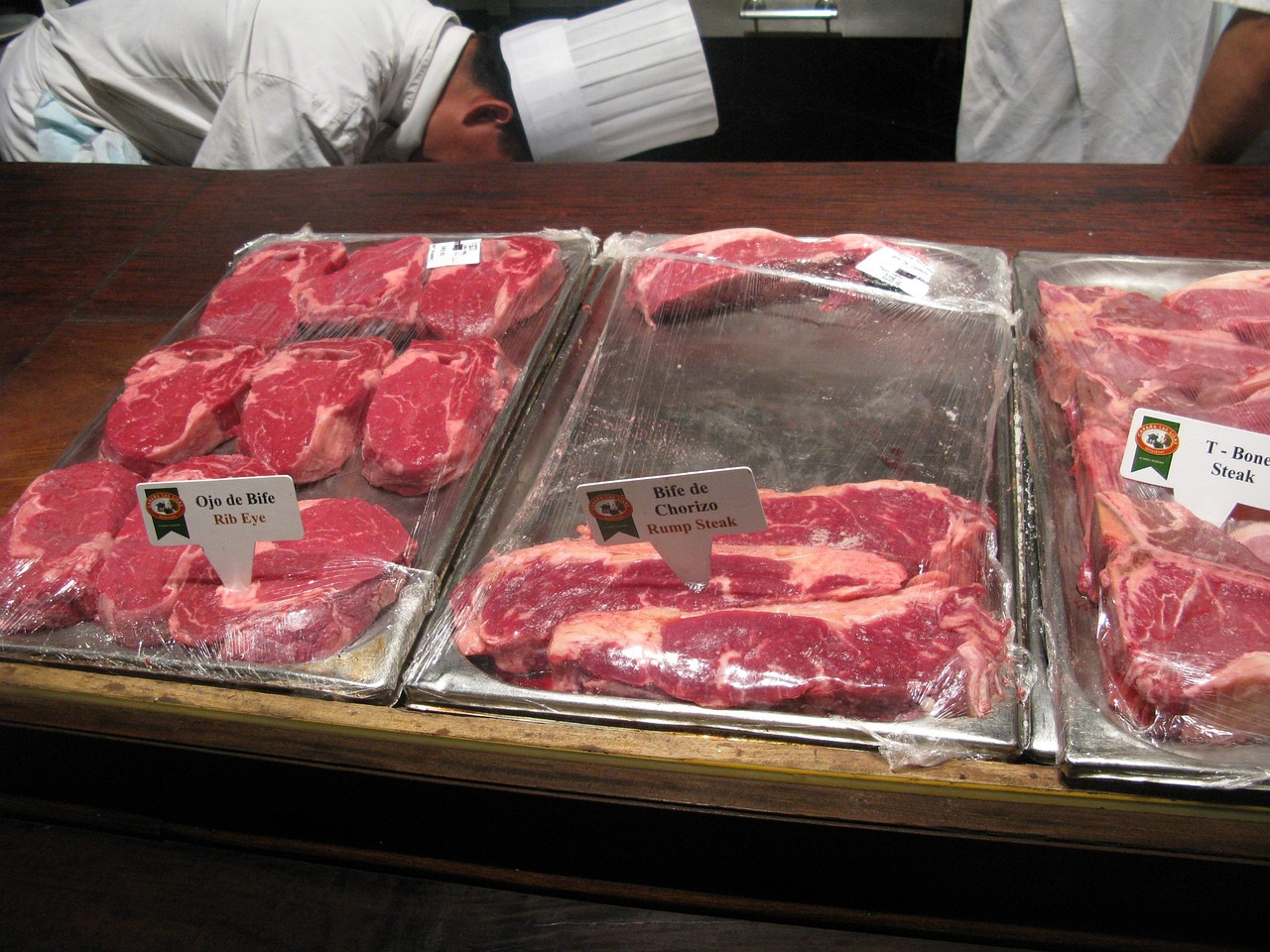
| Overwrap tray | Short retail display for fresh cuts | Low cost, familiar presentation and easy merchandising | Limited barrier protection and higher dependence on rapid turnover |
| Vacuum packaging | Wholesale cuts, export, wet aging and some retail formats | Low oxygen environment can reduce oxidation and inhibit many aerobic spoilage organisms | Darker meat color before bloom and possible purge visibility |
| Modified atmosphere packaging | Retail-ready fresh meat portions | Gas mixture can support red color and slow selected spoilage pathways | High oxygen mixtures may increase oxidation risk in some applications |
| Vacuum skin packaging | Premium retail cuts, case-ready meat and leak-sensitive items | Tight film contact can reduce air pockets and improve pack appearance | More demanding material and equipment requirements |
| Paper-based or fiber components | Wraps, sleeves, trays, liners or secondary presentation | May reduce visible plastic and improve branding space | Food-contact barrier, wet strength, grease resistance and recyclability claims need verification |
Scientific reviews of raw beef packaging commonly describe modified atmosphere packaging, traditional vacuum packaging and vacuum skin packaging as major approaches. A 2018 review in Journal of Food Quality notes that high-oxygen MAP often uses a high oxygen share to maintain bright red color, with carbon dioxide included for bacteriostatic effect, but it also warns that oxygen can contribute to oxidation. The same review describes vacuum packaging as useful for reducing oxygen exposure and vacuum skin packaging as a format that closely conforms to the product surface, helping limit air pockets and visible exudate.
The takeaway is not that one format is always superior. Overwrap can be suitable for fast-moving local retail. Vacuum packs can work well for wholesale and aging. MAP can support retail color expectations. Vacuum skin packaging can improve premium presentation and reduce leakage. The better question is whether the pack design fits the meat cut, distribution time, display conditions and disposal infrastructure.
Regulatory and material signals to track
Two regulatory signals are especially relevant for packaging choices in 2026. The first is chemical scrutiny. On February 28, 2024, the FDA announced that grease-proofing substances containing certain PFAS were no longer being sold by manufacturers for food-contact use in the U.S. market. The announcement focused on paper and paperboard applications such as wrappers, containers and similar packaging where grease and water resistance are needed. For meat packaging, this does not mean every plastic barrier film is affected. It does matter where coated paper, wraps, foodservice packs, liners or absorbent presentation components are used.
The second signal is packaging waste policy. EU Regulation 2025/40 on packaging and packaging waste was adopted on December 19, 2024, published in the Official Journal on January 22, 2025 and applies from August 12, 2026. The regulation applies to packaging placed on the EU market and to packaging waste, with goals around circularity, waste reduction, recyclability and substances of concern. For meat exporters, multinational retailers and packaging suppliers, the EU framework increases pressure to document design choices, reduce unnecessary packaging and prepare for stricter recyclability expectations. Its empty-space rules for grouped, transport and e-commerce packaging also indicate that secondary packaging efficiency will receive more scrutiny, not only the consumer-facing tray.
In the United States, USDA FSIS resources state that the agency monitors packaging material use in meat and poultry plants, while FSIS labeling guidance identifies mandatory features for meat, poultry and egg product labels. These requirements are not the same as FDA food-contact authorizations, so packaging teams should treat label compliance, food-contact status and plant operational controls as related but separate checks.
For global suppliers, the practical lesson is to maintain a compliance file, not just a marketing file. Useful documentation includes food-contact declarations, intended conditions of use, migration or authorization basis, allergen and ink or adhesive information where relevant, PFAS-related statements when paper barriers are involved, and recyclability support based on the actual structure sold into a market. See also: Eco Packaging.
How to choose a better meat packaging structure
A structured selection process reduces the risk of choosing a material because it looks greener, cheaper or more premium before its performance has been tested. Processors and retailers can start with five questions.
- What is the product risk? Ground meat, bone-in cuts, fatty cuts, cooked meats and whole muscle cuts do not behave the same way. Surface area, fat level, purge tendency and bone puncture risk all influence package choice.
- What shelf life is actually needed? A short local retail chain may not require the same barrier as export chilled beef. Extra barrier layers should earn their place through a measurable reduction in waste, returns or quality loss.
- What presentation does the channel require? Bright red color may be important for self-service beef, while vacuum-packed primal cuts may prioritize aging performance and logistics density over immediate shelf appearance.
- What is the disposal route? A recyclable-looking pack has limited value if the material, color, label, adhesive or food residue prevents recovery in the target market. Conversely, a non-recyclable high-barrier pack may still reduce total impact when it prevents significant meat waste, but that argument should be supported by evidence.
- What documentation is available? Supplier claims should be tied to food-contact status, performance data and market-specific waste claims. Terms such as recyclable, compostable, PFAS-free or reduced plastic should not be used without a defined test basis and jurisdictional relevance.
There is also a practical design hierarchy worth applying. First, protect safety and legal compliance. Second, prevent leakage and avoidable product waste. Third, remove material that adds no functional value. Fourth, simplify structures where performance allows. Fifth, communicate disposal instructions accurately. This hierarchy is more realistic for meat than a single-material mandate, because meat packaging often needs barrier performance that simple materials cannot always deliver.
What this means for the food packaging industry
The main shift is that meat packaging is becoming a documented performance decision. Buyers are asking not only whether a film seals and displays well, but why its material structure is necessary, whether a lower-complexity option has been tested, how it fits food-contact rules and whether waste claims can withstand review. Packaging suppliers that can explain the trade-off between barrier performance, shelf life, recyclability and regulatory status will be more credible than those relying on broad sustainability language.
For industry publishers and packaging teams, the topic also needs precise vocabulary. Sustainable meat packaging is not a single format. It may mean a downgauged vacuum pouch for wholesale beef, a well-sealed MAP tray that reduces retail shrink, a vacuum skin pack that limits purge and improves acceptance, or a secondary shipper redesigned to reduce empty space. In each case, the claim depends on the product, route, market and evidence.
In 2026, the winning approach is pragmatic: keep meat safe, keep quality stable, eliminate avoidable material, avoid unsupported chemical and recyclability claims, and build compliance records before a buyer or regulator asks for them.
Frequently asked questions
What is the main purpose of meat packaging?
The main purpose is to protect meat from contamination, oxygen exposure, moisture loss, physical damage and quality deterioration during storage and distribution. It also supports labeling, handling, portion control and retail presentation. Sustainability matters, but it cannot come before food safety and product protection.
Is vacuum packaging better than modified atmosphere packaging?
Not always. Vacuum packaging is strong for limiting oxygen exposure and is widely used for wholesale cuts, aging and longer chilled distribution. Modified atmosphere packaging can be better for retail display when color presentation is important. The better choice depends on meat type, desired shelf life, display requirement, equipment and market expectations.
Does recyclable packaging automatically reduce environmental impact?
No. Recyclability is important, but meat waste has a high environmental cost. A recyclable pack that shortens shelf life or increases leakage may perform worse overall than a harder-to-recycle barrier pack that prevents significant product loss. The impact should be judged across product protection, material use and the actual recovery route.
Why are PFAS discussions relevant to meat packaging?
PFAS discussions are most relevant where grease-resistant paper or paperboard components are used, such as wraps, liners, foodservice containers or coated fiber packaging. FDA’s 2024 announcement on PFAS grease-proofing substances in U.S. food packaging increased attention on documentation and substitution for these applications.
What should buyers ask suppliers before changing meat packaging?
Buyers should ask for food-contact documentation, intended conditions of use, barrier and seal performance data, shelf-life validation, puncture and leak resistance information, and support for any recyclability, compostability or chemical-free claims. A trial under real filling, distribution and display conditions is essential before full conversion.