Custom jewelry packaging that balances protection, branding and sustainability
Why custom jewelry packaging matters beyond presentation
Custom jewelry packaging is no longer just a decorative box for a ring, bracelet, necklace or pair of earrings. For ecommerce and retail jewelry brands, it must protect small high-value items, create a memorable opening moment, support efficient fulfillment and avoid sustainability claims that are too broad to prove. Strong packaging systems usually combine a primary jewelry holder, an insert or pouch, protective outer packaging and clear material documentation. The aim is not to make every pack heavier or more elaborate. It is to match the packaging structure to the jewelry type, sales channel, price point, shipping distance and customer expectations.
That balance matters in a market where buyers often form a visual impression before they compare product specifications. A jewelry box, pouch or mailer can signal care and quality before the product is worn. At the same time, oversized boxes, mixed-material laminates and vague eco claims can add cost, waste and compliance risk. For related packaging topics, see the custom packaging section.
What a complete jewelry packaging system includes
A jewelry package works best as a system, not as a single box. Each layer has a specific job. Problems often appear when one layer is expected to handle presentation, protection, shipping and compliance by itself.
Primary packaging
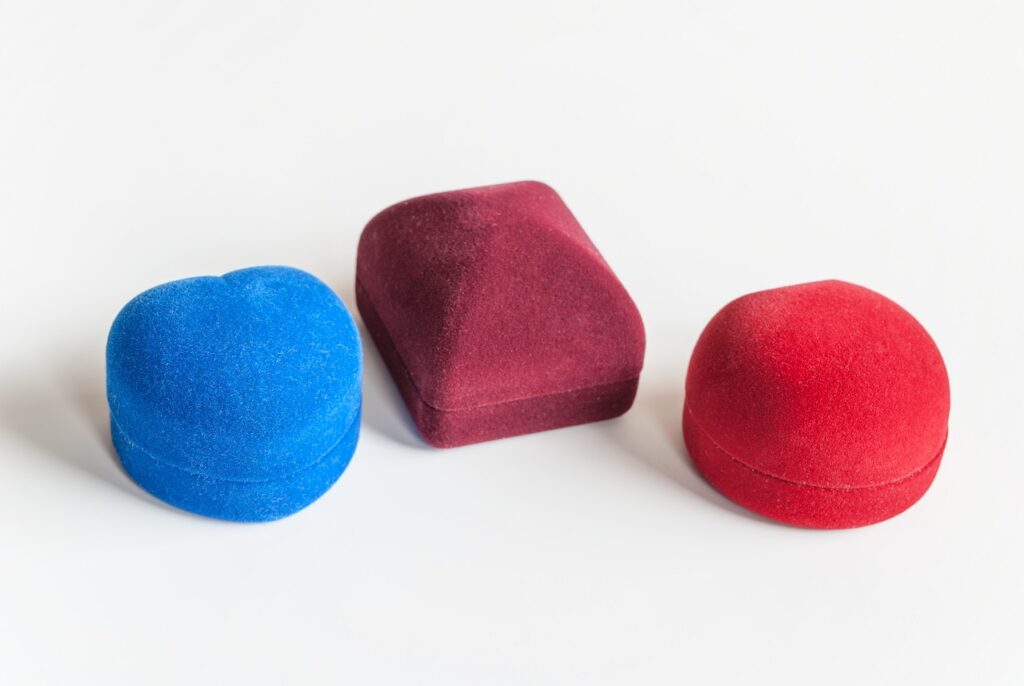
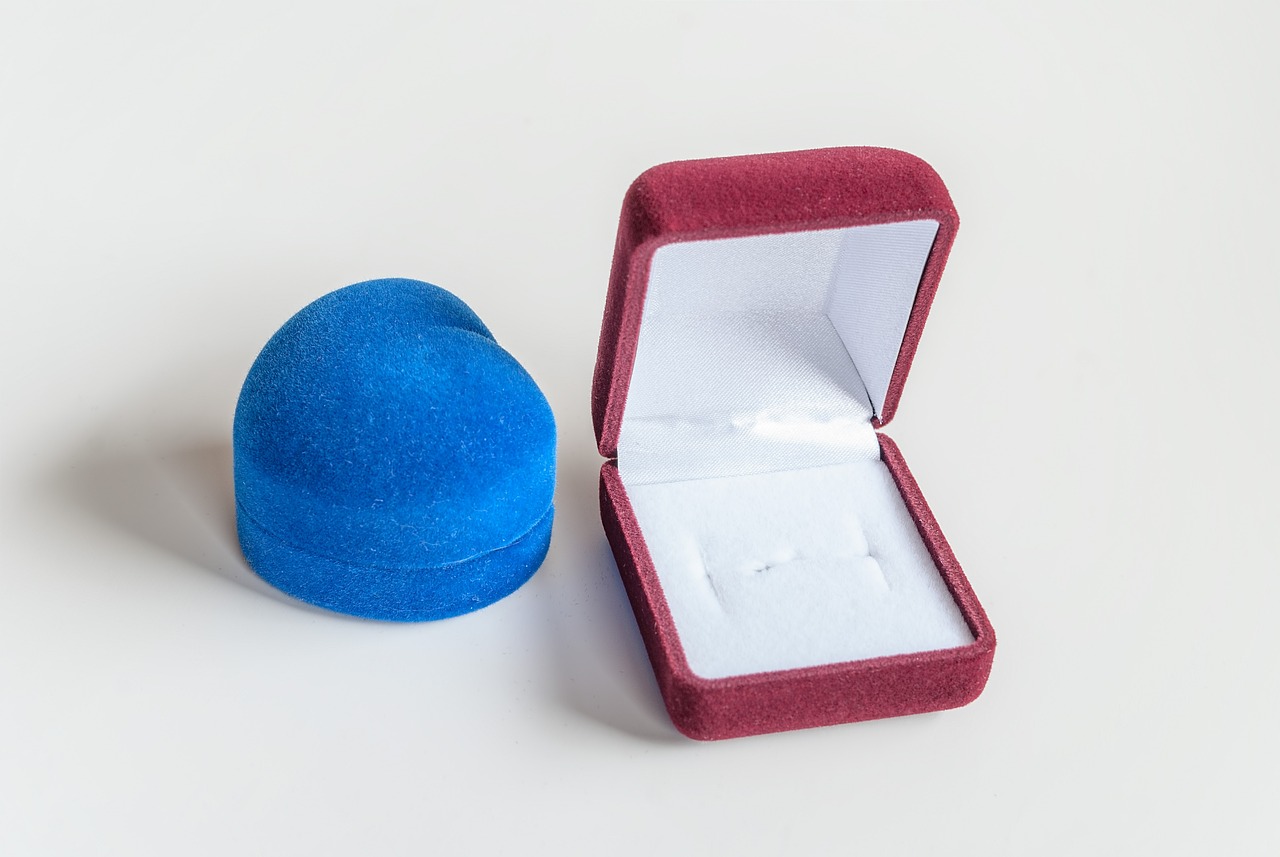
Primary packaging is the component closest to the product. Common formats include rigid boxes, hinged boxes, folding cartons, velvet or microfiber pouches, drawer boxes, paper sleeves and display cards. Its main tasks are to hold the jewelry in place, prevent tangling or scratching, and communicate the brand impression at first sight.
Rings often need slots or foam-free paperboard supports that keep the item upright. Necklaces need anti-tangle cards, clips or channels. Earrings may need pierced cards or molded trays that avoid pressure on posts. Watches, bangles and statement pieces usually need more dimensional support because they are more likely to shift during transport.
Secondary and transit packaging
Secondary packaging includes branded sleeves, tissue, thank-you cards, warranty cards, care instructions, labels and small bags. Transit packaging includes the mailer, shipping carton, protective void fill and tamper-evident closure. For direct-to-consumer orders, the transit layer is often part of the customer experience because it is the first physical contact with the brand.
For parcel shipping, the International Safe Transit Association identifies ISTA 3A as a general simulation test for individual packaged products shipped through parcel delivery systems up to 70 kg or 150 lb. Jewelry packages are much lighter than that threshold, but the principle is still useful: the pack should be evaluated as a complete shipped unit, not only as an attractive inner box.
Material choices and practical trade-offs
No single material is automatically right for every jewelry brand. The best choice depends on protection needs, brand position, order volume, storage space, printing method and end-of-life expectations. The table below summarizes common options.
| Packaging option | Typical use | Strengths | Limits to check |
|---|---|---|---|
| Rigid paperboard box | Rings, premium necklaces, gift sets | Strong presentation, good structure, suitable for inserts | Higher freight volume and storage space than flat formats |
| Folding carton | Affordable jewelry lines, retail displays | Ships flat, cost-efficient, printable | May need an insert or pouch for delicate items |
| Drawer box | Gift-focused ecommerce packaging | Memorable opening experience, reusable feel | More components can increase assembly time |
| Fabric or microfiber pouch | Bracelets, necklaces, travel storage | Lightweight, reusable, soft surface | Less crush protection unless paired with an outer box |
| Molded pulp or paper insert | Ring, earring and pendant support | Plastic reduction potential, shaped protection | Tooling, finish quality and fit must be verified |
| Corrugated mailer | Ecommerce outer packaging | Protective, widely used, good print area | Can look oversized if not dimensioned carefully |
Paper-based packaging is widely used because it supports strong printing, structural variety and more straightforward recycling in many markets. Buyers should still check coatings, lamination, magnets, ribbons, flocking, metallic foils and adhesives. A paper box with difficult-to-separate decorative layers may be less simple to recycle than it appears.
Fabric pouches can support reuse, especially for travel or storage, but they are not a substitute for crush protection in shipping. Foam inserts offer cushioning and a premium look, yet they can complicate material separation. Molded fiber and paperboard inserts are increasingly attractive when brands want to reduce plastic components, but they still need to be tested for surface abrasion, dust, humidity response and dimensional accuracy.
Designing for protection without overpackaging
Jewelry creates a packaging paradox: the product is small, but the perceived value can be high. A tiny pendant shipped in a large luxury box may feel premium, but it can also increase material use, freight volume and storage cost. A minimalist pouch may look efficient, but it may not protect chains, stones or delicate finishes during parcel handling.
Good design starts with risk mapping. A necklace can tangle. A ring can rotate or press against a lid. Earrings can bend at the post. A polished surface can scratch against a card edge. A charm can move through loose tissue. These risks are usually solved through fit, restraint and surface choice rather than by simply adding more layers.
- Use product-specific inserts for items that can move, tangle or bend.
- Keep the jewelry away from hard corners, staples, exposed adhesive and rough board edges.
- Match the box cavity to the item instead of using one oversized box for every SKU.
- Test the fully packed order, including cards, pouches, mailers and labels.
- Check whether the package can be opened without tools, tearing or accidental product loss.
Overpackaging is not only a sustainability issue. It can slow assembly, raise shipping costs and create a mismatch between customer expectations and the actual product size. Underpackaging creates a different problem: damage, returns and loss of trust. The useful target is right-sized protection.
Branding and unboxing should support the product story
Jewelry packaging often carries more emotional weight than packaging for many everyday products. The item may be bought as a gift, kept for years, photographed for social media or used to mark a personal event. That does not mean every package needs heavy decoration. It means the packaging should reinforce the product story clearly and consistently.
Color, texture and typography should align with the jewelry style. Minimalist silver jewelry may work well with uncoated paper, blind embossing and restrained color. Fashion jewelry may benefit from brighter graphics and seasonal sleeves. Fine jewelry may need a more structured box, a secure insert and a certificate or care card that feels permanent rather than disposable.
Unboxing design is strongest when each element has a purpose. Tissue can protect against abrasion. A sleeve can prevent a drawer box from sliding open. A care card can reduce misuse and returns. A warranty card can support trust. A QR code can connect to authentication, care guidance or repair information, but it should not replace essential printed information if the customer may need it later.
Brands should also consider photography and marketplace display. A package that looks excellent in person but reflects too much light may be difficult to photograph. A box that holds the jewelry too deeply may reduce visual impact in product images. Packaging prototypes should therefore be reviewed under both physical and digital conditions.
Sustainability and compliance are becoming design constraints
Sustainability in custom jewelry packaging should be specific. Broad phrases such as eco-friendly, green or sustainable are difficult to substantiate unless the brand can explain what has improved. In the United States, the Federal Trade Commission Green Guides advise marketers to support environmental claims with competent and reliable evidence and to qualify recyclable claims when access to recycling is limited. That guidance is especially relevant for packaging with mixed materials, decorative coatings or special finishes. See also: Food Packaging.
In the European Union, packaging rules have also moved from general waste policy toward more detailed design requirements. Regulation (EU) 2025/40, known as the Packaging and Packaging Waste Regulation, entered into force in February 2025 and began applying on a phased basis from August 12, 2026. European Commission materials describe the regulation as covering the packaging life cycle, including prevention, recyclability, reuse, recycled content and labelling. Jewelry brands selling into the EU should therefore treat packaging specifications as part of market access planning, not only as a design preference.
For paper and board packaging, Forest Stewardship Council information notes that FSC labels require appropriate certified supply chain controls and label approval processes. In practical terms, a brand should not add a certification mark simply because a supplier mentions certified paper. The documentation, certificate scope and label use approval need to match the actual packaging order.
A practical sustainability checklist should include:
- material composition by component, not just by finished pack;
- recycled content percentage where claimed;
- certification documents where certification marks are used;
- separation instructions for inserts, ribbons, magnets or windows;
- package weight and dimensions before and after redesign;
- local rules for the markets where the product is sold.
The most credible improvements are usually measurable: fewer components, lower package weight, easier material separation, higher recycled content, right-sized mailers or reusable pouches that customers are likely to keep. These improvements are easier to support than vague language.
How to brief a supplier or packaging designer
A clear brief reduces sampling rounds and helps suppliers avoid assumptions. For custom jewelry packaging, the brief should start with product details rather than decoration. Include jewelry dimensions, weight, fragile points, finish sensitivity, chain length, clasp type, stone height, sharp edges and any anti-tarnish needs. If the same box must hold multiple SKUs, define the smallest and largest acceptable fit.
The brief should also state the channel. Retail counter packaging may prioritize display and hand feel. Ecommerce packaging must survive parcel handling and may need a mailer or shipper that hides the product category for security. Subscription or promotional packaging may need fast assembly and lower unit cost. International orders may need additional label space and stronger transit packaging.
Useful brief elements include:
- target product type and exact dimensions;
- sales channel and expected shipping method;
- desired opening sequence and customer touchpoints;
- material restrictions, certification needs and claim language;
- print method, color references and finish preferences;
- assembly steps allowed per order;
- storage limits and flat-pack requirements;
- testing expectations for drop, vibration, abrasion and humidity exposure.
Sampling should test both appearance and operations. A box may look correct but take too long to assemble. A ribbon may photograph well but catch on a chain. A magnetic closure may feel premium but add cost and recycling complexity. A pouch may reduce weight but allow earrings to press against each other. The right decision is usually found by comparing the total packaging system rather than judging one sample in isolation.
Frequently asked questions
What is the best material for custom jewelry packaging?
There is no universal best material. Rigid paperboard suits gift and premium presentation, folding cartons work for efficient retail packs, pouches support reuse and travel, and corrugated mailers protect ecommerce orders. The best choice depends on the jewelry type, sales channel, budget, storage space and sustainability requirements.
How can jewelry packaging look premium without becoming wasteful?
Use structure, fit and finish selectively. A right-sized paperboard box with a well-designed insert can feel more premium than an oversized multi-layer package. Tactile paper, embossing, a clean opening sequence and a useful care card can add value without unnecessary components.
Should ecommerce jewelry packaging be different from retail packaging?
Usually yes. Retail packaging is handled in a controlled environment and may focus on display. Ecommerce packaging must protect the item through parcel handling, conceal the product category when needed and still create a good opening experience after shipping.
Can jewelry brands claim packaging is recyclable?
Only when the claim is accurate for the package and the market. Mixed materials, coatings, magnets, foam, fabric, windows and metallic finishes can affect recyclability. Brands should qualify claims where needed and keep documentation for material composition and recycling access.
What should be tested before ordering custom jewelry packaging at scale?
Test product fit, scratch resistance, chain tangling, insert security, closure strength, assembly time, print durability, shipping performance and customer opening experience. For ecommerce, test the complete packed order rather than only the inner jewelry box.
The practical direction for jewelry packaging
The strongest custom jewelry packaging in 2026 is not simply heavier, shinier or more complex. It is more intentional. It protects the product, supports the brand story, works in the sales channel, uses materials that can be documented and avoids claims that cannot be substantiated. For jewelry brands, the packaging decision should sit between design, operations, compliance and customer experience. When those functions are considered together, packaging becomes less of a decorative afterthought and more of a controlled part of product value.