Custom blister packaging for product protection, compliance and retail display
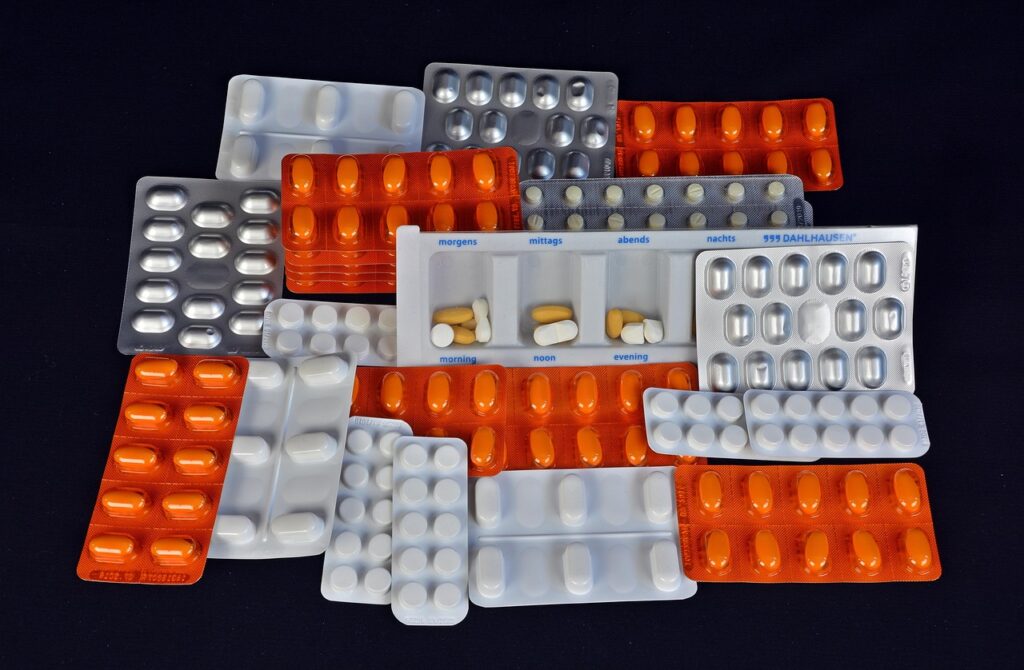
What custom blister packaging needs to achieve
Custom blister packaging is a formed pack engineered around the product shape, display requirement, opening method and protection risk. It is useful when a product needs visibility and controlled containment at the same time: shoppers can see the item, while the cavity, lidding or card limits movement, abrasion, contamination and casual tampering. The design decision should not start with cavity shape alone. It should start with the product’s sensitivity, retail channel, handling route, labeling space, regulatory category and end-of-life target. For light industrial products, that means a small hardware kit, electronic accessory, personal care device or healthcare item may need a very different blister structure. Good customization turns those constraints into a pack that is protective, manufacturable and easy to understand.
Most buyers approach this topic with practical questions: which blister style fits the product, what information a supplier needs, where compliance risks appear, and how material choices affect cost, protection and recyclability. The sections below organize those decisions in the order most packaging teams should make them.

Common blister formats and when they fit
Blister packaging is not one format. The term can describe anything from a simple retail card with a clear bubble to a regulated unit-dose medical pack. The right choice depends on product weight, theft risk, opening experience, display method, sealing equipment and the amount of information that must be printed on the pack.
| Format | Typical use | Design consideration |
|---|---|---|
| Face-seal blister | Light retail products attached to a coated card | Economical and visible, but the seal area and card coating must match the product weight and channel handling. |
| Full-card blister | Products that need more perimeter support or larger graphics | Useful for shelf communication, but card stiffness and heat-seal consistency become important. |
| Trapped blister | Products where a plastic cavity is held between paperboard layers | Can improve card appearance and reduce exposed plastic edges, but recyclability depends on separation and adhesives. |
| Clamshell | Bulkier retail items, kits or products with higher handling risk | Strong visibility and containment, but opening effort and customer frustration should be considered. |
| Slide blister or tray with sleeve | Multipacks, club-store packs or products needing repeated access | The sleeve, tray and locking feature must survive distribution and shelf handling. |
| Unit-dose or calendar blister | Healthcare, supplement or regulated dosage applications | Labeling, stability, child resistance and regulatory requirements may control the design more than appearance does. |
A common mistake is choosing a format because it looks familiar on a shelf. A better approach is to map the product journey: filling, sealing, packing, palletization, e-commerce or retail distribution, merchandising, consumer opening and disposal. If a format performs well in one stage but fails in another, it is not a finished specification.
Material selection affects barrier, forming and recycling decisions
Material choice is the core specification decision in custom blister packaging because it affects forming detail, clarity, seal strength, barrier performance, print compatibility and recycling options. Clear PET is widely used where shelf visibility and stiffness matter. PVC has a long history in pharmaceutical and retail blister applications because it forms and seals well, but some recycling programs or brand policies may restrict or discourage it. PP can be useful when chemical resistance or heat performance is important, although it may require different tooling and process settings. Foil, paperboard and coated lidding materials add their own sealing and opening behaviors.
Barrier requirements should be written in measurable terms instead of broad phrases such as strong protection. Moisture-sensitive products may require defined water vapor transmission performance. Products affected by oxygen, fragrance loss or corrosion may need an oxygen or gas barrier discussion. Light-sensitive products may need opaque cards, foil, colorants or secondary cartons. FDA drug guidance has long recognized that moisture, light and reactive gases can affect some drug products; the same principle applies more broadly to many non-drug products, even when the compliance burden is lower.
Forming details also matter. A cavity that is too tight can scratch a product, stress a solder joint, deform a soft item or make manual loading difficult. A cavity that is too loose can allow movement and abrasion. Draft angles, corner radii, flange width, ribbing, wall thickness, denesting performance and nesting pitch all affect both protection and manufacturing speed. The most useful supplier conversation is therefore not just what material do you use, but what material, thickness, forming method and tolerance range support this product and this channel.
Compliance and testing should be designed in, not patched on
Blister packaging often sits close to regulated categories, especially drugs, supplements, medical devices, cosmetics, chemicals and child-sensitive household goods. Even when a product is not highly regulated, buyers should treat compliance as an early design input because changes after tooling can be expensive.
For drug and healthcare applications, public FDA materials distinguish package types, unit-dose containers, labeling responsibilities and tamper-resistant packaging considerations. FDA guidance for certain over-the-counter human drug products recognizes blister or strip packs as one possible tamper-resistant approach when the product and container are sealed in a way that provides visible evidence of interference. That does not mean every blister is automatically compliant. The construction, labeling statement, seal and intended use must be evaluated for the specific product.
Child-resistant design is a separate issue. The U.S. Consumer Product Safety Commission administers requirements under the Poison Prevention Packaging Act for certain drugs and household substances. The regulatory concept is child-resistant, not childproof. Under 16 CFR 1700.15, child-resistant effectiveness thresholds include not less than 85 percent without a demonstration and not less than 80 percent after a demonstration for applicable special packaging tests. If the product falls into a regulated category, specialized testing and certification are not optional styling choices.
Medical device packaging can involve another layer. ISO 11607-1:2019, confirmed in 2024, specifies requirements and test methods for materials, sterile barrier systems and packaging systems intended to maintain sterility of terminally sterilized medical devices until the point of use. Distribution testing is also important. ASTM D4169-23 provides a uniform system for evaluating shipping units under conditions representative of actual distribution. These standards are not decorative references; they show why the blister, card, carton and shipping case should be treated as one packaging system.
Recyclability now depends on design details, not slogans
Sustainability claims around blister packs need care because many blisters combine formed plastic, foil, paperboard, coatings, labels and adhesives. A pack that looks simple to a consumer may still be difficult for a recycling system if components are small, laminated, dark-colored, contaminated or hard to separate. Packaging teams should avoid broad recyclable claims unless they can support them in the markets where the product will be sold.
Regulation is also changing. Regulation (EU) 2025/40 on packaging and packaging waste was published in the Official Journal of the European Union on January 22, 2025. As of October 8, 2026, its general application date of August 12, 2026 has passed, while many detailed obligations remain phased over later milestones, including design-for-recycling and recycling-at-scale requirements. For products placed on the EU market, this means blister design should be reviewed against material minimization, recyclability, labeling and producer responsibility expectations rather than treated as a purely visual decision.
In practical terms, better design starts with fewer incompatible layers, components that can be separated where separation is expected, compatible labels and adhesives, and clear material identification when appropriate. The Association of Plastic Recyclers has published PET thermoform design resources that emphasize how labels, inks, adhesives and material choices influence recyclability. However, healthcare and high-barrier packs may have safety or sterility requirements that override easier recycling. The honest design goal is not to make every blister look green; it is to document the trade-off between protection, compliance and recovery. See also: Food Packaging.
Specification mistakes that increase cost or risk
Many blister problems come from incomplete specifications rather than poor manufacturing. One frequent issue is designing around the product’s nominal dimensions without allowing for real production variation. Another is treating the printed card as only a graphic surface when it also provides stiffness, hanging strength, sealing performance and space for required warnings.
Opening experience is another overlooked area. A pack that resists theft may also frustrate legitimate customers. A pack that opens too easily may create tamper concerns. For e-commerce, the blister may not need the same hanging hole or retail billboard, but it may need better drop protection or a smaller shipping footprint. For retail, the opposite may be true: visibility, peg strength and planogram fit can drive the design.
Cost can also be misunderstood. The lowest unit price may require longer runs, less flexible tooling, simpler materials or higher damage risk. A more useful comparison includes tooling cost, minimum order quantity, packing labor, scrap rate, transport cube, returns and the cost of a redesign if the pack fails testing.
A practical specification checklist
Before requesting quotes, packaging teams should prepare a concise design brief. For more background on related packaging formats, the custom packaging archive can help compare blister packs with other structures.
- Product profile: dimensions, weight, sharp edges, fragile surfaces, moisture sensitivity, corrosion risk and production tolerance.
- Sales channel: retail peg, shelf tray, club store, e-commerce, hospital, pharmacy or industrial distribution.
- Pack format: face-seal, trapped blister, clamshell, tray, sleeve, unit-dose or another structure.
- Material target: plastic type, thickness range, paperboard grade, lidding structure, recycled content goal and restricted materials.
- Protection target: drop, vibration, compression, seal strength, barrier performance, tamper evidence or child resistance if applicable.
- Labeling and print: warnings, barcode, UDI if relevant, multilingual copy, recycling marks and enough area for legibility.
- Manufacturing route: manual loading or automation, heat sealing, radio-frequency sealing, ultrasonic sealing, adhesive or mechanical locking.
- Validation plan: prototype review, line trial, transport testing, aging or stability work, and documented acceptance criteria.
- End-of-life plan: separability, local recycling compatibility, material identification and claim substantiation.
The checklist should be shared before tooling begins. Once cavities, seal flanges and card layouts are fixed, every late change becomes harder to absorb without delaying launch or increasing waste.
Frequently asked questions
Is custom blister packaging only for pharmaceuticals?
No. Pharmaceuticals are a major use case, but blister packaging is also common for hardware, electronics accessories, toys, personal care products, medical devices, small tools and promotional kits. The difference is that regulated categories usually require more documentation, testing and labeling control.
What is the difference between a blister pack and a clamshell?
A blister pack usually uses a formed cavity sealed to a card, lidding or backing. A clamshell is typically a hinged or two-piece thermoformed plastic structure that encloses more of the product. Both can be customized, but they differ in opening experience, material use, sealing method and display style.
Can blister packaging be recyclable?
Sometimes, but recyclability depends on the exact material combination, size, color, labels, adhesives, local collection systems and whether the components can be separated. Mono-material or easily separable designs are generally easier to evaluate than mixed plastic, foil and paper laminates.
What information does a supplier need for a blister quote?
A useful quote request should include product drawings or samples, target quantity, sales channel, preferred materials, print needs, compliance requirements, testing expectations, packing method and launch schedule. Photos alone are rarely enough for an accurate functional design.
When should testing start?
Testing should start before production tooling is finalized. Early prototypes can reveal fit, loading, opening and display issues, while later validation can address seal strength, distribution performance, aging, stability or regulatory requirements depending on the product category.