How Can You Buy Pizza Packaging Box Wholesale Without Wasting Money?
Why Does Pizza Packaging Box Wholesale Need a Clear Spec?
Buying pizza packaging box wholesale can look easy in the first email, but the problems usually show up when the shipment arrives with soft corners, loose lids, or print colors that do not match the approved file. A clear spec helps avoid claims, repacking, and last-minute local buying. If you are building a buying checklist, the Buyer’s Guide section is a useful place to keep packaging choices tied to real order needs.
Size, Flute, and Board Grade Come First
Start with the inside size, not the outside size. A 12-inch pizza still needs space for the crust, liner paper, and a little movement during delivery. Ask the supplier for the flute type, board weight, and strength test method if they have one. B flute usually works better for stacking, while E flute gives a neater print surface and a thinner box profile. The better choice depends on pizza size, delivery distance, and how many boxes a rider puts in one bag.
Print Needs Before Price Talks
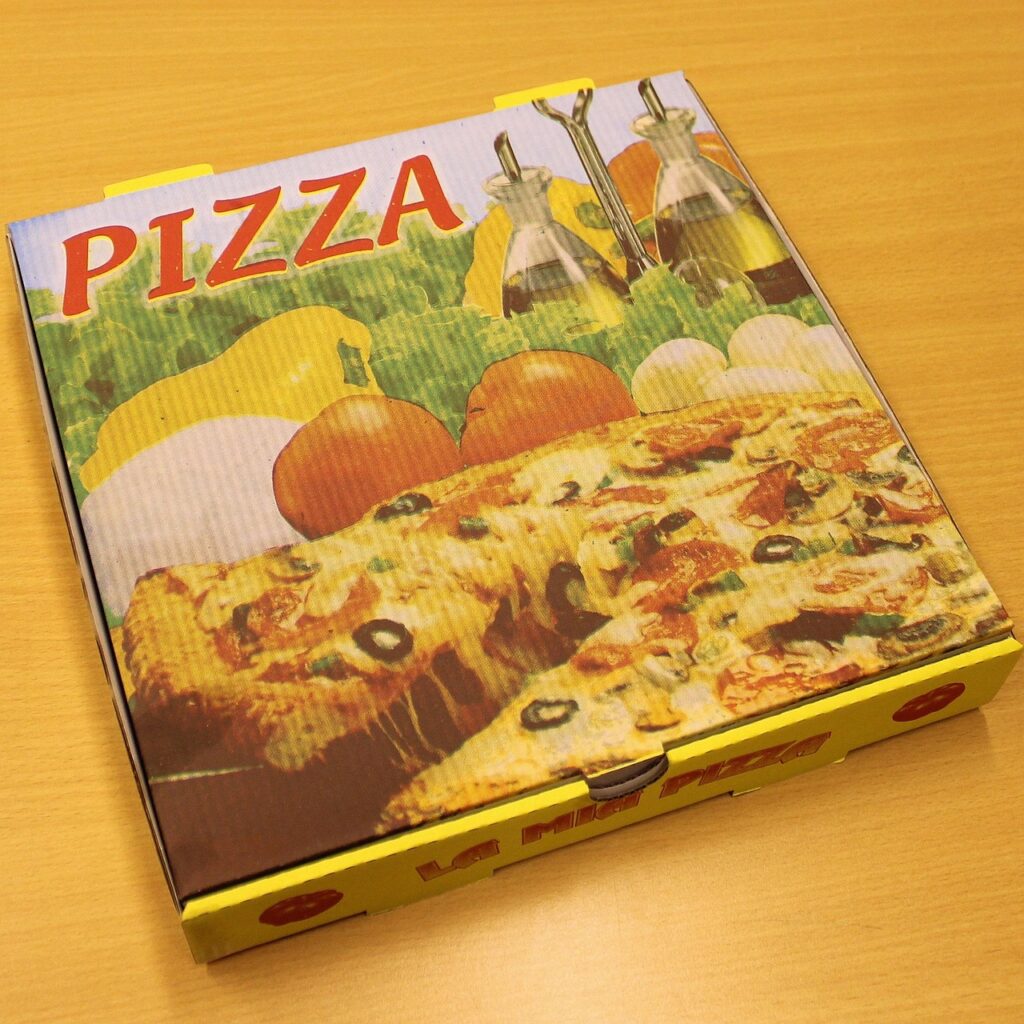
Price can change quickly once the artwork changes. One-color kraft printing, full CMYK printing, and large solid ink areas are not the same production job. Send the die line, Pantone colors, logo position, and any food safety text before asking for a final quote. If the box needs to look good in delivery photos, keep the logo large and easy to read. Small text on a hot pizza box is often missed, especially in evening delivery.
Carton Packing and Pallet Plans
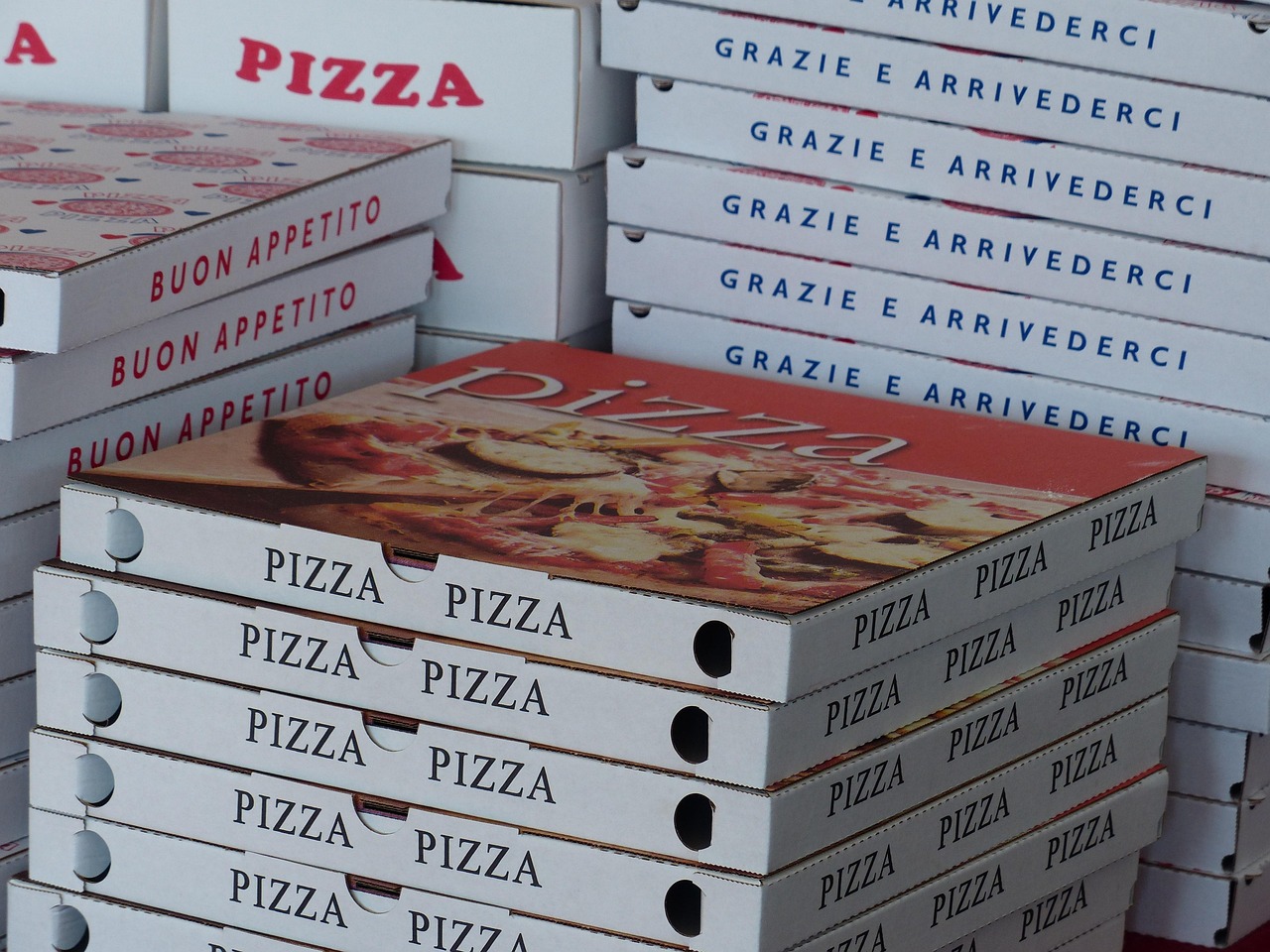
Wholesale boxes take up a lot of space, even when they are packed flat. The unit price may look acceptable, but sea freight can change the total cost. Ask how many flat boxes go into one export carton, plus the carton size, gross weight, and pallet plan. For mixed sizes, label each carton with item code, size, quantity, and purchase order number. This simple step helps warehouse staff avoid mistakes when 10-inch and 12-inch boxes look almost the same.
Which Materials Work Best for Pizza Packaging Box Wholesale?
Material choice affects heat, grease, delivery feel, printing, and recycling claims. Not every pizza shop needs the highest-grade board. What matters is that the box fits the food, the brand, and the trip from oven to customer.
Corrugated Paperboard for Heat and Rigidity
Corrugated paperboard is the usual choice because it gives the box enough structure without adding too much weight. The fluted layer helps the box resist bending during packing and delivery. For hot pizza, vents can reduce steam inside the box, but too many vents may weaken the lid and let heat leave too fast. A simple vent pattern near the top edge often works better than a design with too many cuts.
White, Kraft, and Coated Surfaces
Kraft board gives a natural foodservice look and hides small scuffs quite well. White board is better when bright artwork, chain branding, event packaging, or higher-priced menus need stronger color. Coated or grease-resistant surfaces can improve the eating experience, but they need extra checking if you plan to make recycling claims. Some coatings may change how local recovery programs handle the used box.
Food Contact Compliance for Greasy Foods
For U.S.-facing orders, ask for a food-contact declaration that covers paperboard, ink, glue, and any coating that may touch food. This is especially important for greasy foods, because broad oil-proof claims are not enough for a buyer file. FDA guidance says food packaging components used under 21 CFR parts 174 to 179 may need no further FDA review when used as listed, and paper and paperboard are covered under 21 CFR 176. FDA also announced in January 2025 that 35 PFAS-related food contact notifications for grease-proofers on paper and paperboard packaging were no longer effective, so do not accept vague oil-proof claims without paperwork. Source: FDA, 2025. (fda.gov)
How Can You Compare Wholesale Quotes Fairly?
A lower quote is not always a lower order cost. Pizza boxes include tooling, printing plates, freight volume, carton packing, and inspection work. Put each supplier on the same cost sheet before you choose one.
Total Landed Cost, Not Only Unit Price
Compare the full landed cost, including unit price, plate fee, die fee, sample fee, inner packing, export carton, local transport, ocean or air freight, duty, and warehouse handling. A supplier may give a lower unit price but pack fewer boxes in each carton, which increases cubic volume. If the shipment goes by sea, that extra space can take away the saving. It is not the most exciting part of buying, but cubic meters decide many packaging orders.
MOQ, Tooling, and Plate Fees
Minimum order quantity should match the sales plan, not only the supplier’s best machine setup. If a pizza shop changes its menu every season, a very high MOQ can leave old printed boxes sitting in storage. For custom sizes, ask whether the die fee is paid once or charged again after a design change. For custom printing, confirm whether plate fees apply per color, per size, or per artwork file.
Samples That Match Mass Production
A hand-made sample is useful for checking shape, but it may not show real folding speed, print color, or board strength. Ask whether the sample uses the same board grade and printing method planned for bulk production. Keep one approved sample and mark it with date, item code, and signature. During shipment review, compare the bulk goods with that sample instead of relying on memory.
What Sustainability Claims Can You Safely Make?
Pizza box buyers often want greener packaging, and customers usually welcome that message. Still, public claims should be careful. Say what the material is, what the user should do, and where local rules may differ.
Corrugated Recycling Strength in Public Data
Corrugated boxes have a strong recycling record in the United States. The U.S. EPA’s 2018 municipal solid waste data reported a 96.5% recycling rate for corrugated boxes, while AF&PA reported a 69% to 74% U.S. cardboard recycling rate for 2024. AF&PA also said nearly half of recovered paper in 2024 went into containerboard, the material used to make cardboard boxes. Source: U.S. EPA, 2018 data; AF&PA, 2024 data. (epa.gov)
Grease and Cheese Limits in Practice
Pizza box recycling is often more workable than many old stories suggest, but local acceptance still matters. A 2020 WestRock study found used pizza boxes in the recycling stream had about 1% to 2% grease by weight on average, and paper strength loss was low when pizza box concentration stayed under 10%. The Recycling Partnership also reported that about 73% of community recycling programs did not have clear pizza box acceptance guidelines, so recyclable where accepted is safer than a broad claim. Source: WestRock, 2020; The Recycling Partnership, 2020. (recyclethispizzabox.com)
Clear Disposal Text on the Box
Good disposal copy should be short and easy to act on. A practical line is: Remove leftover food. Flatten box. Recycle if accepted locally. If the bottom is soaked with oil, some users tear off the clean top and recycle that part. Put the message near the lid edge or inside flap, where customers see it after eating. Tiny recycling icons without words can create more confusion than help. See also: Food Packaging.
How Should Custom Printing Support a Pizza Brand?
A pizza box is more than a container. It sits on shop counters, in delivery bags, on office tables, and in customer photos. Custom printing should help people remember the brand without pushing the cost beyond the order budget.
Readable Logos at Delivery Distance
Use a logo size that can be read from a few steps away. Delivery customers do not study the box like a catalog page. They glance at it, open it, and eat. A clear logo, phone number, website, or short slogan usually works better than a crowded layout. If the brand uses dark kraft paper, test the ink color under warm indoor light, not only on a bright design screen.
Ink Coverage That Controls Cost
Heavy solid ink can raise print cost and may increase drying time or rubbing risk. Large black panels may look good in a mockup, then show scratches after cartons are stacked. If budget is tight, use line art, repeat patterns, or one strong brand color. A clean one-color design often looks better than a low-cost full-color design with dull photos.
Seasonal Designs for Repeat Orders
For buyers with steady volume, keep the box structure the same and change only a small print panel for holidays, sports nights, or new menu launches. This avoids new die costs and keeps warehouse handling simple. If you add a QR code, leave enough quiet space around it. Test the QR code on the printed sample, not only in the artwork file.
What Quality Checks Should You Use Before Shipment?
Quality checks do not need to be complex, but they should happen before the balance payment. A pizza box can pass a quick look and still fail during delivery. Whenever possible, test it with real food conditions.
Fit Tests With Real Pizzas
Place the actual pizza size inside the sample box. Check whether the lid touches the cheese, whether the crust has enough space, and whether the corners lock without force. Open and close the box several times. If staff must fight the lock during a lunch rush, the design needs adjustment.
Grease, Steam, and Stacking Checks
Put a hot pizza in the box for 20 to 30 minutes, then check the bottom, lid, and side walls. Stack several filled boxes the same way they will sit in a delivery bag. Public sources do not give one reliable universal compression number for every pizza box because size, flute, board grade, humidity, and coating all change performance. For large orders, ask the factory for relevant test reports and run your own sample test as well.
Pre-Shipment Photos and Simple AQL Notes
Before shipment, request photos or video of printing, folding, carton labels, and random carton opening. Give the inspector a simple checklist covering size tolerance, print position, color match, folding line, glue strength, carton count, and visible defects. If you use AQL inspection, define major and minor defects in plain words. Bad printing is vague, but logo shifted more than 3 mm is much easier to judge.
FAQ
Q1: What Is a Good MOQ for Custom Pizza Boxes? A: It depends on size, print method, and board grade. A lower MOQ is safer for new menus, while a higher MOQ can reduce unit cost for stable repeat orders. Ask the supplier to quote two or three quantity levels.
Q2: Are Greasy Pizza Boxes Recyclable? A: Many corrugated pizza boxes can be recycled when food scraps are removed, but local rules differ. Use careful wording such as recycle if accepted locally, especially for export markets.
Q3: Should You Choose Kraft or White Pizza Boxes? A: Choose kraft for a natural, casual look and better scuff hiding. Choose white when bright artwork, brand color, or menu photos matter more. Always test print color before bulk production.
Q4: What Details Must Be on a Purchase Order? A: Include inside size, board grade, flute, color, artwork version, packing method, carton quantity, sample approval date, delivery terms, inspection rules, and shipment marks.
Q5: How Long Does a Custom Wholesale Order Take? A: There is no reliable public average because tooling, artwork approval, order size, factory load, and shipping route all change timing. Ask for a written schedule covering sampling, production, inspection, and loading.