Which Food Packaging Containers Are Best for Safer Export Orders?
Why Do Food Packaging Containers Matter for Export Buyers?
When you compare food packaging containers for export, the lowest price on the sheet is usually not the safest choice. The container touches the food, protects it in transit, shows up in product photos, and may affect how the buyer sees the brand. For more related options, you can review the Food Packaging category and match the container type to the food, route, and market rules before you place a larger order.
Food Safety Comes First
Food contact is the first point to check. The U.S. Food and Drug Administration says food contact substances that qualify as food additives must be authorized for their intended use before sale in the United States. FDA review looks at migration into food and toxicology data. A nice-looking bowl is not enough for export work. You need material data, intended-use conditions, and proof that the container suits hot, cold, oily, acidic, or frozen food as required.
Shelf Life Cuts Real Waste
Packaging also protects the food value after production. The FAO reported in The State of Food and Agriculture 2019 that around 14 percent of the world’s food is lost after harvest and before retail. UNEP’s Food Waste Index Report 2024 estimated 1.05 billion tonnes of food waste in 2022 at retail, food service, and household levels. A container cannot fix the whole waste problem, but it can help in daily handling. A tight lid, a breathable produce punnet, or a better grease barrier can reduce leaks, bruising, and spoilage during normal transport and display.
Packaging Waste Affects Buyer Choice
Many buyers now ask what happens to the container after use. The U.S. Environmental Protection Agency reported that containers and packaging made up 82.2 million tons of municipal solid waste in 2018, equal to 28.1 percent of total generation. This number covers more than food packs, but it explains the pressure from retail chains and food service groups. They keep asking for lighter packs, recyclable structures, and material claims that can be supported by facts.
Which Materials Fit Common Food Packaging Containers?
Material choice should start with the food, not with a catalog photo. A sushi tray, soup bowl, salad box, sauce cup, and frozen meal tray all face different temperature, oil, moisture, and stacking pressure. The right option may be paper, molded fiber, PP, PET, PE, aluminum, glass, or a combined structure.
Paperboard and Molded Fiber for Dry or Greasy Foods
Paperboard boxes work well for bakery items, dry snacks, fries, and many quick-service meals. Molded fiber is often used for bowls, clamshells, and trays because it gives a plain, natural look on the table. The harder part is grease and moisture control. For oily noodles or sauced meat, buyers should ask which coating or treatment provides the barrier. Since FDA announced in February 2024 that PFAS grease-proofing substances for paper food packaging were no longer sold for use in the U.S. market, PFAS-free declarations are more useful than a simple “eco” label.
PP, PET, and PE for Clear or Heat Ready Packs
PET gives clear visibility for salads, fruit, deli packs, and cold desserts. PP is widely used for microwaveable bowls, hot-fill cups, and takeout lids because it can handle heat better than many clear plastics. PE is often used in films, seals, and coating layers. The OECD Global Plastics Outlook reported 353 million tonnes of plastic waste generated globally in 2019, with packaging among the short-life uses that quickly enter waste streams. When plastic is the practical choice, a simple mono-material design may help local recycling systems more than a mixed multi-layer pack.
Aluminum and Glass for Strong Barrier Needs
Aluminum trays fit baked meals, airline catering, ready-to-heat dishes, and foods that need a strong oxygen and light barrier. Glass jars are common for sauces, preserves, condiments, and premium products where extra weight is acceptable. Both materials feel dependable, but both add freight weight and bring dent or breakage risk. For export orders, check pallet load, carton compression, and drop-test results. A container that looks good in the sample room is not useful if it arrives crushed after ocean transit and warehouse handling.
How Should You Match Containers to Food, Heat, and Transport?
A container has to survive the actual route, not only a quick check on the desk. That route may include filling, sealing, cooling, freezing, truck vibration, warehouse stacking, retail display, delivery bags, and consumer reheating. Small points like lid fit, rim shape, and corner radius often decide whether the pack feels reliable.
Hot Food Needs Heat and Leak Control
For soup, curry, noodles, and rice dishes, test the container at the expected filling temperature and the real holding time. A lid that feels tight at room temperature may loosen when steam builds pressure inside. Vent holes help some meals, but they can cause problems for others. For oily food, ask for migration data under oily or fatty food conditions, not only water-based tests. One low-cost lid failure can lead to a refund, a poor review, and a leaking delivery bag.
Fresh Produce Needs Airflow and Moisture Balance
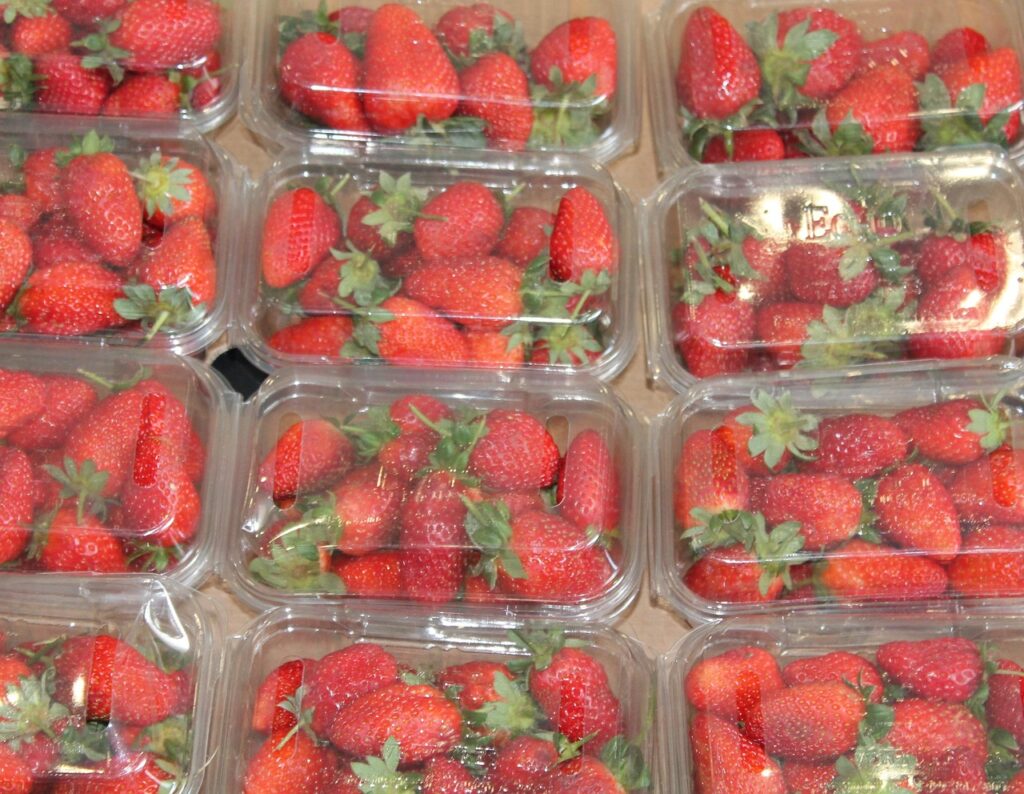
Fresh berries, leafy greens, mushrooms, and cut fruit need a different pack setup. Too much airflow dries the food, while too little airflow causes condensation and mold. Produce containers often use vents, absorbent pads, or anti-fog lids. FAO has noted that packaging can play a role in reducing food loss and waste by keeping food fresh and safe. The balance has to match the product. A punnet that works for grapes may not work for strawberries because pressure points and moisture levels are different.
Frozen Meals Need Seal Strength and Stack Safety
Frozen trays have to deal with low-temperature brittleness, ice crystals, and heavy stacking. PP, CPET, aluminum, and coated paperboard may all be used in frozen food, depending on the heating method and shelf life target. Ask for freezer performance, seal peel strength, and carton stacking tests. Also check whether the container can go from freezer to microwave or oven. If it cannot, the label and buyer instructions need to say that clearly.
What Compliance Details Should You Check Before Ordering?
Compliance is not just a certificate placed at the back of a sales file. It is a set of documents that connects the material, colorant, coating, adhesive, printing ink, production process, and intended food use. Export buyers usually want these files before deposit or before shipment, so it is better to prepare them early.
Food Contact Declarations and Test Reports
Ask for a food contact declaration that states material, intended use, temperature range, food type, and applicable rules. Test reports should match the finished container where possible, not only raw resin or blank paper. For U.S. sales, FDA’s food contact framework is the main reference. For European sales, Regulation EC No 1935/2004 requires food contact materials to be made so they do not transfer constituents to food in amounts that could endanger health or change food quality, taste, smell, or appearance.
Market Rules for the United States and Europe
The United States and Europe follow the same basic point: food contact must be safe. The way to prove it is not always the same. U.S. buyers often ask for FDA compliance statements, food contact notifications where relevant, and migration support. European buyers may ask for EU 10/2011 plastic migration data, declarations of compliance, and good manufacturing practice records. If the order will enter several countries, do not assume one document will cover every market.
Label, Traceability, and Recycled Content Claims
Claims need to be checked before printing. “Recyclable,” “compostable,” “microwave safe,” and “made with recycled content” should match test evidence and local collection systems. FDA also runs a voluntary review program for recycled polymeric food contact materials and issues favorable opinion letters when the recycling process is found suitable for food contact use. For recycled content in direct food contact, buyers should ask for recycling process details. A green icon on the carton is not enough. See also: Eco Packaging.
How Can Sustainable Containers Still Stay Practical?
Sustainable packaging is not one fixed material. It is a better match between food safety, material use, disposal route, and buyer behavior. A heavier “green” pack may increase freight cost and emissions. A compostable pack may also fail in practice if the buyer’s city has no composting route. Keep the discussion close to the food, waste system, and real customer use.
Less Material Without Weak Walls
Lightweighting can cut cost and waste, but it has limits. Thin walls may warp, crack, or leak during filling, stacking, or delivery. A useful trial compares the same meal in two gauges, then checks lid fit, stack height, sidewall strength, and the way the customer opens it. EPA data shows the overall recycling rate for generated containers and packaging was 53.9 percent in 2018, while corrugated boxes reached 96.5 percent. This gap shows why the material type and local collection system matter.
Recyclable Structures That Match Local Systems
Simple structures are often easier to recycle. A clear PET clamshell, a PP bowl with a PP lid, or a paper box without mixed plastic windows can be easier for sorting systems than multi-material packs. Still, “recyclable” depends on the destination city and its collection rules. A buyer serving California, Germany, and the Gulf market may need different instructions and different waste claims.
Compostable Options With Clear Use Cases
Compostable containers can work for events, closed campuses, catering programs, and cities with commercial composting. They are less suitable when they are likely to enter normal recycling bins or landfill. Ask for the composting standard, ink safety, heat resistance, and food contact proof. Also ask what happens when the container holds hot soup for thirty minutes. Beige fiber may look clean, but soggy corners will still cause complaints.
How Can You Buy Food Packaging Containers With Fewer Problems?
A smoother order usually comes from simple checks before mass production. Food packaging containers look easy until sizes drift, lids do not match, cartons collapse, or the buyer asks for missing paperwork two days before loading. A short approval plan can save a lot of time.
Samples Tested Like Real Orders
Do not test empty samples only. Fill the container with the real food or a close substitute. Heat it, cool it, shake it, stack it, freeze it, and open it the way the customer would. For takeout packs, put them in a delivery bag for thirty minutes. For export cartons, check the inner bag, carton strength, and pallet pattern.
Dimensions and Tolerances With Written Limits
Write down rim size, height, volume, weight, lid fit, color range, carton quantity, and acceptable tolerance. A 750 ml bowl that actually holds 700 ml below the safe fill line can create trouble for meal-prep brands. For lids, a very small rim difference may cause leaks. Good suppliers are usually willing to put these details in the specification sheet.
Supplier Communication That Prevents Surprises
Share the food type, filling temperature, storage time, market, and packing method before asking for the final price. If printing is needed, confirm ink location and food contact separation. If the buyer needs retail barcodes or carton marks, settle the artwork early. A good container order should be uneventful: it arrives, fits, seals, and passes the buyer’s checks.
FAQ
Q1: What are the safest food packaging containers for hot food? A: PP bowls, certain paperboard containers with approved linings, aluminum trays, and other tested heat-safe packs can work. The safe choice depends on food type, filling temperature, contact time, and market rules.
Q2: Are paper food containers always better than plastic ones? A: No. Paper can be a good choice for dry or lightly greasy food, but wet, oily, frozen, or long-shelf-life products may need plastic, aluminum, glass, or a coated structure.
Q3: What documents should an export buyer ask for? A: Ask for food contact declarations, migration test reports, material specifications, recycled content support if claimed, carton details, and traceability records for the production lot.
Q4: Can compostable food packaging containers hold hot soup? A: Some can, but not all. Check heat resistance, leak testing, lid fit, and the composting standard before using compostable containers for hot liquid food.
Q5: How can you reduce leakage in takeout containers? A: Match the lid and base carefully, test with hot food, avoid overfilling, use the right vent design, and confirm rim tolerances in writing before mass production.