Clear food packaging in 2026 and what buyers should check before specifying it
What clear food packaging needs to do in 2026
Clear food packaging remains popular because it lets shoppers check freshness, portion size, color and product condition before purchase. In 2026, however, a transparent pack is judged on more than shelf appeal. Buyers need to confirm that the material is suitable for the intended food contact, that any recycled content is documented for the application, that labels and lids do not undermine recycling, and that sustainability claims can be supported. The practical choice is rarely clear versus opaque. It is a balance between visibility, barrier performance, temperature use, tamper evidence, transport protection, waste reduction and end-of-life options. For more context on packaging developments, see the site’s food packaging section.
Why brands still use clear packs
Clear packaging solves a basic retail problem: customers often want to inspect food before they buy it. This is especially true for salads, fruit, bakery items, deli products, sushi, fresh pasta, desserts and ready meals. Transparency reduces uncertainty because the pack becomes part of the product presentation. A well-designed clear lid or tray can show color, ingredient separation, fill level and possible damage without requiring the shopper to open the pack.

For operators, visibility also supports inventory checks, quick product identification and merchandising. A bakery clamshell lets staff see whether pastries have shifted during handling. A clear produce punnet helps buyers assess condensation, bruising and ripeness. A clear ready-meal lid supports fast recognition in chilled cabinets. These practical benefits explain why clear PET, clear PP and transparent films remain widely used, even as regulators and recyclers place more pressure on packaging design.
The limitation is that transparency alone does not make a package responsible or compliant. A pack may look premium but perform poorly in recycling if it uses dark pigments, difficult labels, incompatible lidding films or adhesives that contaminate recovered resin. Another pack may use recycled content but lack documentation for food-contact use. Clear appearance is only the visible part of a much broader specification.
Main materials used for clear food packaging
The first design decision is material selection. The right choice depends on product moisture, fat content, acidity, temperature, shelf life, sealing method, transport conditions and local recovery systems. The table below summarizes common clear materials and the questions buyers should ask before approval.
| Material | Common clear food packaging uses | Key checks before specification |
|---|---|---|
| PET and APET | Clamshells, deli trays, salad boxes, bakery packs, produce containers and cold drink cups | Food-contact authorization, recycled-content documentation, label coverage, adhesive compatibility, color, thermoform acceptance in local recycling streams |
| rPET | Clear trays, lids and containers where post-consumer recycled PET is allowed and verified | Source control, recycling process suitability, migration assessment, supply consistency and claim substantiation |
| PP | Microwaveable containers, hot-fill or reheatable packs, clear lids and tubs | Temperature range, sealing system, clarity requirements, local recycling access and whether the pack is actually labeled for microwave use |
| PE films | Produce bags, overwrap, pouches and flexible lidding in some applications | Film structure, store drop-off or local collection rules, print coverage, barrier needs and contamination from food residue |
| PLA and other bio-based clear plastics | Cold cups, lids, produce containers and some prepared-food packs | Heat resistance, industrial composting access, contamination risk in PET recycling, and evidence for compostable or bio-based claims |
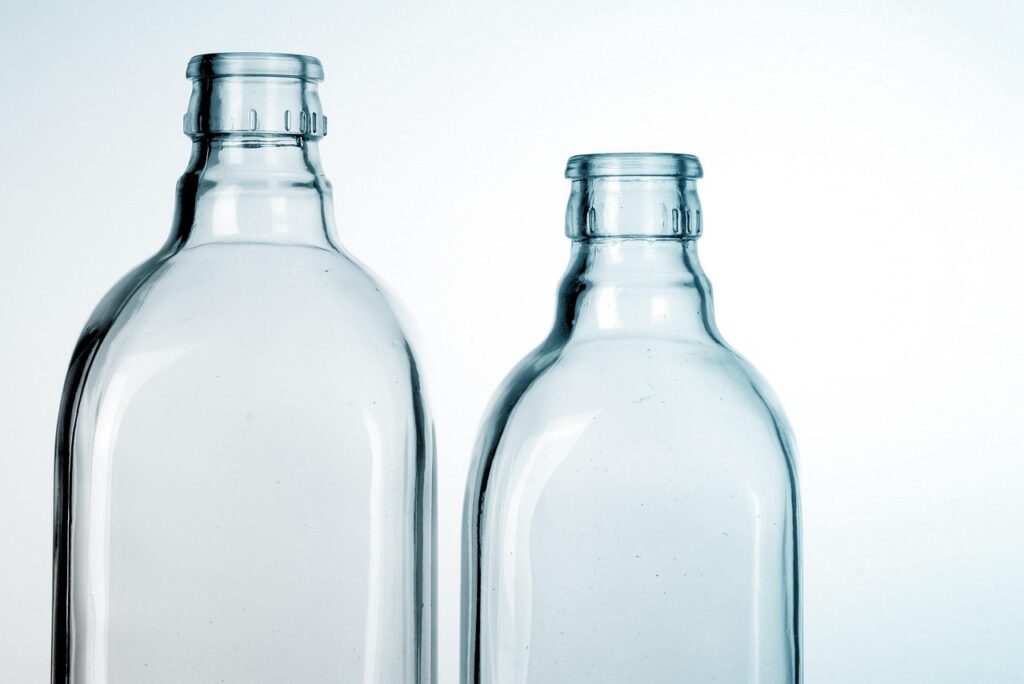
| Glass | Jars and bottles for sauces, beverages, preserves and premium chilled foods | Weight, breakage risk, transport emissions, closure material, reuse potential and local glass recovery systems |
PET is often selected for clear rigid packaging because it combines clarity, stiffness and established recycling demand in many markets. PP is often selected where heat tolerance or microwave use is more important, although it is usually less glass-like than PET. PLA can provide a clear look for cold foodservice items, but it should not be treated as a drop-in recycling solution. Glass offers excellent clarity and consumer familiarity, but its weight and breakage risk matter in transport and e-commerce.
Food-contact safety comes before appearance
Food packaging is not only a container. It is a food-contact article, so material chemistry and conditions of use matter. In the United States, the Food and Drug Administration evaluates food contact substances and provides specific guidance for recycled plastics used in food packaging. The FDA identifies three main safety concerns for post-consumer recycled plastic: possible contaminants in the recycled material, the chance that non-food-grade material could enter the stream, and the possibility that additives may not comply with food-contact requirements.
This means a recycled-content claim is not enough. Buyers should request documentation showing that the recycled plastic process is suitable for the intended food-contact application. The FDA’s recycled plastics guidance discusses source controls, cleaning efficiency, surrogate contaminant testing where appropriate, migration testing or modeling, and the proposed conditions of use, including temperature, food type, contact time and single-use or repeated-use status. For a buyer, these details are not paperwork for later; they define whether the pack can be used for the product at all.
Temperature is another common source of confusion. A clear container that works for cold salad may not be suitable for hot soup, oven heating or microwave reheating. The U.S. Department of Agriculture’s food safety guidance for meat and poultry packaging tells consumers to microwave food in packaging only when the package directions allow it. The same principle applies in procurement: if a pack is intended for microwave use, the supplier should state that clearly and provide the relevant test basis.
Recyclability depends on the whole pack
Clear plastic is often easier for recycling systems to value than dark or heavily colored packaging, but recyclability is not determined by base resin alone. The Association of Plastic Recyclers’ PET thermoform design resources, updated in November 2024, state that clear, unpigmented, light blue or light green PET is preferred for PET packaging, while other colored PET thermoforms have limited markets. The same guidance points to practical details that can reduce recovered PET quality, including label coverage, paper labels, adhesives that do not wash away cleanly, inks that discolor flake, metalized components and multi-material structures.
For PET thermoforms such as trays and clamshells, recycling is more complex than for bottles. Many recovery systems were designed around bottle streams, so thermoforms may be accepted inconsistently. APR notes that design alone does not justify a recyclability claim in places where the format is not accepted for recycling. For buyers, the warning is simple: a resin code on the bottom of a pack does not prove that a local collection system will capture, sort and recycle it at scale.
Recent data also shows both progress and limits. NAPCOR’s 2024 PET Recycling Report infographic reported a U.S. PET bottle collection rate of 30.2 percent in 2024, down from 32.5 percent in 2023 but still above the 2014 to 2023 ten-year average of 29.5 percent. It also reported average recycled PET content in U.S. PET bottles at 15.9 percent in 2024. In the European Union, Eurostat reported that 35.3 kg of plastic packaging waste was generated per person in 2023 and that 42.1 percent of generated plastic packaging waste was recycled. These figures show why clear PET is attractive, but also why claims must be specific to format, geography and recovery route.
Regulation is pushing packaging toward documentation
Clear food packaging is affected by wider packaging regulation, not only by rules written specifically for transparent packs. In the European Union, Regulation (EU) 2025/40 on packaging and packaging waste entered into force on February 11, 2025, and generally applies from August 12, 2026. It replaces much of the earlier directive-based system with a directly applicable regulation and introduces phased requirements on recyclability, recycled content, packaging minimization, labeling and restrictions on certain substances.
For food-contact packaging, one important change is the EU rule restricting PFAS above specified limits in food-contact packaging from August 12, 2026, unless another EU legal act already prohibits the same use. In the United States, the FDA announced on February 28, 2024, that grease-proofing substances containing PFAS were no longer being sold by manufacturers for food-contact use in paper and paperboard packaging. Although PFAS restrictions are most often associated with grease-resistant paper, the broader lesson applies across packaging: buyers need current chemical compliance statements, not vague assurances. See also: Eco Packaging.
Documentation is also becoming more important for environmental claims. Recycled content, recyclability, compostability and bio-based content can be useful information when true, but they require evidence. A clear rPET tray may be a strong option if the recycled resin is suitable for food contact and the design supports sorting. A compostable clear cup may be appropriate in a closed venue with industrial composting access, but it may be a poor choice if it is likely to enter a PET stream. A lightweight clear film may reduce material use, but it can be difficult to recycle if it is a multi-layer structure with food residue.
Design details that improve clear packaging performance
A clear pack should be designed as a system. The tray or tub, lid, label, ink, adhesive, absorbent pad, tamper band and any sleeve all affect safety, presentation and end-of-life performance. Small design decisions can create large downstream consequences.
- Use clarity where it adds value. Full transparency is useful when the food itself sells the product. For light-sensitive foods, partial windows or tinted protection may be more appropriate.
- Avoid unnecessary color. Clear or lightly tinted PET is generally more compatible with high-value recycling than opaque, dark or strongly colored PET.
- Keep labels functional but limited. Large labels may block optical sorting or reduce the value of recovered material. Buyers should ask for label coverage data when recycling claims matter.
- Specify washable adhesives where relevant. Adhesives that remain on PET or redeposit during washing can lower rPET quality.
- Check lid and tray compatibility. A clear PET tray with an incompatible lidding film may be harder to recycle than a simpler mono-material structure.
- Match the pack to temperature use. Cold display, hot fill, chilled distribution, freezing and reheating require different performance assumptions.
- Plan for food residue. Oils, sauces, dairy, meat juices and absorbent pads can affect collection and recycling outcomes.
- Design for handling, not only display. Clear packaging must still resist cracking, lid pop-off, stacking pressure and leakage through the full distribution route.
These details are especially important for fresh and prepared foods, where strict food-contact requirements meet short selling windows and high visual expectations. A pack that fails during transport can waste both food and packaging, undermining any material-saving benefit.
Buyer checklist for clear food packaging
Before approving a clear food pack, procurement and packaging teams should ask for a concise technical file rather than relying on catalog language. The checklist below is a practical starting point.
- What resin and grade are used in each component?
- Is the material authorized or otherwise suitable for the intended food-contact use?
- What are the intended conditions of use, including food type, temperature and contact time?
- If recycled content is used, what is the source and what process documentation supports food-contact use?
- What percentage of recycled content is claimed, and how is it calculated?
- Is the pack designed for cold, frozen, hot-fill, microwave or ambient use?
- Can the supplier provide migration, compliance or declaration documents for the target market?
- How are labels, inks and adhesives assessed for recycling compatibility?
- Does the local or target-market recovery system accept this packaging format?
- Are there PFAS, bisphenol, heavy metal or other chemical restrictions relevant to the market?
- Are recycling, compostability or recycled-content claims specific and evidence-based?
- Is there a change-control process if the supplier changes resin, label, adhesive or manufacturing site?
The strongest specification is one that names the product conditions and market assumptions. For example, a clear rPET salad bowl for chilled use in one country may require different documentation from a PP microwave meal tray, even if both look transparent on shelf.
Frequently asked questions
Is clear food packaging always recyclable?
No. Clear material can improve recycling value, especially for PET, but recyclability depends on the whole package and the local collection system. Labels, adhesives, lidding films, colors, size, food residue and local sorting infrastructure all influence whether a pack is actually recycled.
Is rPET safe for food packaging?
rPET can be used in food packaging when the recycled plastic process and material are suitable for the intended food-contact conditions. Buyers should not treat recycled content as automatically food grade. They should request process documentation, food-contact statements and conditions-of-use information from the supplier.
Are compostable clear packs better than PET or PP?
Not automatically. Compostable clear materials may be useful where industrial composting is available and contamination is controlled. In markets without suitable composting infrastructure, they may not deliver the intended benefit and can create problems if they enter conventional plastic recycling streams.
Can clear food packaging be microwaved?
Only if the packaging is specifically designed and labeled for microwave use. Clear PP is often used for reheatable applications, while many clear PET packs are designed for cold display. The supplier should provide temperature and use instructions for the exact packaging structure.
What is the main trend for clear food packaging?
The main trend is a shift from appearance-led selection to verified performance. Visibility still matters, but buyers increasingly need proof of food-contact suitability, recycled-content claims, chemical compliance, recycling compatibility and accurate consumer labeling.