How to choose shipping crates for industrial freight
The core job of a shipping crate
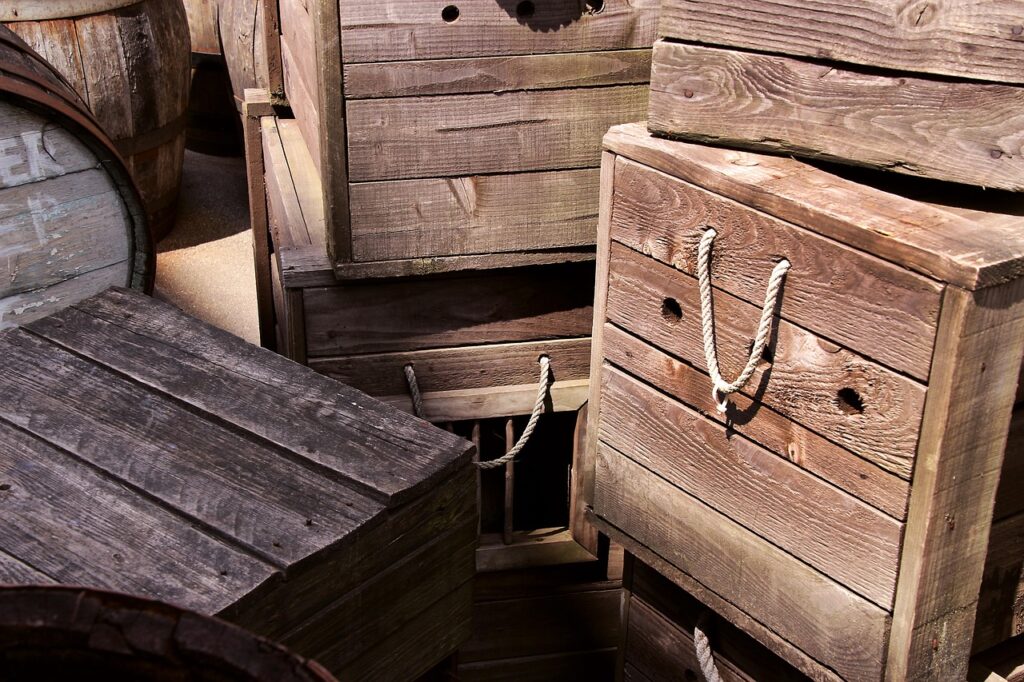
Shipping crates are rigid transport containers used for goods that are too heavy, fragile, irregular, or high-value for ordinary cartons. A crate is not just a stronger box. For industrial freight, it is a package system that combines structure, load support, blocking, bracing, moisture control, labeling, and compliance.
Selection should start with the product, route, handling method, and destination country, then move to material and construction. A crate that is adequate for domestic truck freight may need different treatment, marking, base strength, or moisture protection for export, ocean shipping, or repeated forklift handling. For related logistics topics, visit the shipping section.
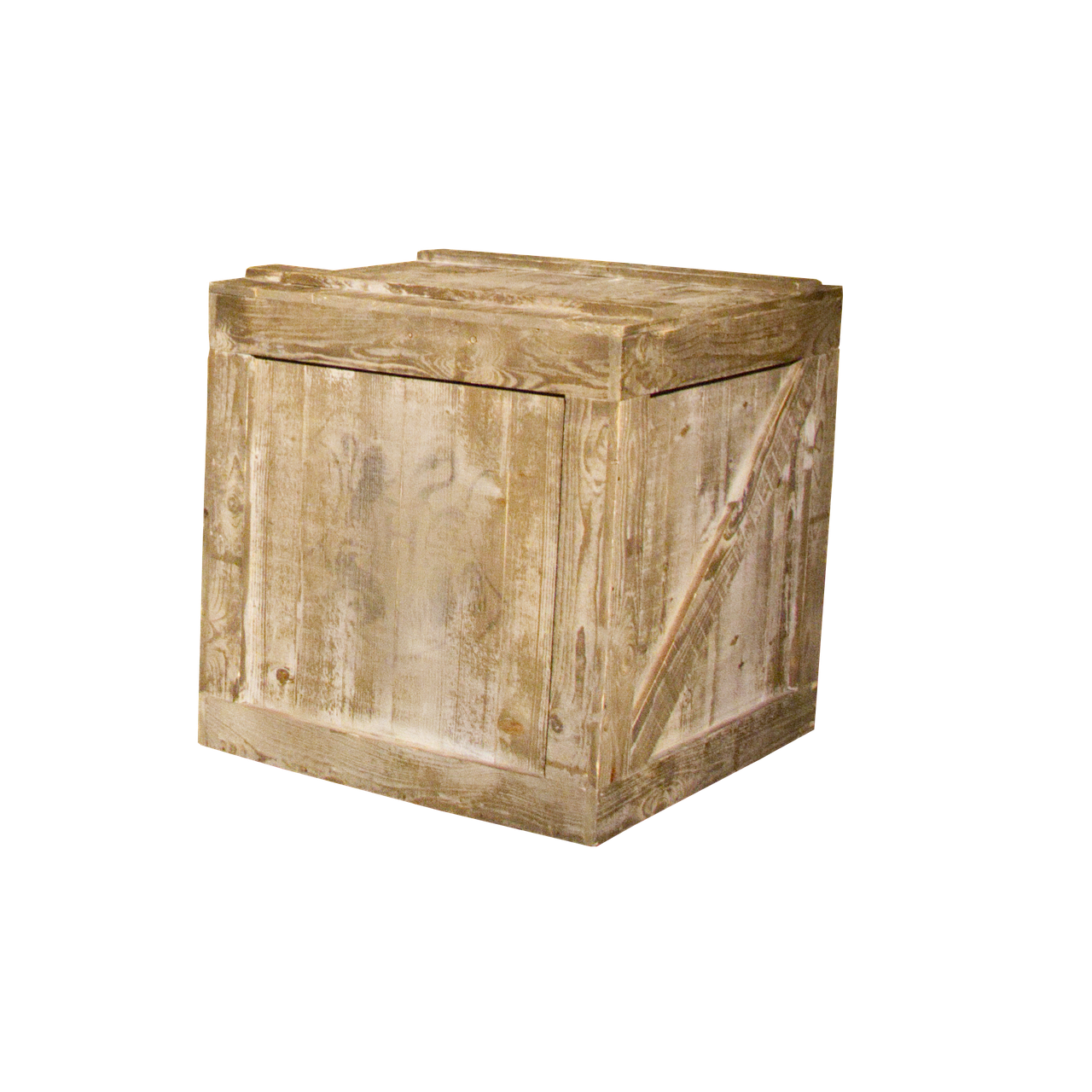
In practice, a well-designed crate does three things at the same time: it keeps the product from moving inside the package, gives handlers a safe way to lift and stack the load, and provides enough environmental protection for the expected journey. If one of these functions is overlooked, the result can be hidden damage, customs delay, warehouse rework, or unnecessary freight cost.
Crates, boxes, and pallets are not the same
The terms crate, box, pallet, skid, and case are often used loosely, but the differences matter when packaging is specified. A pallet is mainly a handling platform. It supports a unit load and allows forklift or pallet jack access, but it does not enclose the product. A box usually has continuous sides and is used for containment. A shipping crate may be open or closed, and it is usually built for heavier or more demanding freight than a standard box.
An open crate uses a framework of lumber or other structural members to hold and protect the product while leaving part of the load visible. This can reduce weight and make inspection easier, but it provides less protection against weather, dust, and surface contact. A closed crate uses sheathing, panels, or boards to enclose the cargo more completely. Closed crates are common for machinery, instruments, exhibition goods, replacement parts, and export cargo that needs a higher level of protection.
A skid-based crate adds a load-bearing base. This is important for heavy industrial products because the base carries vertical loads, distributes weight, and gives forklifts defined entry points. For lighter goods, a wood-cleated panelboard box may be enough. For heavier or awkward cargo, a fully engineered crate with skids, blocking, and internal bracing is usually the safer specification.
Common shipping crate materials and where they fit
Material choice affects strength, cost, compliance, weight, sustainability, and handling. There is no universal best material because the right choice depends on the shipment profile.
| Crate material | Typical use | Advantages | Important limits |
|---|---|---|---|
| Solid wood | Machinery, industrial parts, export cargo, irregular loads | Strong, repairable, widely available, suitable for custom builds | May require ISPM 15 treatment and marking for international movement |
| Plywood or engineered wood panels | Closed crates, panel crates, equipment packaging | Good enclosure, stable panels, often lighter than heavy board construction | Edges, fasteners, and base design still need engineering for heavy loads |
| Corrugated or honeycomb board | Lighter industrial goods, parts, domestic distribution | Lower weight, recyclable in many systems, efficient for repeatable sizes | Less suitable for very heavy, sharp, or moisture-sensitive loads without reinforcement |
| Plastic | Reusable logistics loops, clean environments, molded containers | Reusable, moisture resistant, consistent dimensions | Higher upfront cost and less economical for one-way custom freight |
| Metal | Returnable racks, defense, aerospace, high-value durable equipment | High durability and repeat-use potential | Heavy, costly, and usually justified only when reuse or special protection is required |
For one-way industrial freight, solid wood and plywood remain common because they can be cut, braced, and repaired around unusual products. For closed-loop shipping between factories or service centers, plastic and metal may be more attractive because the cost can be spread across many trips.
Export shipments need an ISPM 15 check
For international shipments, wood packaging compliance is often the first point to confirm. ISPM 15 is the international phytosanitary standard for wood packaging material moving in trade. It covers wood packaging such as crates, boxes, packing cases, dunnage, pallets, cable drums, and reels when they are made from raw wood that can carry pests. The standard is intended to reduce the risk of spreading quarantine pests through international freight.
This check is especially important for solid wood crates. Under ISPM 15, regulated wood packaging must use debarked wood and an approved treatment, then carry the official mark. Common treatment markings include HT for heat treatment and MB for methyl bromide fumigation. USDA APHIS guidance for U.S. wood packaging explains that heat-treated material must reach a minimum wood core temperature of 56 degrees Celsius for at least 30 minutes. APHIS also states that wood packaging entering or transiting the United States must be pest-free, treated or fumigated, and marked with the ISPM 15 logo when the rule applies.
Not every wood-based package is regulated in the same way. ISPM 15 exempts wood packaging made entirely from thin wood of 6 millimeters or less, and packaging made wholly from processed wood material such as plywood or particle board when the processing makes it free from pests. Even so, exporters should verify destination-country requirements before shipping because documentation practices and inspection expectations can vary.
Repair is another practical issue. APHIS guidance says that once properly treated and officially marked, ISPM 15 treatment is intended not to expire. However, repaired or remanufactured wood packaging may need to be retreated and remarked, and old marks may need to be removed or obliterated. For this reason, reused crates should be inspected carefully before export.
Design factors that determine whether a crate works
Crate design should begin with a product profile, not a stock size. Key inputs include length, width, height, gross weight, center of gravity, product contact points, and whether the item can bear load on its own frame. A pump, control cabinet, glass assembly, and cast-metal component may have similar dimensions but very different support needs.
Load path and base strength
The load path is the route by which product weight travels through the crate into the forklift, floor, truck deck, or container floor. Heavy cargo should not rely on thin side panels or weak fastener joints to carry weight. Skids, cross members, and blocking should support the product at structural points. Fork entry should be wide and clear enough for the expected handling equipment, and the crate should not become unstable when lifted from one side.
Blocking, bracing, and cushioning
Blocking prevents movement. Bracing resists shifting forces. Cushioning reduces shock and vibration. These functions are related, but they are not interchangeable. A delicate instrument may need foam or elastomeric cushioning to isolate it from impact, while a heavy machine may need timber blocking bolted or screwed to the base. If a heavy item is allowed to slide, even a strong outer crate can fail because the product becomes a moving mass inside the package.
Moisture and corrosion control
Ocean freight, outdoor staging, and long warehouse dwell time introduce moisture risk. A closed crate can reduce direct exposure, but it can also trap humidity if there is no moisture control plan. For metal parts, common protective measures include vapor corrosion inhibitor materials, desiccants, sealed barrier bags, breathable covers, or surface coatings. The right choice depends on product sensitivity, voyage length, and whether the crate will be opened for inspection. See also: Food Packaging.
Stacking and warehouse handling
If crates will be stacked, the design must account for vertical compression and load transfer. Stacking strength depends on corner posts, panel construction, fasteners, and whether the load inside supports any vertical pressure. A top panel may look strong without being designed to carry another crate. Clear markings help handlers, but markings do not replace structural design.
Standards and tests help turn assumptions into specifications
Industry standards do not remove the need for engineering judgment, but they give buyers and suppliers a common language. ASTM International lists several standards related to shipping containers, crates, pallets, skids, and related structures. ASTM D6251 covers wood-cleated panelboard shipping boxes and states that these containers are intended for domestic and overseas shipment of general materials and supplies up to 1000 pounds, depending on box type. It also notes that performance depends on fabricated components and assembly, and that the specification does not cover all atmospheric, handling, shipping, and storage conditions.
For heavier crate-style packaging, ASTM listings include standards such as D6039 for open and covered wood crates and D6256 for wood-cleated shipping boxes with skidded, load-bearing bases. ASTM D6179 addresses rough handling tests for unitized loads and large shipping cases and crates, including drop and tip-related evaluations. ASTM D4169 is used for performance testing of shipping containers and systems through distribution cycles that represent expected hazards.
A useful crate drawing should show more than dimensions. It should identify the expected distribution environment, handling method, gross weight, support points, closure method, moisture protection, and any test or standard reference required by the buyer. Without those details, two suppliers may quote packages that look similar but perform very differently.
A procurement checklist for industrial shipping crates
Before ordering shipping crates, buyers can reduce risk by answering a short set of practical questions:
- What is the product weight, and where are the true load-bearing points?
- Will the shipment move by parcel, LTL, full truckload, air, ocean container, rail, or multiple modes?
- Will forklifts, pallet jacks, cranes, or slings be used?
- Is the product fragile, top-heavy, moisture-sensitive, corrosion-sensitive, or easily scratched?
- Will the crate be opened for inspection during transit?
- Does the destination require ISPM 15-compliant wood packaging?
- Will the crate be stacked, stored outdoors, or reused?
- Are there buyer-specific packaging standards, labeling rules, or test requirements?
Cost should be reviewed across the whole shipment, not only the crate invoice. Oversized construction can increase dimensional weight and reduce container utilization. Under-built construction can lead to damage, claims, urgent replacement shipments, and schedule disruption. The most economical crate is usually the one that protects the product with enough margin for the real route, without adding unnecessary material or freight cube.
Frequent mistakes to avoid
One common mistake is treating the crate as an afterthought after the product is already ready to ship. That leaves little time to design supports, source compliant material, or confirm export rules. Another mistake is using a domestic crate for an international route without checking ISPM 15 applicability. A third is assuming a heavier crate is automatically safer. Extra lumber can add weight and cost while still failing to control shock, vibration, or internal movement.
Documentation gaps also create problems. Purchase orders should specify internal dimensions, gross weight rating, lifting access, export treatment needs, closure method, and any handling markings. If a crate must be reusable, the supplier should know that before design begins because hinges, removable panels, replaceable skids, and stronger hardware may be needed.
Frequently asked questions
Are shipping crates always made of wood?
No. Wood is common for custom and heavy industrial freight, but crates can also be made from plywood, engineered panels, corrugated materials, plastic, or metal. The right material depends on the product, route, reuse plan, and compliance requirements.
Do all wooden shipping crates need ISPM 15 treatment?
Not all wooden crates need it. ISPM 15 is mainly relevant to regulated wood packaging material in international trade. Solid wood export crates often need treatment and marking, while packaging made wholly from processed wood such as plywood may be exempt under the standard. Destination-country rules should still be checked before shipping.
What information should be given to a crate supplier?
Provide product dimensions, weight, center of gravity, lifting points, fragility, moisture sensitivity, route, transport mode, destination country, stacking requirements, and any customer or regulatory packaging standards. Photos and drawings are useful, but they should not replace weight and handling data.
Can a used shipping crate be reused for export?
Often yes, if it remains structurally sound and carries valid required markings where applicable. However, repaired or remanufactured wood packaging may need retreatment and remarking under ISPM 15-related guidance. Used crates should be inspected for damage, pests, missing marks, and weakened fasteners before reuse.
How can companies reduce crate-related freight cost?
Start with right-sizing. Avoid unnecessary empty space, excessive lumber, and designs that block efficient loading. At the same time, do not remove structural support, bracing, or moisture protection that the route requires. The goal is not the lightest crate, but the lowest total landed risk and cost.