Foil food packaging in 2026 and the tradeoffs behind barrier, safety, and recycling
Why foil food packaging still matters
Foil food packaging remains widely used because aluminium foil combines strong barrier performance, heat tolerance, light protection, and formability in a very thin material. For food brands, caterers, retailers, and packaging converters, the decision is no longer simply whether foil works. In many demanding applications, it does. The more important question in 2026 is whether foil is the right structure for the food, filling process, shelf-life target, distribution route, consumer use case, and local recycling system.
That makes foil packaging practical, but not simple. It can protect coffee aroma, dairy powders, ready meals, bakery items, pet food, sauces, snacks, and takeaway meals. It can also complicate recycling when it is bonded to plastics or contaminated with food residues. The best specification is rarely the thickest foil or the most complex laminate. It is the lightest structure that can safely protect the food while still fitting the waste-management reality of the target market.
For more general packaging topics across formats and materials, see our Food Packaging section.
What foil does better than many other food packaging materials
Aluminium foil is used in food packaging mainly because it is an excellent barrier. In packaging terms, barrier performance is not one property. It includes protection against oxygen, water vapor, light, aroma loss, grease, and external contamination. For dry, fatty, aromatic, or oxygen-sensitive foods, small changes in moisture, odor, or oxidation can shorten shelf life or damage flavor.
Foil also performs across a broad temperature range. Semi-rigid trays and lidding foils are common in chilled ready meals, frozen meals, bakery products, airline catering, and takeaway formats because they can tolerate filling, storage, transport, and reheating stresses when the pack is designed for those conditions. In flexible packaging, thin foil layers are often laminated with paper or plastic films to add sealability, puncture resistance, printability, or mechanical strength.
Opacity is another practical advantage. Light can accelerate oxidation in oils, nuts, dairy powders, spices, coffee, chocolate, and other sensitive products. Transparent packaging may help merchandising, but it can expose food to light-driven quality loss. Foil blocks light, although it also removes product visibility unless the pack uses a window or a separate transparent component.
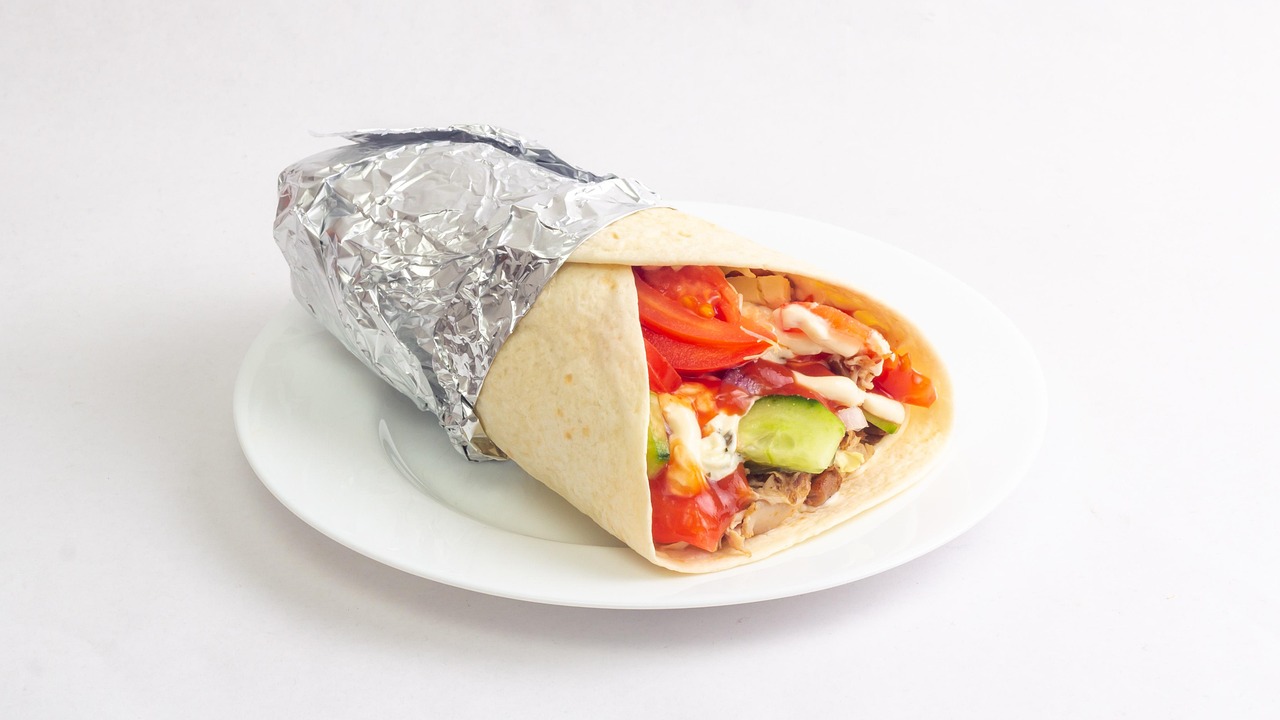
Foil’s formability also supports portion control. Sachets, wraps, lidding, blister-style portions, trays, and laminated pouches can be designed around single-serve or controlled-dose use. In foodservice and ready-to-eat meals, that can reduce handling and help protect hygiene. The tradeoff is that single-serve formats increase the number of packaging units, so the sustainability case depends on whether portion control also reduces food waste or improves recovery.
Common formats and where they fit
Foil food packaging is not one format. It includes pure foil, semi-rigid containers, foil-lined paper, aluminium-laminated flexible packaging, peelable lidding, induction seals, wrappers, and retort-capable pouches. Each format solves a different packaging problem.
Semi-rigid trays and containers
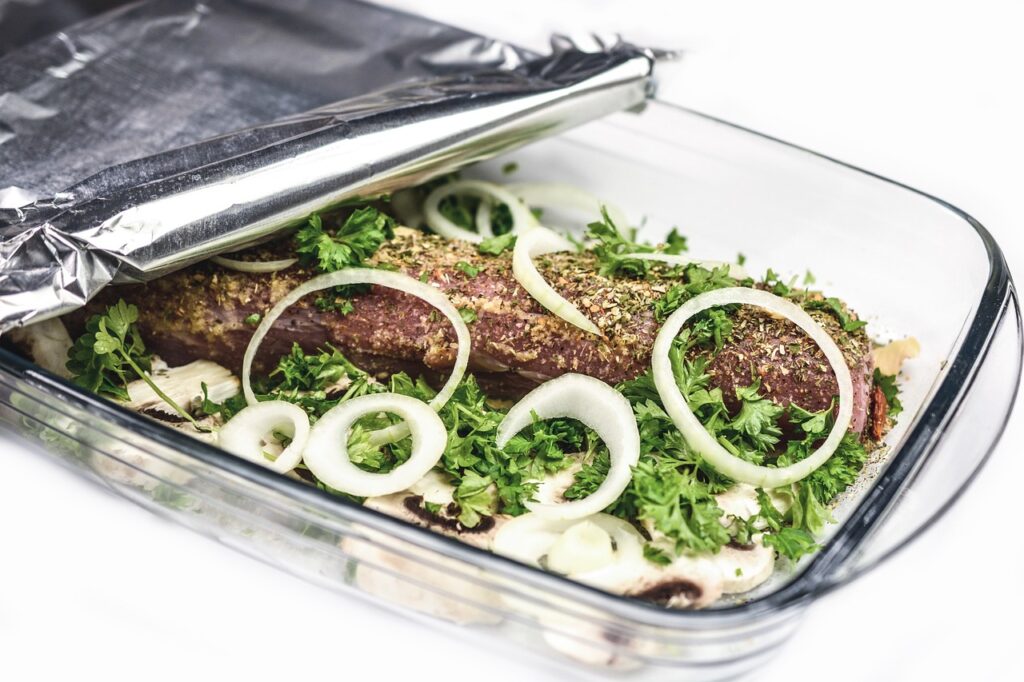
Foil trays are used for ready meals, baked foods, frozen meals, barbecue packs, catering pans, and takeaway dishes. Their main advantages are stiffness, heat tolerance, stackability, and compatibility with oven or reheating use when instructions are followed. They are especially useful when the package also serves as the cooking or serving vessel.
The main limits are denting, possible reaction with salty or acidic foods, and differences in local recycling rules. Clean trays are easier to sort and recycle than small, dirty, or heavily coated foil pieces. For acidic sauces, tomato-based meals, vinegar marinades, or salty foods, a coated tray or alternative liner may be needed to protect appearance and reduce metal-food interaction.
Flexible foil laminates
Flexible laminates combine foil with polymers, paper, adhesives, or coatings. The foil layer provides the barrier, while the surrounding layers provide sealing, toughness, graphics, or stiffness. This structure is common in coffee packs, soup mixes, seasoning sachets, confectionery wrappers, dairy powder pouches, pet food packs, and high-barrier lidding.
The benefit is high performance at low material weight. The drawback is end-of-life complexity. A laminate containing aluminium, polyethylene, polyester, paper, and adhesive may be excellent for shelf life but difficult to recycle through standard household collection. That does not automatically make it the wrong choice. If the product is highly sensitive and the food-waste risk is high, a high-barrier laminate may still be justified. The key is to avoid complex foil laminates where simpler recyclable mono-material or coated structures would provide enough protection.
Lidding foil and induction seals
Foil lidding is used on yogurt cups, dairy desserts, cream cheese, sauces, ready meals, and foodservice cups. Induction seals use a foil layer to create a tamper-evident or leak-resistant seal on bottles and jars. These formats are valued because the foil layer supports reliable sealing and product integrity.
For buyers, the key specification points are peel strength, heat-seal coating, puncture resistance, compatibility with the container rim, and whether the lid separates cleanly. Clean separation can improve the consumer experience and may help recycling when the lid and container enter different material streams.
Safety and food-contact considerations
Food-contact safety depends on the complete packaging system, not only on the aluminium foil. Regulators such as the U.S. Food and Drug Administration treat packaging materials as food-contact substances when they may reasonably come into contact with food. In practice, coatings, adhesives, inks, polymer layers, and sealants can be just as important as the metal layer itself.
One practical issue is foil pitting or discoloration when aluminium contacts salty, acidic, vinegary, or highly spicy foods. The U.S. Department of Agriculture’s Food Safety and Inspection Service explains that this reaction can form aluminium salts and affect appearance. Its public guidance, updated on May 16, 2024, says the affected food is not considered unsafe solely because of that pitting. Even so, appearance, flavor perception, and brand quality can suffer, so packaging designers should account for the issue.
For commercial packaging, direct contact between bare aluminium and aggressive foods is often avoided through coatings, lacquer, paper interlayers, or plastic sealant films. Tomato sauces, citrus marinades, pickled foods, high-salt meals, and hot acidic products deserve special attention during compatibility testing. The relevant question is not simply “Is foil safe?” but “Is this complete foil structure suitable for this food, process temperature, contact time, and storage condition?”
Microwave use is another area where clear instructions matter. Some aluminium containers can be used in microwave ovens under specific conditions, while other formats should not be microwaved. Packaging should not rely on consumer guesswork. If a foil container is intended for reheating, the label should give clear instructions on lid removal, positioning, appliance limits, and avoiding contact with oven walls. If microwave use is not intended, the package should say so plainly.
Recycling realities are improving but remain uneven
Aluminium has a strong circularity argument because remelting aluminium generally requires far less energy than producing primary aluminium from bauxite. Industry bodies such as the European Aluminium Foil Association state that recycling aluminium saves about 95% of the energy associated with primary production. This is a major reason aluminium packaging remains part of sustainability discussions rather than being judged only by mining and primary-metal impacts.
However, recyclability on paper is not the same as recycling in practice. The U.S. Environmental Protection Agency’s 2018 materials dataset reported a 34.9% recycling rate for aluminium containers and packaging, including beverage containers, food containers, foil, and other aluminium packaging. In Europe, the European Aluminium Foil Association estimates that more than 55% of aluminium packaging is recycled under the post-2020 calculation method. These figures show two realities at once: aluminium is valuable, but collection, sorting, cleanliness, and local infrastructure determine actual recovery.
Small foil items are especially challenging. Thin lids, wrappers, and scraps can be too small for sorting systems or can be lost with residual waste. Food residue also matters. A clean foil tray is easier to recycle than a tray with baked-on cheese, grease, or sauce. Some regions advise consumers to rinse or wipe foil and ball small pieces together, while others do not accept household foil at all. Because rules vary by municipality, recycling claims should be specific to the market. See also: Eco Packaging.
Foil laminates present a different challenge. When aluminium is bonded to plastic or paper, the package may be technically recoverable only in specialized systems. If the local market does not collect or process that structure, a broad “recyclable” claim may mislead buyers and consumers. This is why design-for-recycling work increasingly focuses on separable components, simpler material combinations, larger recoverable pieces, and clearer labeling.
| Foil format | Main advantage | Main limitation | Design implication |
|---|---|---|---|
| Semi-rigid tray | Heat tolerance and stiffness | Food residue and acidic-food compatibility | Use coatings where needed and provide disposal guidance |
| Flexible foil laminate | High barrier at low weight | Difficult recycling when multilayer | Use only where shelf-life gains justify complexity |
| Foil lidding | Reliable seal and portion control | Small size may reduce recovery | Improve clean peel and sorting instructions |
| Induction seal | Tamper evidence and leak protection | Mixed-material closure system | Check separation from cap and container streams |
Regulation is pushing packaging toward proof, not slogans
Packaging regulation is moving from general environmental claims toward measurable design and recovery requirements. In the European Union, the Packaging and Packaging Waste Regulation entered into force in February 2025, and its rules began applying in phases from August 12, 2026. The direction is clear: packaging placed on the market must become more recyclable, better labeled, and less wasteful, with major design-for-recycling expectations building toward 2030.
For foil packaging, the impact is not a simple ban-or-approval story. Aluminium is a permanent material with strong recycling value, but packaging systems must still prove that they can be collected, sorted, and recycled at scale in the relevant market. A mono-material aluminium tray may follow a different compliance pathway than a multilayer pouch containing foil, plastic films, inks, adhesives, and coatings.
In the United States, regulatory attention has also affected competing food-packaging materials. On February 28, 2024, the FDA announced that grease-proofing substances containing PFAS were no longer being sold for use in paper and paperboard food packaging in the U.S. market. This development matters because many food brands compare foil with grease-resistant paper, coated fiber, molded fiber, and plastic. As paper-based packaging changes, foil may remain attractive in hot, oily, aromatic, or high-barrier applications, but it still has to answer recycling and source-impact questions.
The practical lesson is that packaging teams should avoid vague claims such as “eco-friendly,” “green,” or “fully recyclable” unless they can define the market, collection route, test method, and material stream. A stronger claim is narrower but more defensible: for example, a clean aluminium tray accepted in specified local recycling programs, or a foil laminate selected because it prevents measurable shelf-life failure in a sensitive food category.
How to decide whether foil is the right choice
The right packaging decision starts with the food, not the material. Foil should be considered when the product needs strong protection from oxygen, moisture, light, grease, aroma loss, or heat. It should be challenged when the same shelf life can be achieved with a simpler recyclable structure or when the target market cannot recover the format.
A practical selection process should include five questions. First, what is the main failure risk: oxidation, moisture gain, moisture loss, aroma loss, grease leakage, microbial spoilage, mechanical damage, or consumer misuse? Second, what processing conditions will the pack face, including hot filling, pasteurization, freezing, baking, or reheating? Third, does the food contain salt, acids, alcohol, spices, or fats that require coatings or liners? Fourth, will the final package be a clean aluminium item, a separable component, or a difficult multilayer laminate? Fifth, what recycling instructions are accurate in the markets where the product will be sold?
Cost should also be viewed beyond material price per kilogram. A foil laminate may cost more than a simple film but reduce product returns, flavor loss, or wasted inventory. A foil tray may cost more than a molded fiber tray but tolerate higher heat and provide better grease resistance. Conversely, if a product has a short distribution chain and low barrier needs, foil may be unnecessary overengineering.
For packaging converters and food brands, the most defensible strategy is specification discipline. Use the minimum gauge that passes performance testing. Avoid unnecessary decorative laminates. Choose coatings based on real food-contact needs. Keep components separable where possible. Make disposal instructions market-specific. Test the package under actual filling, storage, transport, reheating, and handling conditions rather than relying only on material datasheets.
What to watch next
The next stage for foil food packaging will be shaped by three pressures: high-barrier performance, verifiable circularity, and regulatory documentation. Food companies will still need packaging that protects flavor, nutrition, hygiene, and shelf life. At the same time, retailers and regulators will expect clearer evidence that packaging can be recovered, or that its complexity is justified by food-waste prevention.
Several developments are worth watching. Sorting systems may improve recovery of small aluminium items. Extended producer responsibility fees may reward formats that are easier to collect and recycle. Coating and adhesive innovation may help some foil structures separate more cleanly. Reuse and refill models may reduce demand for some single-use packs, while convenience meals, pet food, coffee, and high-barrier portions may keep foil relevant.
The balanced conclusion is straightforward: foil food packaging is neither a universal sustainability solution nor an outdated material. It is a high-performance option that makes the most sense when its barrier, heat, and product-protection benefits are genuinely needed. In 2026, the strongest packaging decisions will connect those benefits to food safety, shelf-life evidence, consumer instructions, and realistic end-of-life outcomes.
Frequently asked questions
Is foil food packaging safe for all foods?
Foil can be used safely in many food applications, but the complete structure must match the food. Acidic, salty, vinegary, or highly spicy foods may react with bare aluminium and cause pitting or discoloration, so coatings or liners are often used for those products.
Is aluminium foil packaging recyclable?
Aluminium itself is recyclable, but actual recycling depends on local collection rules, sorting systems, package size, food residue, and whether the foil is part of a multilayer laminate. Clean trays are generally easier to recover than small dirty pieces or complex flexible laminates.
When is a foil laminate better than a plastic film?
A foil laminate can be better when the food needs very strong protection from oxygen, moisture, light, or aroma loss. If a simpler film provides enough shelf life and is easier to recycle in the target market, the simpler option may be more appropriate.
Can foil trays be used for reheating?
Many foil trays are designed for oven or controlled reheating use, but instructions must be followed. Microwave use depends on the tray design, appliance, and label directions, so consumers should not assume every foil package is microwave-safe.
What is the main sustainability tradeoff with foil food packaging?
The main tradeoff is between strong product protection and end-of-life complexity. Foil can reduce spoilage and protect sensitive foods, but small pieces, food contamination, and multilayer structures can lower recycling performance.