Mediterranean Shipping Company explained for shippers and supply chain teams
What Mediterranean Shipping Company is and why it matters
Mediterranean Shipping Company, usually shortened to MSC, is a global container shipping and logistics company headquartered in Geneva, Switzerland. For shippers, freight forwarders and supply chain teams, MSC matters because its vessel capacity, port network and service decisions can affect sailing options, equipment availability, transit times and routing resilience on major trade lanes.
MSC describes itself as a privately owned, family company founded by Captain Gianluigi Aponte in 1970. Industry fleet trackers such as Alphaliner have listed MSC as the largest container line by operated capacity in recent years. Exact capacity figures change frequently as ships are delivered, chartered, transferred or scrapped, so any ranking should be read as date-specific.
This article looks at MSC from a practical shipping perspective rather than as a corporate profile. It explains what the company does, how its network is presented in public sources, how the end of the 2M alliance changed the market, and what importers and exporters should check before booking. For more ocean freight context, see the Shipping section.
Company background and public scale indicators
MSC Mediterranean Shipping Company began as a single-ship operation and grew into a global liner shipping group. The company is part of the wider MSC Group, which also includes logistics, terminals, towage, air cargo and passenger cruise interests. In container shipping, the MSC brand most often refers to ocean liner services for dry, refrigerated and specialized cargo.
Public MSC company materials use several headline figures to describe the scale of the business. MSC’s cargo website has cited estimated 2024 figures including about 1,000 vessels, 300 routes, 520 ports of call, operations across more than 155 countries, more than 675 offices and around 30 million TEUs carried annually. These are company estimates for a defined reporting period, not live fleet statistics. Live ranking services may show different numbers because they measure operated container capacity at a specific date and may treat subsidiaries, chartered ships and related companies differently.
| Topic | Useful public indicator | How to interpret it |
|---|---|---|
| Business type | Global container shipping and logistics company | MSC is mainly relevant to ocean freight, inland connections and related logistics services. |
| Headquarters | Geneva, Switzerland | The company has a global office network, but commercial and operational rules can differ by country. |
| Network scale | Hundreds of routes and ports of call | Scale improves routing choice, but actual port coverage depends on the trade lane and service string. |
| Fleet scale | Roughly 1,000 vessels in company estimates | Carrier fleet figures change often, especially when charters, newbuildings and subsidiaries are included. |
| Market position | Listed by industry trackers as the largest container carrier by operated capacity | Market rank is useful context, but booking decisions should still be based on lane-level service details. |
What services MSC provides in container shipping
MSC’s core service is scheduled container transport. It operates published liner services between defined port rotations and moves standardized containers across ocean routes. For most cargo owners, the relevant services include full-container-load ocean freight, refrigerated cargo moves, special equipment for oversized cargo, documentation support and inland options where available.
The company also promotes logistics services beyond the ocean leg. These may include overland transportation, depot and terminal-related solutions, digital booking and tracking tools, air cargo under the MSC Air Cargo brand and related cargo protection options. For shippers, the key point is that “MSC” can refer to different service layers. A basic port-to-port ocean booking is not the same as a door-to-door logistics arrangement that includes trucking, rail, customs coordination or cargo insurance. The commercial scope should be confirmed in the booking note, bill of lading terms and local office instructions.
MSC serves many commodity groups. Cargo commonly moved by major liner carriers includes consumer goods, retail merchandise, food and agricultural products, chemicals, machinery, pharmaceuticals and temperature-sensitive cargo. Acceptance is not automatic, however. Dangerous goods, food-grade requirements, controlled-temperature shipments, out-of-gauge cargo and high-value goods can require additional approvals, documentation and equipment checks before loading.
How MSC’s network strategy changed after the 2M alliance
One of the most important recent structural changes in container shipping was the end of the 2M alliance between MSC and Maersk. Maersk announced on January 25, 2023 that the 2M vessel-sharing agreement with MSC would discontinue in January 2025. From February 2025, MSC moved forward with a standalone East-West network, while Maersk and Hapag-Lloyd launched the Gemini Cooperation and other carriers reorganized around the Ocean Alliance and Premier Alliance structures.
This shift matters because alliances influence vessel sharing, port rotations, service frequency and transshipment patterns. A standalone MSC network gives the company more control over its East-West service structure instead of operating within the former shared 2M framework. MSC’s November 2024 service update said its 2025 East-West network would add or adjust port calls on Asia-Europe, Asia-North America and related trades, including additional calls in Vietnam, South China, India, the United Kingdom and other locations.
For shippers, the practical impact is not simply that one alliance ended. The useful question is whether a specific origin-destination pair gained or lost direct calls, changed transshipment hubs, shifted cutoff times or saw different vessel sizes deployed. A carrier can be strong globally and still be a poor fit for a particular shipment if the sailing day, transit time, port congestion exposure or inland connection does not match the cargo plan.
Practical implications for shippers and forwarders
MSC’s size can be an advantage. A large operated fleet can support broad coverage, frequent sailings and the ability to add capacity where demand justifies it. A wide office network can also help when shipments require local documentation support, equipment release, claims handling or coordination with inland providers. For shippers moving regular volumes, this scale often makes MSC a carrier to include in rate comparisons and annual contract discussions.
Scale also creates planning questions. When a major carrier changes a port rotation, blank sailing plan or equipment policy, the effect can reach many supply chains at the same time. Importers and exporters should therefore avoid choosing a carrier on the headline ocean freight rate alone. The stronger approach is to compare the full shipping plan.
- Port pair coverage: Check whether the service is direct or requires transshipment.
- Transit time: Compare advertised transit time with recent operational performance where data is available.
- Cutoff and availability: Confirm cargo cutoff, documentation cutoff, equipment pickup windows and depot location.
- Equipment type: Verify dry, reefer, open-top, flat-rack or other special equipment before committing cargo.
- Local charges: Review terminal handling, documentation, demurrage, detention and emissions-related surcharges.
- Contingency options: Keep alternative routings in mind for urgent, seasonal or disruption-sensitive shipments.
Freight forwarders should also check whether a quoted routing depends on an MSC-operated vessel, a slot arrangement or a partner service. The bill of lading carrier, vessel operator and transshipment carrier can differ in some arrangements. That distinction matters for tracking, claims, documentation amendments and operational escalation.
Sustainability, regulation and cost visibility
Container shipping is under growing pressure to reduce greenhouse gas emissions. The International Maritime Organization adopted a revised greenhouse gas strategy in 2023 with an ambition for international shipping to reach net-zero greenhouse gas emissions by or around 2050. MSC’s sustainability materials state that the company is targeting net-zero decarbonization by 2050 and is working on energy efficiency, fleet modernization and alternative fuel pathways.
For cargo owners, sustainability is now part of freight procurement rather than a separate reporting topic. Regulations can affect both cost structure and documentation expectations. The European Union extended its Emissions Trading System to maritime transport from January 1, 2024, and carriers operating EU-related voyages commonly apply emissions-related cost mechanisms or surcharges. FuelEU Maritime also began applying from January 1, 2025 to support lower greenhouse gas intensity in marine fuels used by ships calling at EU ports. See also: Food Packaging.
These rules do not mean every shipment will carry the same surcharge or carbon profile. Costs depend on trade lane, vessel deployment, fuel choices, distance, regulatory coverage and carrier methodology. Shippers should ask carriers and forwarders how emissions-related charges are calculated, whether they are included in the base ocean rate, and what documentation is available for internal sustainability reporting.
Common points of confusion around the MSC name
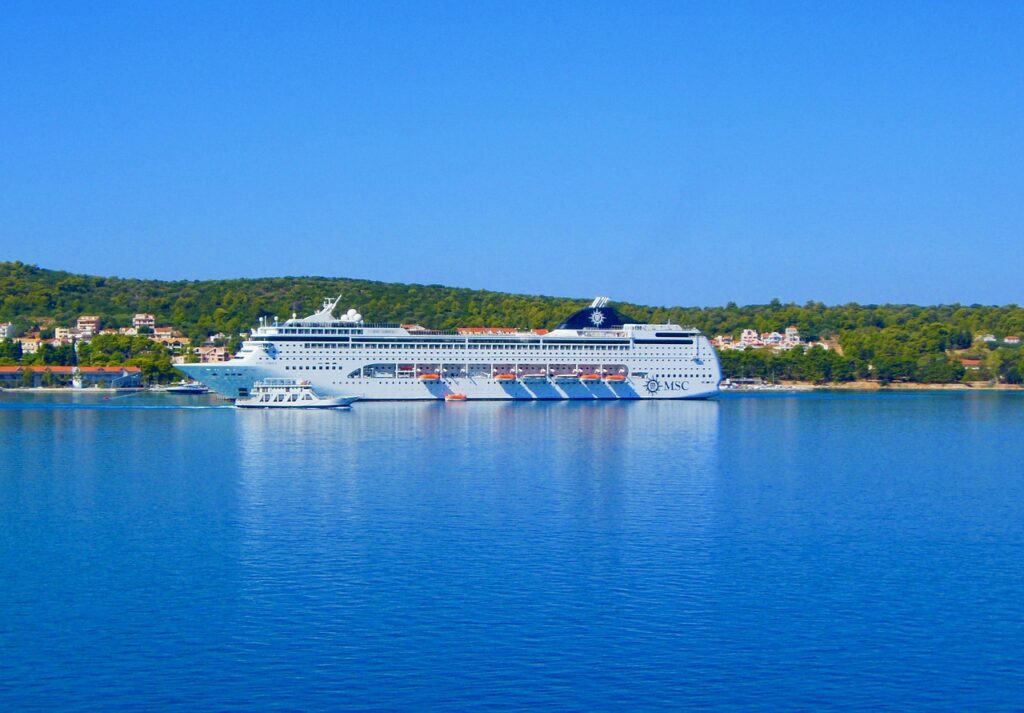
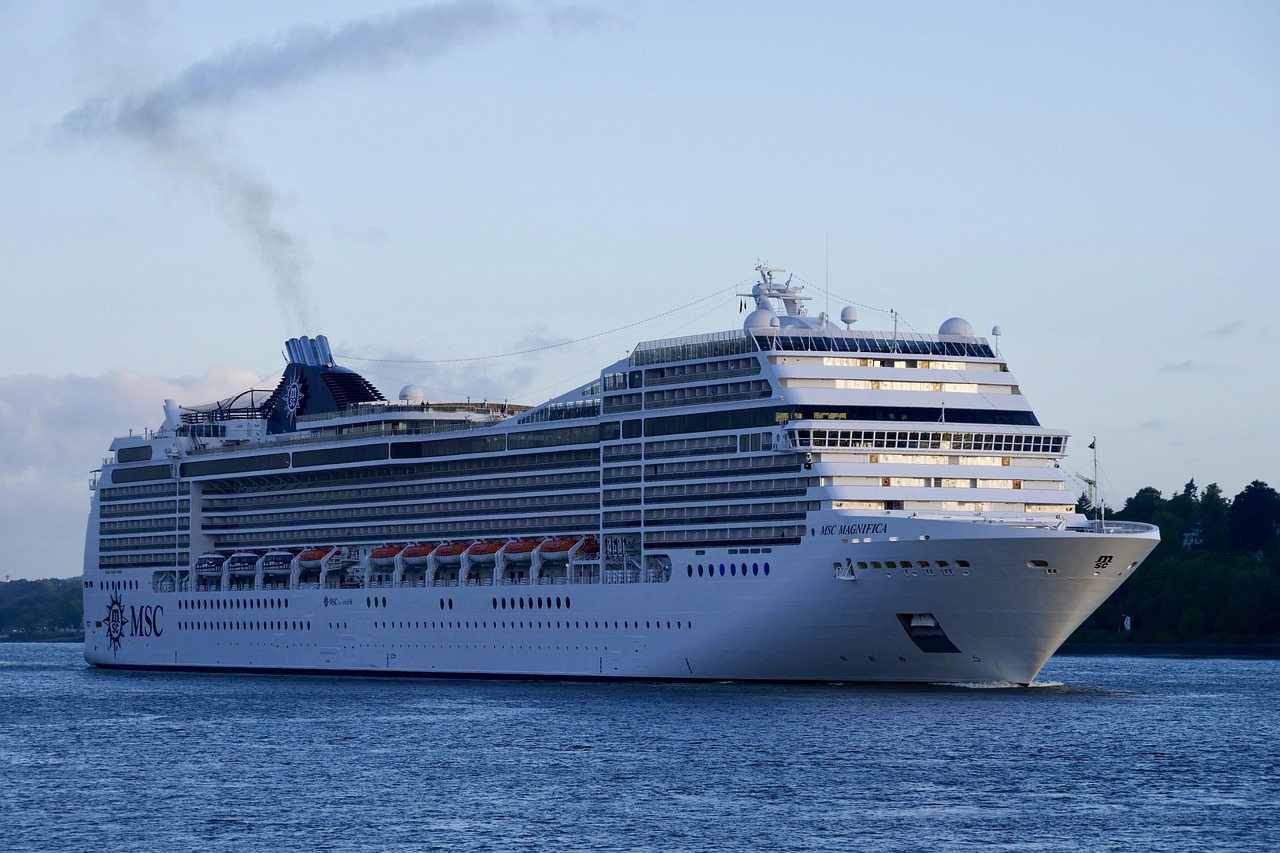
The abbreviation MSC can create confusion because it is used in several contexts. In commercial shipping, “MSC” usually means Mediterranean Shipping Company. It is not the same as Military Sealift Command, a U.S. Navy organization that also uses the acronym MSC. It is also different from MSC Cruises, although both are connected through the wider MSC Group. A cargo shipper looking for container freight information should use MSC’s cargo and shipping channels, not cruise passenger materials.
The word “Mediterranean” can also be misleading. MSC has historical roots connected with Mediterranean trade, but it is not a regional carrier limited to the Mediterranean Sea. Its modern network covers major global East-West trades, North-South lanes, regional services and inland connections. The company’s port coverage includes Asia, Europe, North America, Latin America, Africa, the Middle East and Oceania, depending on the service and local market.
Another common misunderstanding is the link between company scale and service quality. A carrier’s global size does not automatically guarantee the fastest transit time or best reliability on every lane. Schedule performance can vary by season, port congestion, weather, canal restrictions, labor disruption, equipment balance and geopolitical events. Shippers should treat MSC’s scale as one input, then verify lane-level performance before selecting a service.
How to evaluate MSC for a shipment
A practical evaluation starts with the shipment’s constraints. Time-sensitive cargo needs a different decision process from low-value cargo that can tolerate a longer transit. Reefer cargo needs equipment availability, plug capacity and temperature documentation. Oversized machinery may require special stowage approval. Retail cargo may prioritize predictable arrival windows over the lowest ocean freight rate.
Before booking with Mediterranean Shipping Company or any other carrier, confirm the commercial and operational details in writing.
- Identify the exact origin, loading port, discharge port and final delivery location.
- Ask whether the route is direct or transshipped, and where any transshipment occurs.
- Check the sailing date, estimated arrival date and documentation cutoff.
- Confirm container type, pickup location and free time conditions.
- Review freight, local charges, bunker charges and emissions-related surcharges.
- Clarify what happens if the sailing is rolled, blanked or delayed.
- Keep copies of booking confirmations, bills of lading, amendments and carrier notices.
The best use of MSC’s network is not simply to book space with the largest carrier. It is to match the carrier’s actual service pattern with the cargo’s cost, timing, documentation and risk requirements. In a market shaped by alliance changes, emissions regulation and periodic disruption, that lane-by-lane discipline is more useful than relying on brand size alone.
Frequently asked questions
What does Mediterranean Shipping Company do?
Mediterranean Shipping Company provides container shipping and related logistics services. Its main role is moving containerized cargo on scheduled ocean services, with additional inland, digital, reefer, special cargo and logistics options available in many markets.
Is MSC the largest container shipping company?
Industry fleet trackers such as Alphaliner have listed MSC as the largest container shipping line by operated container capacity. Because fleet capacity changes frequently, shippers should treat any rank or TEU figure as date-specific rather than permanent.
Is MSC only a Mediterranean carrier?
No. Despite its name, MSC operates globally. Its network covers major international trades and many regional lanes, including Asia-Europe, transpacific, transatlantic, Latin America, Africa, Middle East and intra-regional services.
Is MSC the same as MSC Cruises?
No. MSC Mediterranean Shipping Company is the cargo container shipping business. MSC Cruises is a passenger cruise business within the wider MSC Group. Shippers should use cargo-specific MSC channels for freight matters.
What should shippers check before booking with MSC?
Shippers should verify the port pair, sailing schedule, direct or transshipment routing, equipment availability, cutoff dates, local charges, free time, documentation requirements and contingency options. These details matter more than the carrier’s global rank alone.