How to choose cardboard packaging boxes manufacturers for custom corrugated packaging
What buyers are really comparing
Choosing cardboard packaging boxes manufacturers is not just a price exercise. A reliable supplier has to turn your product, route to market and compliance requirements into a box that protects goods, runs smoothly in packing operations and fits recycling or disposal expectations in the destination market.
The strongest comparisons start with a controlled specification: box style, internal dimensions, flute, board grade, print method, strength target, test protocol, tolerance, packing method and documentation. Without those details, quotations are rarely like for like. A low unit price may reflect weaker board, higher damage risk, unclear material claims, expensive tooling changes or longer lead times. The aim is to give several manufacturers the same sourcing brief and ask them to prove they can make the package consistently.
For more sourcing frameworks across light industry categories, see the Buyer’s Guide.
Start with the box function before asking for prices
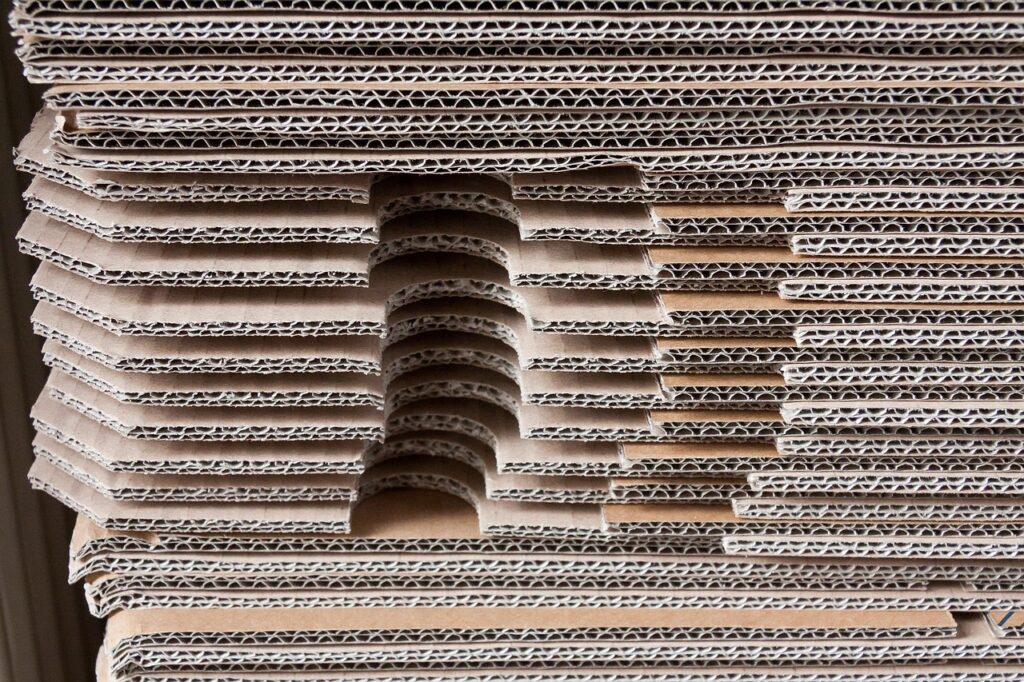
Cardboard packaging is a broad sourcing term, so buyers should first separate corrugated shipping boxes from paperboard folding cartons. Corrugated board is made with liner papers and a fluted medium, giving the sheet stacking strength and cushioning properties. Folding cartons are thinner and are usually selected for retail presentation rather than heavy distribution protection. Many manufacturers are stronger in one category than the other, so the first question is whether the order is for a shipper, mailer, retail display, inner carton, subscription box or shelf-ready pack.
The box function sets the trade-offs. A parcel ecommerce box may need crush resistance, scuff-resistant print and a tamper-evident closure. A retail display may need die-cut accuracy, shelf appearance and easy opening. A food-contact secondary carton may need material declarations and controlled production practices. An export shipper may need pallet efficiency, humidity tolerance and clear carton markings. A manufacturer that asks about product weight, fragility, packing line, stacking height, warehouse conditions and delivery route is usually more useful than one that quotes from dimensions alone.
Specifications that make manufacturer quotes comparable
A clear request for quotation prevents the common problem of receiving five prices for five different boxes. Buyers should define the package in measurable terms and separate fixed requirements from negotiable options. If the current box is failing, include photos and damage descriptions, but do not ask a new manufacturer simply to copy it. The more useful question is which specification should change to solve the problem.
| Specification | What to include in the RFQ | Why it matters |
|---|---|---|
| Box style | Use a recognized style code where possible, such as a regular slotted carton or die-cut mailer format. | Style affects tooling, labor, packing speed and material use. |
| Dimensions | State whether dimensions are internal or external, and list length, width and height in a fixed order. | Dimension ambiguity causes fit issues, freight cost changes and pallet inefficiency. |
| Board construction | Specify single-wall, double-wall or triple-wall, flute type and liner surface requirements. | Construction affects strength, print quality, cost and weight. |
| Performance target | Ask for ECT, burst, compression or shipment-test targets when relevant. | Performance language is more useful than vague terms such as strong or heavy duty. |
| Print and finish | Define colors, artwork coverage, barcode needs, coating and varnish limits. | Print choices affect appearance, drying, recyclability and lead time. |
| Packing and delivery | State flat-packed quantity per bundle, palletization, labels and delivery schedule. | Inbound efficiency can matter as much as the box unit price. |
International references can reduce confusion. FEFCO and ESBO codes are widely used to describe fibreboard case constructions in simple numerical formats. ISO 3037:2022 covers a method for determining edgewise crush resistance of corrugated fibreboard. ISTA procedures are used to simulate distribution hazards for packaged products. These references do not replace engineering judgment, but they give buyers and manufacturers a shared vocabulary.
Board grade, flute and structure are not interchangeable
Two boxes with the same outside dimensions can perform very differently. The flute profile, liner paper, medium, adhesive, moisture exposure and converting quality all influence the finished package. FEFCO technical material describes common flute types such as A, B, C, E and smaller microflutes, each with different heights and paper usage. In general, larger flutes can support cushioning and stacking applications, while smaller flutes can provide a smoother print surface and cleaner folds. The right choice depends on the product and supply chain, not on a universal ranking.
Single-wall board is common for lighter shipping and retail applications. Double-wall board adds a second fluted layer and can improve stacking and puncture resistance for heavier or export shipments. Triple-wall board is reserved for heavy-duty industrial packaging where wood alternatives may be considered. For many ecommerce products, over-specifying board increases material cost and freight weight without improving customer experience. Under-specifying it can lead to crushed corners, open seams, product returns and brand damage.
When comparing manufacturers, ask whether they produce board in-house or buy sheets from another mill or sheet feeder. Integrated corrugated manufacturers may control more of the board-making process, while converters may offer flexibility, short runs or specialized die-cut designs. Neither model is automatically better. The key question is whether the supplier can document the board grade, maintain tolerances and repeat the same performance across production batches.
Testing should match the distribution channel
Cardboard boxes fail in different ways: edge crushing in warehouse stacks, corner damage during parcel sorting, seam failure under vibration, moisture-related softening or product movement inside the pack. A manufacturer’s test proposal should match the actual hazard. Edge crush data can help evaluate board strength, but it does not prove that a packaged product will survive a parcel network. A drop test alone may not represent pallet storage. A successful lab test also does not remove the need to monitor real shipments.
For North American parcel delivery, ISTA 3A is commonly referenced for individual packaged products shipped by parcel systems. For less-than-truckload and palletized distribution, different procedures may be more relevant. If the product is intended to ship without an additional overbox through marketplace fulfillment, buyers may also need to consider retailer-specific packaging programs. Amazon, for example, uses Ships in Product Packaging requirements for eligible products, and those requirements are separate from a general box quote.
Buyers should ask manufacturers three practical questions. First, which test is being recommended, and why does it fit the route? Second, who performs the testing: an in-house lab, third-party lab or customer lab? Third, what will change if the package fails? The best manufacturers treat testing as a design loop, not a certificate to attach at the end. They adjust dimensions, caliper, board grade, insert design, closure method or pallet pattern based on the failure mode.
Sustainability and compliance should be specified, not assumed
Corrugated packaging has a strong recycling infrastructure in many markets, but buyers should be precise when making sustainability claims. The American Forest & Paper Association reported a 2024 U.S. cardboard recycling rate range of 69% to 74% and more than 33 million tons of cardboard recycled. That context supports the importance of recyclable paper-based packaging, but it does not mean every printed, coated or laminated box is equally easy to recycle.
Ask manufacturers to explain recycled content, virgin fiber content, forest certification availability, ink systems, coatings, adhesives and any plastic windows, films or wet-strength treatments. A small finish choice can affect recyclability or repulpability. If the package uses high-coverage ink, metallic effects, polymer coatings or barrier layers, request a clear explanation of how those choices affect recycling streams in the target market. See also: Food Packaging.
Compliance depends on where the product is sold and what it touches. For food and sensitive consumer goods, a secondary carton that never contacts food has different requirements from direct food-contact packaging. In the United States, FDA rules and guidance apply to food-contact substances and recycled materials in food packaging under specific conditions. In the European Union, the Packaging and Packaging Waste Regulation entered into force on 11 February 2025 and generally applies from 12 August 2026, with requirements affecting packaging placed on the EU market. Buyers selling into the EU should treat recyclability, substance restrictions, labeling and documentation as RFQ topics, not afterthoughts.
How to evaluate manufacturer capability
A strong cardboard box manufacturer should be able to move from design intent to repeatable production. Start with engineering support. Can the supplier review your product dimensions, packing method and distribution path? Can it provide a dieline, white sample, printed proof and pre-production sample before mass production? Can it explain why one flute, board grade or closure is preferred over another?
Then review production capability. For simple regular slotted cartons, speed, board sourcing and consistency may matter most. For custom mailers, subscription boxes and retail displays, die-cutting accuracy, crease control and print registration become more important. For branded ecommerce packaging, digital printing may suit shorter runs or versioned artwork, while flexographic printing may be economical for larger volumes. Litho-laminated corrugated can produce strong shelf impact, but it adds process steps and may affect cost, lead time and recyclability depending on the materials used.
Quality control should be documented in plain terms. Ask for incoming paper checks, board caliper or basis-weight controls, compression or edge-crush test records where applicable, color tolerance, glue-joint inspection, moisture management and final AQL inspection. For export orders, check carton bundle protection, pallet wrapping, container loading practices and humidity controls. Corrugated board can lose performance when stored poorly, so the supply chain after manufacturing matters too.
Commercial terms and sourcing risk
Price comparison should include more than the printed unit price. Tooling, sample fees, artwork setup, plate charges, testing, packaging, pallets, inland freight, ocean freight, duties, storage, inventory carrying cost and damage rates all affect the real landed cost. A cheaper box that raises product damage by a small percentage can become expensive quickly, especially for bulky ecommerce products with high return shipping costs.
Lead time deserves close attention. Custom corrugated orders often involve artwork approval, tooling, board procurement, production scheduling, drying or curing time, inspection and transport. Seasonal demand can also tighten capacity. Buyers should ask for realistic lead times for first orders, repeat orders and urgent replenishment. If a manufacturer quotes unusually fast delivery, confirm whether board is already available, whether tooling exists and whether the date means factory completion or delivery to your warehouse.
For overseas sourcing, communication and documentation become part of quality control. Confirm units of measure, carton markings, pallet size, Incoterms, inspection timing and who owns the dieline or tooling. For domestic sourcing, buyers may gain shorter replenishment cycles and easier factory visits, but unit prices can be higher. The best choice depends on volume, customization, demand stability and tolerance for inventory risk.
Questions to ask before approving a supplier
- What box style and board construction do you recommend for this product, and what alternatives would reduce cost without increasing risk?
- Are dimensions quoted as internal or external dimensions, and what tolerances apply after production?
- Which flute, liner and medium will be used, and can the same grade be maintained on repeat orders?
- What tests are recommended for our distribution channel, and can test reports be reproduced later?
- How will print color, barcode readability, coating and rub resistance be controlled?
- What recycled content or certification claims can be documented?
- What happens if the pre-production sample fails a fit, compression, drop or print inspection?
- Who pays for tooling changes caused by manufacturer error versus buyer design changes?
- How are bundles, pallets and containers protected from moisture and crushing before delivery?
- Can the supplier provide a written specification sheet that both parties approve before mass production?
Frequently asked questions
What is the difference between cardboard and corrugated boxes?
In everyday sourcing language, cardboard often refers to many paper-based packages. Technically, corrugated boxes are made with liner sheets and a fluted medium, which gives them better strength for shipping. Paperboard folding cartons are thinner and usually used for retail primary or secondary packaging.
Should I choose ECT or burst strength for box specifications?
It depends on the failure risk. ECT is commonly used to evaluate edgewise compression strength related to stacking performance, while burst strength relates to resistance against rupture. Many buyers also need package-level shipment testing because board strength alone does not prove product protection.
Are custom cardboard boxes always expensive?
Not always. Cost depends on size, board grade, print coverage, tooling, order volume, finishing, testing and logistics. A custom size can sometimes reduce void fill and freight volume enough to offset higher converting costs.
How many samples should a buyer approve?
At minimum, buyers should review a structural sample for fit and a printed or production-intent sample for appearance and converting quality. For higher-risk products, approve samples after distribution testing and before mass production.
What is the biggest mistake when sourcing cardboard packaging boxes manufacturers?
The biggest mistake is asking for a quote without a controlled specification. If each manufacturer chooses its own board grade, flute, tolerance and print process, the lowest quote may not represent the same package or the same risk level.